

Relating to: exempting certain agricultural warehouses from automatic fire sprinkler requirements.
AB 956 exempts specific agricultural warehouses storing crop protection products (like fertilizers and pesticides) from mandatory automatic fire sprinkler systems. It applies to warehouses designed primarily for storing these chemicals, provided they meet conditions such as using secondary containment for liquid products or using dry bulk storage. Owners must notify local fire departments about stored chemicals and update this information if changes occur. The exemption does not apply to office areas within the warehouse, changes in warehouse use, or other fire safety requirements beyond sprinklers. This bill directly affects agricultural businesses storing these products in qualifying facilities.
Bill status
vetoed
4 of 5 stages cleared
Introduction
Jan 2026
Committee Review
Mar 2026
Assembly Passage
Feb 2026
Senate Passage
Mar 2026
Vetoed
Apr 2026
Introduced Jan 29, 2026
Vetoed Apr 8, 2026
Maddy AI version diff · 1 comparison
What changed between versions
Bill Text
→
Text as Enrolled
·
3 edits
MINOR
The bill was finalized into law, changing its title to '2025 Wisconsin Act' and adding a new subsection (e) to Section 1. This new provision explicitly exempts warehouses storing ammonium nitrate or anhydrous ammonia from automatic fire sprinkler requirements, expanding the list of eligible chemicals beyond fertilizers and pesticides. The text also includes standard legal boilerplate regarding the effective date of the act.
Scope change
The bill's scope was expanded to include specific exemptions for warehouses storing ammonium nitrate and anhydrous ammonia, which were not explicitly listed in the original draft.
ELIGIBILITY
Added a new exemption for warehouses storing ammonium nitrate or anhydrous ammonia.
TITLE
Changed the document title from 'Assembly Bill' to '2025 Wisconsin Act' to reflect its enactment.
TECHNICAL
Added standard statutory language regarding the effective date of the act.
Floor votes
How they voted
This bill passed the Senate by voice vote (no roll call recorded).
Full legislative history
Actions timeline
Total actions
35
Key actions
6
Committee
4
Amendments
2
Apr 8, 2026
Vetoed
Report vetoed by the Governor on 4-8-2026
lower
Mar 17, 2026
Upper · Passed
Read a third time and concurred in
upper
Mar 16, 2026
Upper · Passed
Public hearing requirement waived by committee on Senate Organization, pursuant to Senate Rule 18 (1m), Ayes 3, Noes 2
upper
Mar 11, 2026
Upper · Passed
Report concurrence recommended by Committee on Agriculture and Revenue, Ayes 7, Noes 1
upper
Feb 19, 2026
Lower · Passed
Read a third time and passed
lower
Feb 19, 2026
Lower · Passed
Assembly Amendment 1 adopted
lower
Feb 12, 2026
Committee
Referred to committee on Rules
lower
Feb 12, 2026
Lower · Passed
Report passage recommended by Committee on State Affairs, Ayes 7, Noes 3
lower
Feb 11, 2026
Introduced
Assembly Amendment 1 offered by Representative Hurd
lower
Jan 29, 2026
Introduced
Introduced by Representatives Hurd, Novak, Behnke, Dittrich, Gundrum, Kreibich, Moses, Murphy, Mursau, Piwowarczyk, Spiros, Summerfield and Tittl;
cosponsored by Senators James, Marklein and Quinn
lower
13 primary · 0 co-sponsors
Sponsors
Role
Legislator
Party
State
District
P

Barbara Dittrich
RRepublican
P
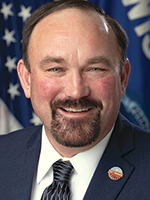
Clint Moses
RRepublican
P

Dave Murphy
RRepublican
P

Elijah Behnke
RRepublican
P
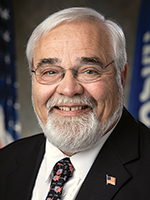
Jeff Mursau
RRepublican
P

Jim Piwowarczyk
RRepublican
P
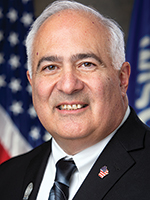
John Spiros
RRepublican
P

Karen Hurd
RRepublican
P

Paul Tittl
RRepublican
P

Rick Gundrum
RRepublican
P

Rob Kreibich
RRepublican
P
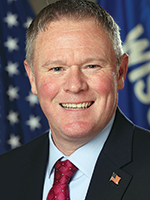
Rob Summerfield
RRepublican
P
Todd Novak
RRepublican
Ask Maddy
·
AI policy assistant
Ask Maddy about AB 956
Scope: WI
Hi! I can help you understand AB 956. What would you like to know?
Try one of these
i
Maddy answers using official bill text and legislative records. Always verify before sharing.
Sources cited inline