Issue · Technology

Technology

Every technology bill, vote, and legislator stance in Wisconsin, automatically classified by Maddy, our AI policy reader.

Total bills
17
2025-2026 Regular Session
Top supporter
Rob Swearingen
83% support rate
Top opponent
Jodi Habush Sinykin
17% support rate
Ranked legislators
10
5 support · 5 oppose
Key legislators

Who's moving technology in Wisconsin

Legislators moving technology in Wisconsin
Legislator Party Stance Support rate Votes
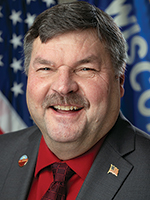
Rob Swearingen
Rob Swearingen House · District 34
R
Strong +
83% 65
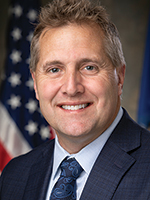
Shannon Zimmerman
Shannon Zimmerman House · District 30
R
Strong +
82% 54
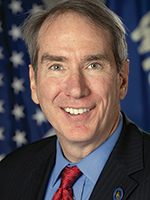
Dave Maxey
Dave Maxey House · District 83
R
Strong +
82% 63
Will Penterman
Will Penterman House · District 38
R
Strong +
82% 61
Scott Allen
Scott Allen House · District 82
R
Strong +
82% 59
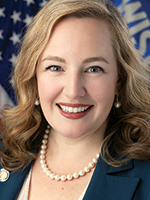
Jodi Habush Sinykin
Jodi Habush Sinykin Senate · District 8
D
Strong −
17% 42
Tim Carpenter
Tim Carpenter Senate · District 3
D
Strong −
17% 42
Kelda Roys
Kelda Roys Senate · District 26
D
Strong −
17% 40
Jamie Wall
Jamie Wall Senate · District 30
D
Strong −
17% 42
Chris Larson
Chris Larson Senate · District 7
D
Strong −
17% 42
Showing 1–10 of 17 bills

All technology bills

failed · Wisconsin · Assembly Mar 23, 2026

AB 1186: Relating to: prohibiting retail dynamic price gouging of consumer goods and providing a penalty.

This bill prohibits retail sellers from using artificial intelligence or automated systems to set personalized prices for consumer goods based on individual customer data. It defines consumer goods as packaged items for personal use and dynamic price gouging as customized pricing generated through computational models that process consumer information. Retailers who violate this rule could face warnings, civil forfeiture of up to $10,000, or legal injunctions from state authorities. The law applies to both online and in-person sales of everyday products like groceries and household items.
failed · Wisconsin · Assembly Mar 30, 2026

AB 1109: Relating to: use of artificial intelligence to deny prior authorization for medical necessity or experimental status.

This bill prohibits disability insurance policies and self-insured health plans from using artificial intelligence to deny prior authorization requests for medical necessity or experimental treatments. Instead, it requires that a licensed human healthcare provider must review these specific requests before any denial can occur. The law applies to limited service health organizations, preferred provider plans, and defined network plans, with exceptions for plans covered by collective bargaining agreements. If passed, the restrictions would take effect at the start of the fourth month following the bill's publication.
failed · Wisconsin · Senate Mar 23, 2026

SB 1166: Relating to: use of autonomous devices equipped with weapons by law enforcement agencies.

This bill prohibits law enforcement agencies from using autonomous devices equipped with weapons. It defines an autonomous device as one that can operate without active human control and uses the existing legal definition of a dangerous weapon. The law enforcement restriction is the main policy change, while the definitions clarify what types of technology and weapons are covered. The bill was introduced in March 2026 but failed to pass the Senate.
Sub-Topics Law Enforcement
failed · Wisconsin · Assembly Mar 23, 2026

AB 1099: Relating to: moratorium on data centers.

This bill establishes a moratorium on operating new data centers in the state unless specific conditions are met, directly affecting companies that build or operate large-scale digital storage and processing facilities. It requires the creation of a statewide planning authority and mandates that data centers cannot shift their energy or water costs to residential customers. The legislation also includes requirements for mandatory public reporting of resource usage, environmental safeguards, 100% renewable energy from newly built projects, prevailing wage standards for construction workers, and prior approval by local voters before a data center can be built. Additionally, it prohibits financial subsidies for data centers, bans nondisclosure agreements between data centers and local officials, and restores public utility planning authority.
Sub-Topics Renewable Energy
failed · Wisconsin · Senate Mar 30, 2026

SB 1066: Relating to: use of artificial intelligence to deny prior authorization for medical necessity or experimental status.

SB 1066 prohibits health insurance companies (including disability insurance and self-insured plans) from using artificial intelligence to deny prior authorization for medical treatments or experimental procedures. Instead, the bill requires a licensed healthcare provider to review these requests before a denial can be issued. It directly affects insurers that currently use AI for these decisions and healthcare providers who seek approval for patient care. The law takes effect in the fourth month after publication, with specific transition rules for plans under collective bargaining agreements.
failed · Wisconsin · Senate Mar 23, 2026

SB 939: Relating to: artificial intelligence systems that simulate humanlike relationships with children and providing a penalty.

SB 939 prohibits operators of "companion chatbots" (AI systems designed to simulate ongoing, personalized relationships with users) from making these tools available to children under 18 without specific safety measures. It requires such chatbots to avoid encouraging self-harm, replacing professional mental health care, promoting illegal activity, sharing explicit content, prioritizing validation over safety, or optimizing engagement beyond safety features. Operators face civil penalties of up to $25,000 per violation per day, and affected children or their guardians may sue for damages. The law exempts customer service bots, internal business tools, and research systems, and includes a 2027 implementation deadline.
failed · Wisconsin · Senate Mar 23, 2026

SB 1061: Relating to: moratorium on data centers.

SB 1061 imposes a moratorium on new data center operations in the state until specific requirements are met. It directly affects data center operators and developers by requiring: a statewide planning authority, prohibitions on shifting energy/water costs to residential customers, mandatory public reporting of water/electricity usage, and 100% renewable energy sourcing from newly built, directly accessible projects. The bill also mandates prevailing wages for construction workers, local referendum approval for new sites, and environmental safeguards for air, water, and noise. These provisions must be enacted by law before any new data center can operate.
Sub-Topics Renewable Energy
failed · Wisconsin · Senate Mar 23, 2026

SB 957: Relating to: policies to prohibit the use of wireless communication devices during the school day in public schools.

SB 957 requires Wisconsin public school districts to adopt policies prohibiting students from using personal wireless communication devices (like cell phones, tablets, and laptops) during the school day, with exceptions for emergencies, health care needs, special education plans, and teacher-approved educational use. School boards must create these policies by July 1, 2027, and submit them to the Department of Justice by October 1, 2027, with annual updates thereafter. The policy must define "wireless communication device" to include cell phones, tablets, laptops, and gaming devices, and must include specific requirements for student notification and documentation. This bill directly affects all public school districts and students in Wisconsin, requiring implementation of device restrictions starting in the 2027-2028 school year.
Sub-Topics Telecommunications
failed · Wisconsin · Assembly Mar 23, 2026

AB 965: Relating to: artificial intelligence systems that simulate humanlike relationships with children and providing a penalty.

AB 965 prohibits operators of AI chatbots designed to simulate ongoing, humanlike relationships with children (under 18 in the state) from making them available without specific safety measures. The bill requires these "companion chatbots" to avoid encouraging self-harm, illegal activity, sexual content, or prioritizing a child’s feelings over safety, while excluding standard customer service tools. Violations could result in civil penalties up to $25,000 per day or private lawsuits by affected children or parents for damages. The law takes effect after January 1, 2027, with a transition period for operators unaware a user is a child.
vetoed · Wisconsin · Assembly May 13, 2026

AB 105: Relating to: the distribution of certain material on the Internet.

AB 105 requires business entities (like websites or platforms) distributing material harmful to minors to verify users' ages using approved methods before granting access. It applies specifically to sites containing a "substantial portion" (over one-third) of such material, defined as content with sexual depictions, prurient appeal, or lacking literary/artistic value for minors. The bill exempts bona fide news organizations and internet service providers from these requirements. Violations could result in civil lawsuits seeking damages, while the bill also bans publishing obscene material involving children or obscene content online.
Showing 1 to 10 of 17 bills
1 2 Next