Issue · Technology

Technology

Every technology bill, vote, and legislator stance in Wisconsin, automatically classified by Maddy, our AI policy reader.

Total bills
126
2025-2026 Regular Session
Top supporter
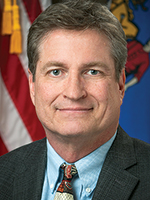
Rob Swearingen
83% support rate
Top opponent
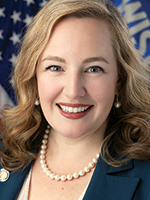
Jodi Habush Sinykin
17% support rate
Ranked legislators
10
5 support · 5 oppose
Key legislators

Who's moving technology in Wisconsin

Legislators moving technology in Wisconsin
Legislator Party Stance Support rate Votes
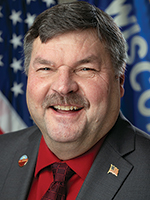
Rob Swearingen
Rob Swearingen House · District 34
R
Strong +
83% 65
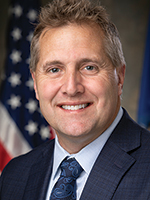
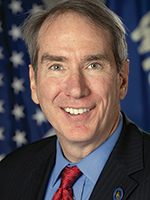
Shannon Zimmerman
Shannon Zimmerman House · District 30
R
Strong +
82% 54
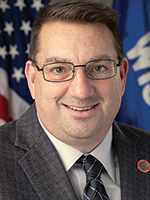
Dave Maxey
Dave Maxey House · District 83
R
Strong +
82% 63
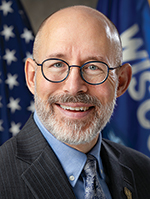
Will Penterman
Will Penterman House · District 38
R
Strong +
82% 61
Scott Allen
Scott Allen House · District 82
R
Strong +
82% 59
Jodi Habush Sinykin
Jodi Habush Sinykin Senate · District 8
D
Strong −
17% 42
Tim Carpenter
Tim Carpenter Senate · District 3
D
Strong −
17% 42
Kelda Roys
Kelda Roys Senate · District 26
D
Strong −
17% 40
Jamie Wall
Jamie Wall Senate · District 30
D
Strong −
17% 42
Chris Larson
Chris Larson Senate · District 7
D
Strong −
17% 42
Showing 51–60 of 126 bills

All technology bills

failed · Wisconsin · Senate Mar 23, 2026

SB 885: Relating to: digital asset staking and the state’s securities laws.

SB 885 clarifies that digital asset staking and staking-as-a-service are excluded from the state's securities laws. It defines "staking" as locking digital assets to support blockchain security (e.g., via validator nodes) and "staking as a service" as third-party technical support for stakers. The bill directly affects blockchain participants, staking providers, and custodians by removing regulatory burdens under securities rules. This creates a clear regulatory boundary, ensuring staking activities are not treated as investment products under existing state law.
Sub-Topics Emerging Technology
failed · Wisconsin · Assembly Mar 23, 2026

AB 965: Relating to: artificial intelligence systems that simulate humanlike relationships with children and providing a penalty.

AB 965 prohibits operators of AI chatbots designed to simulate ongoing, humanlike relationships with children (under 18 in the state) from making them available without specific safety measures. The bill requires these "companion chatbots" to avoid encouraging self-harm, illegal activity, sexual content, or prioritizing a child’s feelings over safety, while excluding standard customer service tools. Violations could result in civil penalties up to $25,000 per day or private lawsuits by affected children or parents for damages. The law takes effect after January 1, 2027, with a transition period for operators unaware a user is a child.
signed · Wisconsin · Assembly Apr 9, 2026

AB 957: Relating to: Internet crimes against children law enforcement and making an appropriation. (FE)

AB 957 increases funding by $400,000 for each of the 2025-26 and 2026-27 fiscal years to support internet crimes against children law enforcement within the Department of Justice. This is a budget adjustment that directly affects the Department of Justice's resources for investigating and prosecuting online crimes targeting minors. The bill does not create new laws or change existing legal standards - it solely allocates additional state funds for enforcement efforts.
signed · Wisconsin · Assembly Apr 9, 2026

AB 958: Relating to: position authorizations for Internet crimes against children law enforcement. (FE)

AB 958 authorizes the Department of Justice to add three new positions specifically for its Internet Crimes Against Children (ICAC) unit: two criminal analyst roles, one outreach specialist, and one digital evidence examiner. These positions are funded through existing appropriations under section 20.455(2)(a). The bill directly affects the ICAC unit’s staffing capacity to investigate and respond to online crimes involving children. It does not create new laws or policies but adjusts personnel authorizations to support existing law enforcement efforts. The bill was introduced in the 2026 Legislature and referred to the Criminal Justice and Public Safety Committee.
Sub-Topics Law Enforcement
failed · Wisconsin · Senate Mar 23, 2026

SB 807: Relating to: grants to WisconsinEye for the establishment of an endowment fund, creating the Office of the Public Affairs Network to administer a public affairs network in Wisconsin, and making an appropriation. (FE)

SB 807 creates a new Office of the Public Affairs Network within Wisconsin's Department of Administration to provide live, unedited online coverage of state government proceedings. The office must stream real-time video and audio of legislative sessions, court hearings, agency meetings, and related public events, while maintaining permanent online archives accessible without registration or fees. It allocates $2 million biennially for operations and transitions WisconsinEye's existing digital archives and equipment to the state. The bill establishes a board with gubernatorial, legislative, and public members to oversee the network's nonpartisan operation.
Sub-Topics Appropriations
passed · Wisconsin · Assembly Mar 23, 2026

AB 963: Relating to: social media accounts for minors and providing a penalty.

AB 963 requires large social media platforms (with $1 billion+ annual revenue) to identify users under 18 and obtain parental permission before collecting their personal data. After a user spends 25 hours on the platform within six months, companies must estimate age with 80% confidence; if uncertain, they must treat the user as a minor. Platforms must then get verifiable parental consent for data collection, including location, browsing history, and biometric information. This bill directly affects minors under 18 in the state and major social media companies operating there, focusing on data handling rather than restricting access to platforms.
failed · Wisconsin · Assembly Mar 23, 2026

AB 960: Relating to: requiring social media platforms to provide mental health warnings and providing a penalty.

AB 960 requires most social media platforms operating in the state to display a clear, prominent mental health warning each time a user in the state accesses the platform. The warning must inform users about potential negative mental health effects and provide access to crisis resources like the 988 suicide hotline. It applies to platforms defined as user-generated content services (excluding search engines, email, business communication tools, and streaming services), and prohibits hiding warnings in terms of service or allowing users to disable them without specific conditions. Violations may result in fines up to $5,000 per incident, enforced by state departments.
failed · Wisconsin · Assembly Mar 23, 2026

AB 855: Relating to: synthetic digital representations and providing a penalty.

AB 855 prohibits creating and sharing synthetic digital representations (like AI-generated images, videos, or audio) that use someone's recognizable personal characteristic (face, voice, etc.) without their consent, appear authentic to a reasonable person, and are intended to coerce, harass, intimidate, or defraud for monetary gain. It classifies unauthorized use for coercion/harassment as a Class A misdemeanor and for financial gain as a Class I felony. Key exceptions include tech providers (protected under Section 230), newsworthy content, and clear disclaimers like "This content generated by AI" in the media itself. The law directly affects individuals whose likenesses are misused without consent and aims to prevent non-consensual deepfakes used for harm.
failed · Wisconsin · Senate Mar 23, 2026

SB 815: Relating to: synthetic digital representations and providing a penalty.

SB 815 prohibits creating and sharing AI-generated content that mimics a real person's face, voice, or other identifying features without their consent, if intended to harass, intimidate, or defraud for financial gain. It establishes a Class A misdemeanor for misuse to coerce or harass, and a Class I felony for profit-driven misuse. The law includes key exceptions: tech companies, news content, and creators who clearly label AI-generated material (e.g., "This content generated by AI" in videos, images, or audio). It directly affects individuals whose likenesses are exploited without consent and sets clear penalties for malicious use of synthetic media.
failed · Wisconsin · Assembly Mar 23, 2026

AB 946: Relating to: implementing a behavioral health prevention pilot program and making an appropriation.

AB 946 creates a two-year pilot program to provide behavioral health support to high school students in Wisconsin. It allocates $1.5 million annually for the 2026-27 and 2027-28 school years to give at least 50,000 high school students access to a digital tool offering online mental health resources, peer support, and private sessions with licensed professionals. The tool must be accessible via mobile/web, support English/Spanish, include professional profiles for user choice, and follow a population health model. The program is administered by the Department of Public Instruction and requires contracting with educational service agencies, with the related funding provision set to expire on July 1, 2028.
Showing 51 to 60 of 126 bills
Previous 1 5 6 7 13 Next