Issue · Technology

Technology

Every technology bill, vote, and legislator stance in Wisconsin, automatically classified by Maddy, our AI policy reader.

Total bills
126
2025-2026 Regular Session
Top supporter
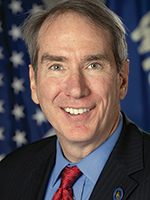
Rob Swearingen
83% support rate
Top opponent
Jodi Habush Sinykin
17% support rate
Ranked legislators
10
5 support · 5 oppose
Key legislators

Who's moving technology in Wisconsin

Legislators moving technology in Wisconsin
Legislator Party Stance Support rate Votes
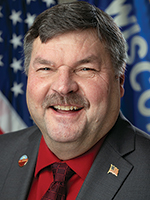
Rob Swearingen
Rob Swearingen House · District 34
R
Strong +
83% 65
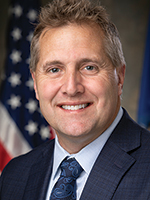
Shannon Zimmerman
Shannon Zimmerman House · District 30
R
Strong +
82% 54
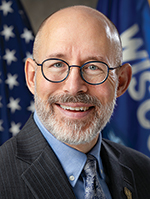
Dave Maxey
Dave Maxey House · District 83
R
Strong +
82% 63
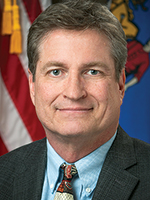
Will Penterman
Will Penterman House · District 38
R
Strong +
82% 61
Scott Allen
Scott Allen House · District 82
R
Strong +
82% 59
Jodi Habush Sinykin
Jodi Habush Sinykin Senate · District 8
D
Strong −
17% 42
Tim Carpenter
Tim Carpenter Senate · District 3
D
Strong −
17% 42
Kelda Roys
Kelda Roys Senate · District 26
D
Strong −
17% 40
Jamie Wall
Jamie Wall Senate · District 30
D
Strong −
17% 42
Chris Larson
Chris Larson Senate · District 7
D
Strong −
17% 42
Showing 91–100 of 126 bills

All technology bills

failed · Wisconsin · Assembly Mar 23, 2026

AJR 118: Relating to: proclaiming the months of October 2025 and October 2026 as Cybersecurity Awareness Month.

This joint resolution formally designates October 2025 and October 2026 as "Cybersecurity Awareness Month" in Wisconsin. It does not create new laws or programs but makes an official state proclamation to highlight the importance of cybersecurity education. The resolution cites rising online threats like phishing scams and identity theft as reasons to promote public awareness. It directly affects all Wisconsin residents by encouraging broader attention to online safety practices during those months.
vetoed · Wisconsin · Assembly May 13, 2026

AB 415: Relating to: use restrictions on state and local government electronic devices.

AB 415 restricts state and local government employees from using electronic devices owned by their agencies to access social media, apps, or AI tools owned by entities located in "foreign countries of concern" (as defined by federal regulations). The bill directly affects government employees and contractors who use official devices for non-law enforcement work, banning access to specific foreign-owned technology. Exceptions allow written waivers from the secretary of administration for limited job-related purposes. This policy change aims to limit government use of technology linked to designated foreign adversaries, with no impact on law enforcement activities. The bill does not create new funding or require agency budget changes.
failed · Wisconsin · Senate Mar 23, 2026

SB 677: Relating to: various changes to the unemployment insurance law. (FE)

SB 677 modifies Wisconsin's unemployment insurance law to improve accessibility and prevent fraud. It creates new exemptions allowing claimants to skip electronic filings if they lack internet access, have digital literacy challenges, or face communication barriers like vision disabilities or limited English proficiency. The bill also requires employers to report job applicant rejections or no-shows to the department, which could affect claimants' eligibility if not justified as "good cause." Additionally, it strengthens penalties for fraud, imposing a $5,000 fine for false statements on initial claims and requiring repayment of benefits obtained through deception. These changes directly affect unemployed workers, employers reporting job-related events, and the state's unemployment insurance administration.
failed · Wisconsin · Senate Mar 23, 2026

SB 129: Relating to: the right to repair motor vehicles and providing a penalty. (FE)

Senate Bill 129 establishes a "right to repair" for motor vehicles, aiming to give owners and independent repair facilities greater access to necessary information and tools. It prohibits motor vehicle manufacturers from creating technological or legal barriers that prevent owners and repairers from accessing vehicle-generated data and critical repair information, including diagnostics, software, and parts catalogs. The bill requires manufacturers to provide this data and information directly and wirelessly, and at a fair cost, while also preventing them from mandating specific brands of parts or tools for repairs. This allows owners and independent repair shops to diagnose, service, and maintain vehicles in a manner similar to manufacturers or dealerships.
failed · Wisconsin · Senate Mar 23, 2026

SB 204: Relating to: creating a video game production tax credit and making an appropriation. (FE)

SB 204 creates a 30% tax credit for video game companies in the state, allowing them to reduce their tax liability by 30% of wages paid for qualifying game development activities. The credit applies to wages paid for developing, producing, or creating video games (excluding gambling platforms, social media tools, political/religious content, or marketing sites) beginning in 2025. Companies can claim the credit against state taxes, with unused portions paid from a new appropriation fund. This directly affects video game developers operating within the state who meet the eligibility criteria.
failed · Wisconsin · Assembly Mar 23, 2026

AB 575: Relating to: prohibiting state agencies and local governmental units from using facial recognition technology or data generated from it.

AB 575 prohibits all state agencies and local governmental units (like cities, counties, or school districts) from using facial recognition technology or its data, except to identify their own employees for employment-related purposes. The bill defines facial recognition technology as an automated system that compares camera footage of faces against databases to find matches. It directly affects government entities that currently use or plan to use this technology for public services, law enforcement, or other operations. The law creates a clear ban on its use for public identification, with only the narrow exception for internal employee verification.
failed · Wisconsin · Senate Mar 23, 2026

SB 386: Relating to: virtual currency kiosks.

SB 386 regulates virtual currency kiosks in the state, requiring operators to obtain a license and directly affecting both kiosk businesses and customers using these services. Key provisions include mandatory fraud warnings displayed physically and electronically before every transaction, strict identity verification (requiring government ID copies, photos, and personal details for each customer), and daily transaction limits of $1,000 in traditional money. The bill also caps fees at $5 or 3% of the transaction amount and mandates refunds for customers fraudulently induced into transactions within 30 days. These rules aim to enhance consumer protection while establishing clear operational standards for kiosk operators.
failed · Wisconsin · Assembly Mar 23, 2026

AB 384: Relating to: virtual currency kiosks.

AB 384 regulates virtual currency kiosks (machines that exchange cash for cryptocurrency or vice versa) by requiring operators to obtain state licenses, display a specific fraud warning before every transaction, and verify customer identities using government ID and photos. It limits daily transactions to $1,000 in cash, caps fees at $5 or 3% of the transaction amount, and mandates refunds for fraud victims who report incidents within 30 days. The law directly affects kiosk operators (who must comply with licensing and ID rules) and customers (who receive fraud protections and transaction limits). These provisions aim to reduce scams and financial risks associated with in-person crypto exchanges.
Sub-Topics Emerging Technology
failed · Wisconsin · Assembly Mar 23, 2026

AB 378: Relating to: prohibiting the state from sharing data with the federal government that contains personally identifiable information if the data is not first masked or otherwise anonymized and authorizing a civil cause of action for negligent violations of that prohibition. (FE)

AB 378 requires all state agencies to mask or anonymize personally identifiable information (PII) before sharing it with the federal government, directly affecting state agencies handling sensitive data like health records or social services. The bill allows limited exceptions for sharing unmasked data when required by law, for legislative constituent services, or for court operations. It also creates a civil lawsuit option for individuals harmed by negligent violations, allowing recovery of actual damages, up to $1,000 in punitive damages, and attorney fees. The law aims to strengthen data privacy protections by limiting federal access to identifiable state records without explicit safeguards.
Sub-Topics Consumer Data Protection Data Privacy Tags Privacy
failed · Wisconsin · Assembly Mar 23, 2026

AB 172: Relating to: consumer data protection and providing a penalty. (FE)

AB 172 creates a new consumer data protection law by defining key terms like "personal data," "biometric data," "sale of personal data," and "consumer" in section 100.80 of the statutes. This bill directly affects businesses that collect or process personal data of state residents, requiring them to follow standardized handling practices for such data. The law includes penalty provisions for violations, though specific penalty amounts and enforcement details are not provided in the available bill text.
Showing 91 to 100 of 126 bills
Previous 1 9 10 11 13 Next