Issue · Environment

Environment

Every environment bill, vote, and legislator stance in Wisconsin, automatically classified by Maddy, our AI policy reader.

Total bills
188
2025-2026 Regular Session
Top supporter
Shannon Zimmerman
89% support rate
Top opponent
Francesca Hong
20% support rate
Ranked legislators
10
5 support · 5 oppose
Key legislators

Who's moving environment in Wisconsin

Legislators moving environment in Wisconsin
Legislator Party Stance Support rate Votes
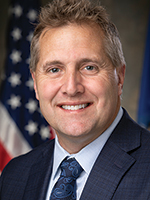
Shannon Zimmerman
Shannon Zimmerman House · District 30
R
Strong +
89% 17
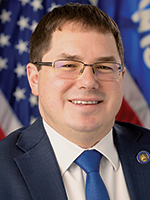
Mark Spreitzer
Mark Spreitzer Senate · District 15
D
Strong +
88% 18
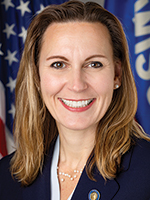
Melissa Ratcliff
Melissa Ratcliff Senate · District 16
D
Strong +
88% 18
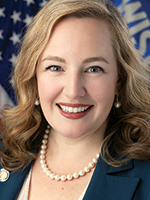
Jodi Habush Sinykin
Jodi Habush Sinykin Senate · District 8
D
Strong +
88% 18
Kelda Roys
Kelda Roys Senate · District 26
D
Strong +
86% 17
Francesca Hong
Francesca Hong House · District 76
D
Strong −
20% 19
Supreme Moore Omokunde
Supreme Moore Omokunde House · District 17
D
Strong −
20% 19
Lori Palmeri
Lori Palmeri House · District 54
D
Strong −
20% 19
Darrin Madison
Darrin Madison House · District 10
D
Strong −
20% 19
Sequanna Taylor
Sequanna Taylor House · District 11
D
Strong −
20% 18
Showing 51–60 of 188 bills

All environment bills

failed · Wisconsin · Senate Mar 23, 2026

SB 874: Relating to: report on environmental impacts to vulnerable communities and granting rule-making authority. (FE)

SB 874 requires environmental impact reports for new or expanded facilities seeking permits in "vulnerable communities" - defined as census areas with at least 50% low-income households (200% of federal poverty level) plus either 40%+ minority residents or 40%+ households with limited English proficiency. Permit applicants must assess cumulative pollution impacts, hold public hearings, and share reports with the public and local officials before permits are issued. The department must consider community input and may deny permits if combined pollution risks pose unreasonable health or environmental harm. This applies to facilities needing permits under environmental codes 283, 285, 289, or 291.
failed · Wisconsin · Assembly Mar 23, 2026

AB 889: Relating to: creating the Wisconsin Climate Corps program, granting rule-making authority, and making an appropriation. (FE)

AB 889 establishes the Wisconsin Climate Corps program to create climate-focused job opportunities for workers aged 16-30, with at least 50% from underserved communities. The program funds projects like restoring natural lands, weatherizing homes for energy efficiency, and building community gardens, administered by a board overseeing contracts with nonprofit managers. Key requirements include paying workers $15/hour, providing housing stipends ($100/week), and gold-level health insurance. Sponsors (local governments, tribes, or nonprofits) must submit annual reports, and completed projects require permanent plaques identifying them as Wisconsin Climate Corps initiatives. The bill appropriates state funds for grants to approved projects under this framework.
failed · Wisconsin · Assembly Mar 23, 2026

AB 888: Relating to: green jobs training program grants, providing an exemption from emergency rule procedures, and making an appropriation.

AB 888 creates a new state-funded program providing $1.5 million annually in grants to public or private organizations for training workers in green jobs. Green jobs are defined as roles in renewable energy (like solar/wind) or environmental services that conserve resources or benefit the environment. Organizations receiving grants must provide matching funds, and the Department of Workforce Development will track outcomes like employment rates and wage changes for participants. The funding comes from the state's workforce development budget and requires annual reporting on program impact.
failed · Wisconsin · Senate Mar 23, 2026

SB 878: Relating to: grants for regional biodigesters, granting rule-making authority, and making an appropriation. (FE)

SB 878 creates a new grant program to fund planning for regional biodigesters, which convert organic waste into renewable energy. It allocates $250,000 annually from the environmental fund for planning grants, specifically for establishing these facilities. The Department of Agriculture would administer the grants and develop rules for the program. This bill directly affects entities seeking to develop regional biodigester infrastructure, providing funding for initial planning stages. The legislation focuses on creating a structured process for grant distribution without specifying recipient eligibility.
failed · Wisconsin · Assembly Mar 23, 2026

AB 830: Relating to: required inclusions in the long-range statewide transportation plan. (FE)

AB 830 requires the state transportation department to include specific goals in its long-range transportation plan, directly affecting how the department develops statewide infrastructure strategies. The bill mandates inclusion of a vision for low-carbon public transit, transportation electrification, cost-effective charging infrastructure, equitable clean transportation incentives, and solutions for underserved rural, low-income, and minority communities. The department must also submit a report within six months detailing progress on these requirements and future plans for implementation. This legislation sets concrete policy standards for sustainable and equitable transportation planning without specifying funding or enforcement mechanisms.
failed · Wisconsin · Senate Mar 23, 2026

SB 856: Relating to: climate change scholarships and making an appropriation. (FE)

SB 856 creates a new $5 million annual scholarship program (biennially) to support Wisconsin students pursuing climate-related education. It directly affects Wisconsin residents enrolled in eligible higher education institutions - such as UW System campuses, technical colleges, tribal colleges, or private nonprofits - who study fields addressing climate change. The program awards up to $5,000 per academic year, with half of scholarships based on merit and half on financial need. Funding comes from the state's Higher Educational Aids Board budget, and students with unresolved child support liens may qualify only if they provide approved payment agreements.
signed · Wisconsin · Senate Mar 20, 2026

SB 825: Relating to: environmental review prerequisites for certain major highway project actions.

SB 825 streamlines environmental review processes for major highway projects by establishing clearer timelines and requirements. It defines "categorical exclusion" (avoiding full environmental reviews for standard projects) and requires the transportation department to submit a report to the commission before construction begins, including proof that financing is secured to start work within 6 years of project approval. The bill directly affects highway projects listed under Section 84.013(3) and those described in Section 84.013(1)(a)2m., requiring project reports to include approved environmental documentation and a financing plan. These changes aim to accelerate project timelines while ensuring compliance with federal environmental review standards.
Sub-Topics Roads & Highways
failed · Wisconsin · Senate Mar 23, 2026

SB 871: Relating to: creating a grant program for farmers who implement certain sustainable practices, granting rule-making authority, and making an appropriation. (FE)

SB 871 creates a $2.5 million grant program to help Wisconsin farmers adopt sustainable practices that reduce fossil fuel use and store carbon. Eligible activities include installing renewable energy systems, planting trees/vegetation to capture carbon, and improving soil health through cover cropping or no-till farming. The program prioritizes projects offering the greatest carbon reduction per dollar, with special focus on small farms and diverse agricultural regions across the state. Grant recipients must allow project monitoring and report on environmental impacts, with funds requiring matching non-state support for maximum climate benefit.
failed · Wisconsin · Assembly Mar 23, 2026

AB 987: Relating to: the purpose statement for the statutory grant of local zoning authority.

AB 987 amends a state statute to update the purpose statement that local governments must follow when creating zoning regulations. The bill adds specific goals including promoting solar/wind energy access, protecting groundwater, encouraging diverse housing types, advancing "complete streets" for all users, and preserving burial sites. These changes require cities to consider these factors when developing zoning rules that affect land use, housing, transportation, and environmental protection. The bill directly impacts local zoning authorities and the communities they serve by shaping how land development is regulated.
failed · Wisconsin · Senate Mar 23, 2026

SB 854: Relating to: county conservation staff for climate change resiliency purposes and making an appropriation. (FE)

SB 854 creates a new funding line to support county conservation staff focused on climate change resiliency. It directly affects counties with approved land and water resource management plans, requiring them to request funding for climate-focused personnel in annual grant applications. The bill adds a specific appropriation of $1.8 million for the 2026-27 fiscal year under statute 20.115(7)(f) for "soil and water management; climate change personnel." This establishes a dedicated funding mechanism for counties to hire or retain staff addressing climate impacts, separate from existing conservation program funding.
Showing 51 to 60 of 188 bills
Previous 1 5 6 7 19 Next