

Issue · Environment
Environment
Every environment bill, vote, and legislator stance in Wisconsin, automatically classified by Maddy, our AI policy reader.
Total bills
170
2025-2026 Regular Session
Top supporter
Shannon Zimmerman
89% support rate
Top opponent
Francesca Hong
20% support rate
Ranked legislators
10
5 support · 5 oppose
Key legislators
Who's moving environment in Wisconsin
| Legislator | Party | Stance | Support rate | Votes |
|---|---|---|---|---|
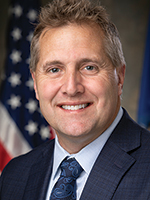
Shannon Zimmerman
House · District 30
|
R |
Strong +
|
89% | 17 |

Mark Spreitzer
Senate · District 15
|
D |
Strong +
|
88% | 18 |

Melissa Ratcliff
Senate · District 16
|
D |
Strong +
|
88% | 18 |

Jodi Habush Sinykin
Senate · District 8
|
D |
Strong +
|
88% | 18 |

Kelda Roys
Senate · District 26
|
D |
Strong +
|
86% | 17 |

Francesca Hong
House · District 76
|
D |
Strong −
|
20% | 19 |
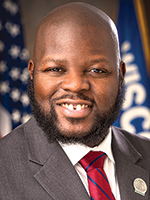
Supreme Moore Omokunde
House · District 17
|
D |
Strong −
|
20% | 19 |

Lori Palmeri
House · District 54
|
D |
Strong −
|
20% | 19 |
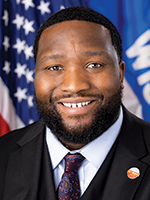
Darrin Madison
House · District 10
|
D |
Strong −
|
20% | 19 |

Sequanna Taylor
House · District 11
|
D |
Strong −
|
20% | 18 |
Showing 131–140 of 170
bills
All environment bills
SJR 107: Relating to: recognizing the inherent rights of nature and Wisconsin’s commitment to environmental stewardship.
Sub-Topics
Conservation
AB 222: Relating to: a sustainable aviation fuel production tax credit. (FE)
Topics
✓ Budget & TaxesSupports Budget & TaxesEstablishes tax credit reducing liability for SAF producers, incentivizing sustainable energy production through fiscal policy.
✓ EnergySupports EnergyEstablishes tax credit for renewable sustainable aviation fuel (SAF) meeting 90% renewable source requirement, directly promoting clean energy production and reducing fossil fuel dependence.
✓ EnvironmentSupports EnvironmentEstablishes $1.50/gal tax credit for SAF meeting 90% renewable source requirement, promoting cleaner aviation fuel and reducing emissions per bill summary.
✓ TransportationSupports TransportationEstablishes tax credit for sustainable aviation fuel (SAF) producers, promoting cleaner aviation transportation infrastructure and aligning with sustainable transportation policies.
AB 552: Relating to: funding for chronic wasting disease research and making an appropriation. (FE)
Topics
✓ Budget & TaxesSupports Budget & TaxesAllocates $3M annually from state general fund for CWD research/management, directly increasing budgetary support for wildlife management programs.
✓ EnvironmentSupports EnvironmentFunds CWD research/management under Natural Resources Dept, directly supporting wildlife conservation and ecosystem health as part of environmental protection efforts.
SB 207: Relating to: creating a hazard mitigation revolving loan program, creating a Great Lakes erosion control revolving loan program, providing an exemption from emergency rule procedures, granting rule-making authority, and making an appropriation. (FE)
Topics
✓ Budget & TaxesSupports Budget & TaxesBill appropriates $5M from environmental fund for revolving loan programs, funding essential infrastructure projects through sustainable fiscal management.
✓ EnvironmentSupports EnvironmentCreates Great Lakes erosion control program funded by environmental fund, directly protecting coastal ecosystems and natural resources through infrastructure financing.
AJR 6: Relating to: recognizing that the Wisconsin State Legislature supports nuclear power and fusion energy as clean energy sources that are critical to safely meeting Wisconsin’s growing energy demands and declaring the legislature’s commitment to the continuation and expansion of nuclear power and nuclear technologies, the development of nuclear technologies and fusion energy, and employing the leadership and resources necessary to support the development of and investment in nuclear power, fusion energy, and related technologies in the state.
Topics
✓ EnergySupports EnergyExplicitly declares legislative support for nuclear/fusion energy as clean sources, cites emission reductions, and commits to advancing these technologies without new laws.
✓ EnvironmentSupports EnvironmentBill explicitly promotes nuclear/fusion as clean energy to reduce emissions (6.4M tons annually), aligning with environmental protection goals through emissions reduction and clean energy advancement.
AB 493: Relating to: authorizing community solar programs and granting rule-making authority. (FE)
Topics
✓ EnergySupports EnergyAuthorizes community solar programs, enabling shared renewable energy access and expanding clean energy infrastructure without restricting renewables or favoring fossil fuels.
✓ EnvironmentSupports EnvironmentAuthorizes community solar programs, promoting clean energy adoption and reducing reliance on fossil fuels through shared renewable infrastructure.
AB 472: Relating to: a nuclear energy generation tax credit; prioritizing nuclear energy resources; approval of certain electric tariffs for very large customers; and authorizing electric utilities to recover certain precertification costs through rates. (FE)
Topics
✓ Budget & TaxesSupports Budget & TaxesCreates $10k/megawatt tax credit for nuclear utilities, reducing their tax liability and incentivizing investment. Directly modifies state tax structure to fund energy sector.
✓ EnergySupports EnergyCreates $10k/megawatt tax credit for nuclear energy, reclassifies nuclear as renewable, and prioritizes nuclear generation to fund infrastructure development.
✓ EnvironmentSupports EnvironmentBill creates tax credit for nuclear energy, a low-carbon electricity source, promoting clean energy generation and reducing emissions per environmental policy indicators.
SB 623: Relating to: issuance of permits for the mining of sulfide ore bodies.
AJR 33: Relating to: declaration of the Economic Justice Bill of Rights.
Topics
✓ EducationSupports EducationBill explicitly declares 'adequately funded public education' as a core right, directly advancing school funding support.
✓ EnvironmentSupports EnvironmentExplicitly includes 'clean environment' as a core right in the Economic Justice Bill of Rights, directly advancing environmental protection as a fundamental entitlement.
✓ HealthcareSupports HealthcareBill explicitly declares 'affordable healthcare' as a right, directly advancing access and cost reduction goals.
✓ HousingSupports HousingDeclares 'safe, affordable housing' as a specific right, directly aligning with tenant protections and affordable housing initiatives per the resolution's stated goals.
✓ Labor & EmploymentSupports Labor & EmploymentExplicitly declares right to living wage and union rights, directly advancing labor protections and workers' economic security per bill summary.