Issue · Environment

Environment

Every environment bill, vote, and legislator stance in Wisconsin, automatically classified by Maddy, our AI policy reader.

Total bills
170
2025-2026 Regular Session
Top supporter
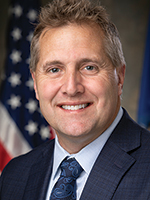
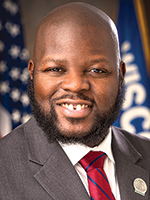
Shannon Zimmerman
89% support rate
Top opponent
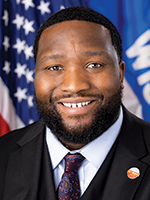
Francesca Hong
20% support rate
Ranked legislators
10
5 support · 5 oppose
Key legislators

Who's moving environment in Wisconsin

Legislators moving environment in Wisconsin
Legislator Party Stance Support rate Votes
Shannon Zimmerman
Shannon Zimmerman House · District 30
R
Strong +
89% 17
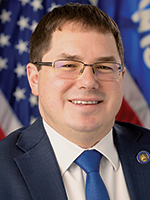
Mark Spreitzer
Mark Spreitzer Senate · District 15
D
Strong +
88% 18
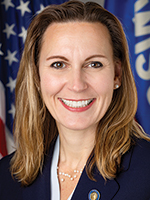
Melissa Ratcliff
Melissa Ratcliff Senate · District 16
D
Strong +
88% 18
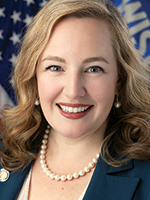
Jodi Habush Sinykin
Jodi Habush Sinykin Senate · District 8
D
Strong +
88% 18
Kelda Roys
Kelda Roys Senate · District 26
D
Strong +
86% 17
Francesca Hong
Francesca Hong House · District 76
D
Strong −
20% 19
Supreme Moore Omokunde
Supreme Moore Omokunde House · District 17
D
Strong −
20% 19
Lori Palmeri
Lori Palmeri House · District 54
D
Strong −
20% 19
Darrin Madison
Darrin Madison House · District 10
D
Strong −
20% 19
Sequanna Taylor
Sequanna Taylor House · District 11
D
Strong −
20% 18
Showing 111–120 of 170 bills

All environment bills

failed · Wisconsin · Senate Jun 1, 2026

SB 297: Relating to: special registration plates to support protecting pollinators and making an appropriation. (FE)

SB 297 creates a special "Protect Pollinators" vehicle registration plate requiring a voluntary $25 annual or $50 biennial fee for vehicle owners who choose it. Excess funds from these fees, after covering plate production costs, are deposited into the conservation fund to support pollinator protection programs. The plate must display "Protect Pollinators" and cover the entire plate, with the design approved by the Department of Natural Resources. This affects only drivers who opt for this specific plate, with no mandatory participation.
Sub-Topics Conservation
failed · Wisconsin · Senate Mar 23, 2026

SB 113: Relating to: a transition to grazing pilot program and making an appropriation. (FE)

SB 113 creates a pilot program to help farmers transition to managed grazing systems, which rotate livestock between pasture sections to reduce soil erosion and improve forage quality. It directly affects farmers adopting new managed grazing systems or improving existing ones, excluding support for current practices. The program provides grants covering infrastructure (fencing, water systems), technical assistance from specialists, and incentive payments for the first three years of transition, with a $40,000 annual cap per farmer. Funded by $500,000 annually from the environmental fund, grants are paid as 75% in year one and 12.5% each subsequent year. The bill also defines "marginal areas" (land unsuitable for crops like floodplains) as eligible for supplemental feed development.
failed · Wisconsin · Senate Mar 23, 2026

SB 265: Relating to: waiver of fees for admission to state parks on Earth Day. (FE)

SB 265 requires Wisconsin state parks to waive all daily admission fees and related charges on April 22 each year to honor Earth Day and its founder, Gaylord Nelson. This policy change directly affects all visitors to state parks on April 22, eliminating the cost of entry for that specific day. The bill creates a new statutory provision (27.01(9)(b)) that automatically applies the fee waiver without requiring additional action. The change affects the Department of Natural Resources, which must implement the waiver for all state parks under its management.
Sub-Topics Parks & Recreation
signed · Wisconsin · Senate Dec 10, 2025

SB 158: Relating to: county forest administration grant eligibility.

SB 158 updates Wisconsin's rules for county forest administration grants by setting new qualifications for the county forest administrator position. It requires applicants to have either a forestry degree from an accredited program, a related degree with 3+ years managing county forests, or an associate forestry degree with 3+ years of experience. The bill allows counties to use grants covering up to 50% of the administrator's salary and 40% of their benefits (capped at 40% of salary). This applies to all grant applications submitted on or after January 1, 2025, directly affecting counties seeking funding for forest management programs.
Sub-Topics Forestry
failed · Wisconsin · Assembly Mar 23, 2026

AB 181: Relating to: county forest administration grant eligibility.

AB 181 modifies grant eligibility for county forest programs by allowing counties to receive funding for one professional forester in a county forest administrator or assistant role. The bill specifies that grants cover up to 50% of the forester’s salary and up to 40% of fringe benefits (capped at 40% of salary), using funds from a designated appropriation. It defines a qualifying "county forest administrator" as someone with a forestry degree (or equivalent), natural resources degree with 3+ years’ experience, or an associate degree in forestry with 3+ years’ experience managing county forests - excluding department employees. The changes apply retroactively to grant applications submitted on or after the bill’s effective date (January 1, 2025). This bill directly affects counties managing forest programs seeking state funding for their designated forest administration staff.
Sub-Topics Forestry
failed · Wisconsin · Senate Mar 23, 2026

SB 250: Relating to: prohibiting abandonment of a boat and providing a penalty.

SB 250 prohibits abandoning boats on state waters or adjacent land without the owner's consent. It defines abandonment as leaving a boat unattended over 7 days without intent to return, or neglecting a boat that becomes a navigation, safety, or environmental hazard. Boat owners must remove abandoned vessels within 30 days of a written notice from authorities, or face immediate removal and liability for costs. Violators risk fines up to $10,000, up to 9 months in jail, or mandatory completion of a boating safety course. The bill directly affects boat owners and state agencies responsible for enforcement.
signed · Wisconsin · Assembly Apr 2, 2026

AB 453: Relating to: required approvals of rezoning requests related to residential development, contents of and consistency of local ordinances with local comprehensive plans, certain tax incremental district project costs related to residential development, and tax incremental district lifespan extension. (FE)

AB 453 requires counties and cities to include specific elements in their comprehensive land-use plans, such as 20-year projections of residential development (in 5-year increments) and maps showing current/future land uses, including environmentally sensitive areas. It mandates that local ordinances related to residential development must align with these plans, though density requirements (specifying minimum/maximum residential units per acre) apply only to cities, not towns or counties. The bill affects local governments by standardizing planning processes for residential growth and ensuring consistency between zoning rules and long-term land-use goals. It does not create new taxes or funding but updates existing planning statute requirements.
failed · Wisconsin · Assembly Mar 23, 2026

AB 209: Relating to: creating a hazard mitigation revolving loan program, creating a Great Lakes erosion control revolving loan program, providing an exemption from emergency rule procedures, granting rule-making authority, and making an appropriation. (FE)

AB 209 creates two revolving loan programs: one for Great Lakes shoreline erosion control and another for hazard mitigation projects. It directly affects municipalities and homeowners threatened by erosion along Lake Michigan or Lake Superior, as well as local governments seeking funds for hazard mitigation. The bill establishes a $5 million appropriation from the environmental fund for the Great Lakes program and a separate hazard mitigation revolving loan fund using federal funds, state transfers, and loan repayments. All repaid loan principal and interest are recycled into the programs, creating a self-sustaining funding mechanism.
failed · Wisconsin · Assembly Mar 23, 2026

AB 435: Relating to: the Warren Knowles-Gaylord Nelson stewardship 2000 program and making an appropriation. (FE)

AB 435 restructures funding and governance for Wisconsin's Warren Knowles-Gaylord Nelson Stewardship 2000 conservation program. It establishes a new Knowles-Nelson Stewardship Board with specific member appointments (including assembly/senate representatives, environmental groups, tribal representatives, and outdoor recreation stakeholders) and creates two new grant programs: one for nonprofit conservation organizations ($5 million annually) and a tribal co-management program ($3 million annually). The bill also adjusts debt limits for the program and modifies how funds are allocated from the capital improvement fund to support state parks, local recreation, and boating facilities. This directly affects conservation organizations, tribal governments, local municipalities, and outdoor recreation businesses receiving program funding.
failed · Wisconsin · Senate Apr 6, 2026

SB 128: Relating to: programs and requirements to address PFAS.

SB 128 establishes a Municipal PFAS Grant Program to help communities test for and address PFAS ("forever chemicals") in drinking water systems. It allows water utilities to use service funds to cover up to half the cost of source reduction measures (like filtration) if cheaper than endpoint treatment, and creates an exception for utilities acting quickly on unexpected PFAS contamination (without penalties if they notify regulators within 30 days and costs stay under $2 million). The bill prioritizes projects addressing serious health risks and extends grant eligibility to disadvantaged communities affected by water contamination, regardless of their existing service area status. It also creates a referral system connecting PFAS contamination claims to the existing Innocent Landowner Grant Program.
Showing 111 to 120 of 170 bills
Previous 1 11 12 13 17 Next