Issue · Criminal Justice

Criminal Justice (Corrections)

Every criminal justice bill, vote, and legislator stance in Wisconsin, automatically classified by Maddy, our AI policy reader.

Total bills
10
2025-2026 Regular Session
Top supporter
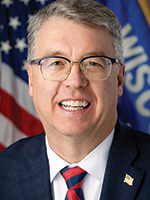
Brad Pfaff
100% support rate
Top opponent
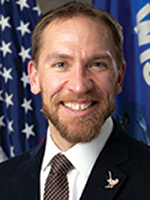
Steve Doyle
0% support rate
Ranked legislators
10
5 support · 5 oppose
Key legislators

Who's moving corrections in Wisconsin

Legislators moving corrections in Wisconsin
Legislator Party Stance Support rate Votes
Brad Pfaff
Brad Pfaff Senate · District 32
D
Strong +
100% 4
Bob Wirch
Bob Wirch Senate · District 22
D
Support
75% 4
Chris Larson
Chris Larson Senate · District 7
D
Support
75% 4
Dianne Hesselbein
Dianne Hesselbein Senate · District 27
D
Support
75% 4
Dora Drake
Dora Drake Senate · District 4
D
Support
75% 4
Steve Doyle
Steve Doyle House · District 94
D
Strong −
0% 6
Paul Tittl
Paul Tittl House · District 25
R
Strong −
0% 3
Jill Billings
Jill Billings House · District 95
D
Strong −
17% 6
Jodi Emerson
Jodi Emerson House · District 91
D
Strong −
17% 6
AJ
André Jacque Senate · District 1
R
Oppose
25% 4
Showing 10 of 10 bills

All criminal justice bills

failed · Wisconsin · Senate Mar 23, 2026

SB 1018: Relating to: penalty for the terrorist crimes against the occupants of a church and providing a penalty.

SB 1018 creates a mandatory one-year prison sentence for anyone convicted of a felony committed with the intent to terrorize, intimidate, or coerce two or more people inside a church. It prohibits probation for these offenses and requires courts to obtain a special verdict confirming the intent to terrorize church occupants. Prosecutors cannot dismiss or amend related charges without court approval, and deferred prosecution programs are banned for such cases. This law directly affects defendants charged with church-targeted violent crimes, prosecutors handling these cases, and courts overseeing sentencing.
failed · Wisconsin · Assembly Mar 23, 2026

AB 1039: Relating to: penalty for the terrorist crimes against the occupants of a church and providing a penalty.

This bill increases penalties for individuals convicted of felony crimes targeting church occupants with intent to terrorize or intimidate them. It mandates a minimum one-year prison sentence (with no probation allowed) for such offenses and requires prosecutors to seek court approval before dismissing or amending charges. Additionally, it prohibits deferred prosecution programs for these cases and directs courts to verify the specific intent element during trials. The law applies to any felony where the defendant intended to terrorize two or more people inside a church.
signed · Wisconsin · Senate Apr 9, 2026

SB 782: Relating to: intentionally sending false text messages to 911 and providing a penalty.

SB 782 amends Wisconsin statute 256.35(10)(a) to penalize intentionally sending false text messages to 911 reporting a non-existent emergency. It imposes fines of $100-$600 or up to 90 days in jail for a first offense, and classifies subsequent offenses within four years as a Class H felony. The law directly affects individuals who deliberately mislead emergency services via text, such as falsely reporting crimes or medical crises. Key provisions clarify that the penalty applies specifically when the sender knows the reported emergency is fabricated. This bill creates concrete legal consequences for misuse of 911 text services, aiming to deter non-emergency false reports.
Sub-Topics Corrections
failed · Wisconsin · Assembly Mar 23, 2026

AB 791: Relating to: intentionally sending false text messages to 911 and providing a penalty.

AB 791 makes it illegal to intentionally send false text messages to 911 reporting a non-existent emergency. It directly affects individuals who send such deceptive messages, imposing fines ($100-$600) or up to 90 days in jail for a first offense. For repeat offenses within four years, the penalty escalates to a Class H felony charge. The bill targets misuse of emergency services by adding specific penalties for text-based false reports, which previously lacked clear legal consequences. This law aims to deter non-emergency text spam that wastes critical resources.
Sub-Topics Corrections Tags Public Safety
failed · Wisconsin · Senate Mar 23, 2026

SB 93: Relating to: recommendation to revoke extended supervision, parole, or probation if a person is charged with a crime. (FE)

SB 93 requires state departments to recommend revoking extended supervision, parole, or probation when a person under those programs is charged with a crime. It directly affects individuals supervised by the department after release from incarceration. The bill mandates this recommendation as a standard step in the process, without altering the existing revocation procedures or hearing requirements. The change applies to criminal charges filed on or after the bill's effective date.
failed · Wisconsin · Assembly Mar 23, 2026

AB 624: Relating to: increasing the maximum penalty for certain controlled substances offenses if the violation occurs near a homeless shelter and providing a penalty.

AB 624 increases penalties for distributing methamphetamine or similar drugs near homeless shelters. If someone distributes these substances within 1,000 feet of a homeless shelter (and knows or should know the location), the maximum prison sentence for that offense rises by 5 years. The bill defines "near a homeless shelter" as being on or within 1,000 feet of the shelter premises, including when the shelter is readily recognizable. This directly affects individuals convicted of drug distribution offenses in these specific locations. The policy change modifies existing sentencing rules without altering the core definition of drug offenses.
signed · Wisconsin · Assembly Dec 10, 2025

AB 265: Relating to: human trafficking and trafficking of a child and providing a penalty.

AB 265 strengthens Wisconsin's penalties for human trafficking by requiring minimum prison terms: 15 years for child trafficking and 10 years for general human trafficking convictions. It creates new felony charges for individuals who profit from trafficking (Class D C felony) or receive compensation from commercial sex acts or debt bondage (Class F E felony). The bill directly affects convicted traffickers, their financial beneficiaries, and those who facilitate trafficking through recruitment or harboring of children for commercial sex. These sentencing changes apply to offenses committed after the bill's effective date.
vetoed · Wisconsin · Senate May 13, 2026

SB 610: Relating to: increasing the maximum penalty for certain controlled substances offenses if the violation occurs near a homeless shelter and providing a penalty.

SB 610 increases the maximum prison sentence for distributing methamphetamine or similar drugs near homeless shelters. If someone distributes these drugs within 1,000 feet of a homeless shelter - knowing or reasonably aware the shelter is nearby - their maximum prison term rises by 5 years. The bill specifically targets violations of drug distribution laws (Section 961.65) occurring in these proximity circumstances. This policy change directly affects individuals convicted of such drug distribution offenses near shelters, without altering existing penalties for other drug offenses.
vetoed · Wisconsin · Assembly May 13, 2026

AB 85: Relating to: recommendation to revoke extended supervision, parole, or probation if a person is charged with a crime. (FE)

AB 85 requires Wisconsin's Department of Corrections to recommend revoking parole, probation, or extended supervision whenever a person under supervision is charged with a new crime. This applies directly to individuals on community supervision who face new criminal charges. The bill mandates that the department submit this recommendation to the appropriate administrative body, triggering a hearing process unless the person waives it. The law changes existing statutes to make this recommendation automatic upon a new charge, without requiring proof of violation first.
failed · Wisconsin · Assembly Mar 23, 2026

AB 259: Relating to: criminal trespass at a campground and providing a penalty. (FE)

AB 259 creates a new misdemeanor offense for entering or remaining on a campground without permission from the operator. It directly affects visitors who enter or stay on licensed campground property without consent. The law allows campground operators to issue written requests for individuals to leave, and failing to comply results in fines up to $100 or up to 30 days in jail. This bill specifically applies to campgrounds and camping resorts licensed under state law, clarifying that standard trespass laws do not cover campground occupants or guests.
Sub-Topics Corrections