Issue · Criminal Justice

Criminal Justice

Every criminal justice bill, vote, and legislator stance in Wisconsin, automatically classified by Maddy, our AI policy reader.

Total bills
39
2025-2026 Regular Session
Top supporter
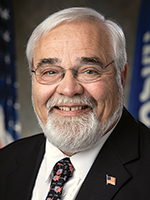
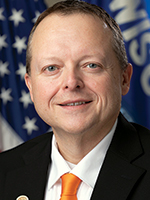
Jeff Mursau
70% support rate
Top opponent
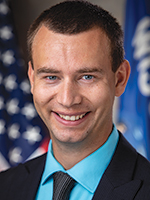
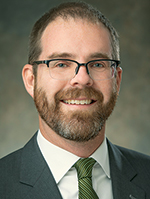
Ryan Clancy
32% support rate
Ranked legislators
10
5 support · 5 oppose
Key legislators

Who's moving criminal justice in Wisconsin

Legislators moving criminal justice in Wisconsin
Legislator Party Stance Support rate Votes
Jeff Mursau
Jeff Mursau House · District 36
R
Support
70% 54
Will Penterman
Will Penterman House · District 38
R
Support
67% 48
Brad Pfaff
Brad Pfaff Senate · District 32
D
Support
64% 36
Eric Wimberger
Eric Wimberger Senate · District 2
R
Support
64% 36
Scott Krug
Scott Krug House · District 72
R
Support
64% 58
Ryan Clancy
Ryan Clancy House · District 19
D
Oppose
32% 53
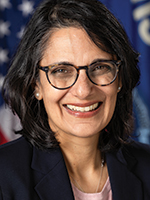
Renuka Mayadev
Renuka Mayadev House · District 77
D
Oppose
32% 58
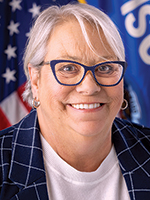
Christine Sinicki
Christine Sinicki House · District 20
D
Oppose
32% 58
Alex Joers
Alex Joers House · District 81
D
Oppose
32% 58
Christian Phelps
Christian Phelps House · District 93
D
Oppose
33% 57
Showing 21–30 of 39 bills

All criminal justice bills

signed · Wisconsin · Assembly Dec 10, 2025

AB 265: Relating to: human trafficking and trafficking of a child and providing a penalty.

AB 265 strengthens Wisconsin's penalties for human trafficking by requiring minimum prison terms: 15 years for child trafficking and 10 years for general human trafficking convictions. It creates new felony charges for individuals who profit from trafficking (Class D C felony) or receive compensation from commercial sex acts or debt bondage (Class F E felony). The bill directly affects convicted traffickers, their financial beneficiaries, and those who facilitate trafficking through recruitment or harboring of children for commercial sex. These sentencing changes apply to offenses committed after the bill's effective date.
signed · Wisconsin · Assembly Apr 2, 2026

AB 19: Relating to: increased penalties for crimes against adults at risk; restraining orders for adults at risk; freezing assets of a defendant charged with financial exploitation of an adult at risk; sexual assault of an adult at risk; and providing a penalty.

AB 19 increases penalties for crimes against elders (60+ years) and adults at risk (a defined term under state law) by raising felony classifications for physical abuse and sexual assault. It requires courts to allow these victims to participate in hearings via phone or video, and allows asset freezes for defendants charged with financial exploitation of such victims. Crucially, the bill states that defendants cannot claim ignorance of the victim’s age or status as a defense. The bill directly affects vulnerable adults, courts handling related cases, and defendants facing charges under these provisions. It amends multiple statutes to implement these changes without creating new offenses.
Sub-Topics Violent Crime
vetoed · Wisconsin · Senate May 13, 2026

SB 610: Relating to: increasing the maximum penalty for certain controlled substances offenses if the violation occurs near a homeless shelter and providing a penalty.

SB 610 increases the maximum prison sentence for distributing methamphetamine or similar drugs near homeless shelters. If someone distributes these drugs within 1,000 feet of a homeless shelter - knowing or reasonably aware the shelter is nearby - their maximum prison term rises by 5 years. The bill specifically targets violations of drug distribution laws (Section 961.65) occurring in these proximity circumstances. This policy change directly affects individuals convicted of such drug distribution offenses near shelters, without altering existing penalties for other drug offenses.
signed · Wisconsin · Assembly Apr 3, 2026

AB 86: Relating to: imposing the penalty of life imprisonment for the crime of child trafficking and providing a penalty. (FE)

AB 86 amends Wisconsin law to impose a life sentence without parole for individuals convicted of child trafficking involving three or more child victims. It specifically upgrades penalties under statutes 948.051(1)(b) and 948.051(2)(b), defining child trafficking as recruiting, transporting, or exploiting children for commercial sex acts. The bill requires courts to sentence offenders to life imprisonment without parole eligibility when three or more child victims are involved, affecting both traffickers and those who benefit from such crimes. This change applies to offenses committed on or after the bill’s effective date.
failed · Wisconsin · Assembly Mar 23, 2026

AB 124: Relating to: prohibiting persons who have been convicted of a violent crime from changing their name and providing a penalty.

AB 124 prohibits individuals convicted of a violent crime from changing their name, with violations punishable as a Class H felony. The bill amends existing state laws to explicitly block all name change requests - whether through court orders or vital records updates - for people with such convictions. This applies to all name change processes, including those for birth records, marriage records, or court-ordered changes. The law does not affect name changes for individuals without violent crime convictions.
Sub-Topics Courts Violent Crime
vetoed · Wisconsin · Assembly May 13, 2026

AB 85: Relating to: recommendation to revoke extended supervision, parole, or probation if a person is charged with a crime. (FE)

AB 85 requires Wisconsin's Department of Corrections to recommend revoking parole, probation, or extended supervision whenever a person under supervision is charged with a new crime. This applies directly to individuals on community supervision who face new criminal charges. The bill mandates that the department submit this recommendation to the appropriate administrative body, triggering a hearing process unless the person waives it. The law changes existing statutes to make this recommendation automatic upon a new charge, without requiring proof of violation first.
failed · Wisconsin · Senate Mar 23, 2026

SB 77: Relating to: entering certain places with intent to commit battery and providing a penalty.

SB 77 amends Wisconsin statute 943.10(1m) to criminalize intentionally entering a place without consent when intending to commit theft or specific battery-related offenses (under statutes 940.19 or 940.195). It classifies this as a Class F felony, directly affecting individuals who enter premises unlawfully with such criminal intent. The key provision raises the penalty for these specific acts by defining them as a felony rather than a lesser offense. This change applies to locations like homes, businesses, or vehicles where entry occurs without permission for the purpose of committing theft or battery. The bill focuses solely on the legal penalty structure, not broader policy impacts.
failed · Wisconsin · Senate Mar 23, 2026

SB 95: Relating to: restitution orders following a conviction for human trafficking and restoration of the right to vote to a person barred from voting as a result of a felony conviction. (FE)

SB 95 changes voting rights restoration rules for people with felony convictions by requiring full payment of all financial obligations - including restitution, fines, costs, and fees - before voting rights are restored. For human trafficking convictions (specifically under sections 940.302(2) or 948.051), courts must order immediate restitution payments, with enforcement options like property execution if unpaid. This affects individuals barred from voting due to felony convictions who have completed sentences but still owe financial penalties. The bill updates two statutes to ensure voting rights restoration is tied directly to resolving all court-ordered financial responsibilities.
failed · Wisconsin · Assembly Mar 23, 2026

AB 229: Relating to: the law enforcement officers’ bill of rights.

AB 229 repeals Section 164.05 of the statutes, which previously outlined specific protections for law enforcement officers under the "law enforcement officers’ bill of rights." This procedural bill directly affects law enforcement officers by removing an existing statutory provision governing their rights. The bill contains no new provisions or mechanisms - its sole action is the repeal of the referenced section. No additional policy changes or impacts are specified in the bill text.
Sub-Topics Law Enforcement
failed · Wisconsin · Senate Mar 23, 2026

SB 57: Relating to: county sheriff assistance with certain federal immigration functions. (FE)

SB 57 reclassifies certain actions by county sheriffs who assist federal immigration authorities as a felony instead of a misdemeanor. It directly affects county sheriffs who provide support for federal immigration enforcement activities. The key provision changes the legal penalty for sheriffs participating in specific immigration-related functions, increasing the potential punishment. This bill modifies existing law to impose stricter criminal penalties for sheriffs engaging in these activities.
Showing 21 to 30 of 39 bills
Previous 1 2 3 4 Next