Maddy summaryHB 5519, the "West Virginia Tax Neutrality Act," would modify West Virginia's tax code to exclude capital gains from the sale of investment metal bullion and coins from state taxable income. It directly affects individuals, corporations, and fiduciaries who sell these specific investments. The bill requires taxpayers to subtract net capital gains from such sales (as defined in existing law) from their federal adjusted gross income when calculating their West Virginia state tax liability. This change aims to align West Virginia's treatment of these investments with federal tax rules, though the bill is still in early stages (introduced February 13, 2026, referred to House Finance).
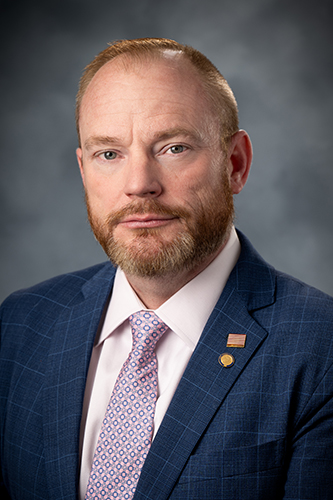
Rep. Chris Anders
Sponsored bills
Maddy summaryHB 5397 would exempt the sale of firearm suppressors from West Virginia's consumer sales and service tax. This bill directly affects individuals purchasing suppressors, which are devices designed to reduce the sound of a firearm discharge. The key provision amends the tax code to specifically exclude suppressor sales from taxable transactions, aligning them with existing exemptions for small arms and ammunition. The bill does not change ownership laws or safety requirements for suppressors, only the tax treatment of their purchase.
Maddy summaryHB 5058 requires restaurants in West Virginia to clearly label any menu item containing or made from "analogue products," "cell-cultured products," or "food products" (as defined in state law) with specific terms. This directly affects restaurants serving lab-grown or lab-made food alternatives, such as cultivated meat or plant-based substitutes. The key provision mandates that these labels appear prominently on all menus to inform consumers about the product type before purchase. The bill aims to ensure transparency for dining choices without specifying how restaurants must implement the labeling. It does not change food safety standards or restrict the sale of these products.
Maddy summaryHB 5328 clarifies how bars, taverns, and restaurants are regulated by defining them based on actual business operations - like primary revenue source (food vs. alcohol sales) - not just menu offerings. It prohibits classifying establishments as restaurants solely for serving limited food and sets specific wastewater standards by business type (e.g., bars cannot be held to full-service restaurant wastewater rules unless food sales exceed 50% of revenue). The bill also requires professional engineers, not health departments, to oversee septic system design and performance, ensuring standards reflect technology differences. These changes aim to reduce regulatory confusion for businesses while aligning with nationally recognized engineering practices.
Maddy summaryHB 5352 would amend West Virginia law to prohibit the governor from deploying the West Virginia National Guard into overseas combat without a formal declaration of war by the U.S. Congress. The bill specifically requires a Congressional declaration for any combat deployment abroad, while allowing the governor to deploy the National Guard within the United States. This provision would be added to the state code governing the National Guard, making it a legal requirement for the governor to seek such a declaration before authorizing overseas combat missions. The bill directly affects the governor's authority over state National Guard deployments and aligns with the U.S. Constitution's requirement for Congress to declare war.
Maddy summaryHB 5374 prohibits telemarketers from using auto-dialing systems (robo-calls) to make unsolicited sales calls for Medicare benefits, auto insurance, warranties, or charitable donations in West Virginia. The bill directly affects consumers who receive these unwanted calls and telemarketers who currently make such solicitations. It bans all phone calls using auto-dialing technology to sell insurance-related products, warranties, or solicit donations for charities. The law would apply to all locations, including workplaces, and aims to reduce nuisance calls without exempting political or non-commercial communications. The bill is currently in the House Judiciary Committee after being introduced on February 9, 2026.
Maddy summaryHB 5208 establishes the "Child Protective Services Due Process and Child Protection Act" in West Virginia, directly affecting parents and children involved in child abuse and neglect cases investigated by Child Protective Services (CPS). The bill requires all CPS testimony to be sworn under oath, prohibits removing children without a court order (except for immediate physical danger), and mandates higher evidence standards: probable cause for emergency removals, clear and convincing evidence for custody decisions, and proof beyond a reasonable doubt for termination of parental rights. It also bans poverty-based removals, guarantees parents legal counsel upon any removal, and requires CPS to provide quarterly public reports on their activities. The law takes effect July 1, 2027.
Maddy summaryHR 9 is a ceremonial resolution honoring the late West Virginia House Delegate Douglas John Skaff Jr. It expresses the House of Delegates' condolences to his family and commemorates his service, including his roles as a delegate representing multiple districts and as Minority Leader. The resolution has no policy impact - it is purely symbolic, acknowledging his career in public service, business, and community leadership. It was unanimously adopted by the House on February 5, 2026, the same day it was introduced.
Maddy summaryHB 5170 allows individuals to openly carry firearms on West Virginia Capitol grounds and inside the Capitol building, removing previous restrictions. It permits open carry in most areas but prohibits it in the Governor’s office and specific Supreme Court chambers (third/fourth floors of the East wing). The bill also maintains existing rules against carrying pepper spray over one ounce and defacing Capitol property. This directly affects lawful firearm owners seeking to carry openly while visiting the Capitol complex.
Maddy summaryHB 5113 requires healthcare providers in West Virginia to ask patients in advance if they consent to being treated by a medical resident (a doctor in training) or having a resident observe a procedure during routine appointments. If a patient declines, the appointment must be rescheduled with a licensed physician instead, applying only to non-emergency situations. This bill directly affects patients seeking routine care and healthcare facilities, ensuring they can choose their primary provider. Emergency or urgent care is exempt from this requirement, as stated in the bill's provisions.