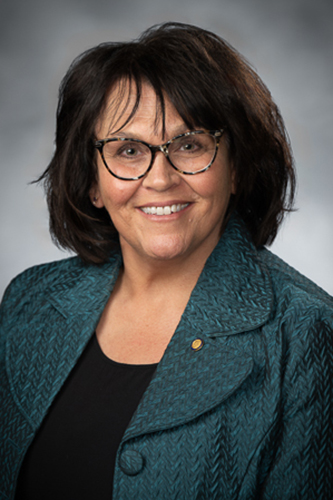
Photo of Lori Dittman
R West Virginia House · District 63 On the 2026 ballot

Rep. Lori Dittman

Compare
Total votes
2,380
all sessions
Attendance
99%
31 missed
Near the chamber average
With party
96%
of cast votes
Near the chamber average
Bipartisan score
2%
crosses aisle rarely
Near the chamber average
Sponsored
300
bills & resolutions
Higher than 77% of chamber peers
Committees
6
assignments
300 bills and resolutions

Sponsored bills

Total
300
Primary
24
Co-sponsor
276
This page
300
matching current filters
Co-sponsor HCR 33
In committee · West Virginia House · Co-sponsor
Requesting the Joint Committee on Government and Finance to study women’s collegiate sports programs in West Virginia

Maddy summaryThis bill requests the Joint Committee on Government and Finance to study women's collegiate sports programs in West Virginia, focusing on financial sustainability, name image and likeness impacts, and Title IX obligations. The study will examine current funding levels, endowment feasibility, revenue-sharing models, and operational efficiency methods to support female student-athletes. The committee must submit a report by January 1, 2027, to state officials with findings, conclusions, and potential legislative recommendations. Funding for the study will come from existing legislative appropriations to the committee.

In committee Mar 14, 2026 1 co-sponsor
Co-sponsor HB 4588
Failed · West Virginia House · Co-sponsor
Relating to participating in the federal tax credit scholarship program

Maddy summaryHB 4588 requires West Virginia's State Treasurer to participate in a federal tax credit program that allows individuals to receive tax credits for contributions to scholarship organizations. The bill mandates the Treasurer to annually identify and publish a list of qualified nonprofit scholarship organizations and eligible schools meeting federal and state requirements. Eligible schools must comply with West Virginia education laws, and students must be eligible for public school enrollment under federal criteria. Scholarship funds can cover elementary and secondary education expenses as defined by federal law, with the Treasurer accepting applications year-round for organization inclusion.

Failed Mar 14, 2026 1 co-sponsor
Co-sponsor HB 4793
Failed · West Virginia House · Co-sponsor
Creating the Barber Apprentice Program

Maddy summaryHB 4793 would lower the minimum age for barber and cosmetology apprentices in West Virginia from 16 to 14 years old. Apprentices must work under direct supervision of a licensed professional and meet requirements like being enrolled in school or having a high school credential. Sponsors (licensed professionals who supervise apprentices) must have at least five years of experience in a shop. This change adjusts the existing apprenticeship program to permit younger participants while maintaining oversight and safety standards.

Failed Mar 14, 2026 1 co-sponsor
Primary HB 4573
Failed · West Virginia House · Lead sponsor
Foster Youth Post-Secondary Transition Awareness Act

Maddy summaryHB 4573 requires West Virginia high schools to provide foster youth (current or former foster care) with information about post-secondary education, job training, housing, healthcare, and independent-living support before graduation. The bill mandates school counselors and graduation coaches receive training on these resources and directs the state Department of Education to create and maintain a Foster Youth Resource Guide. County school districts must ensure eligible students receive this pre-graduation information. The law aims to improve transition planning for foster youth entering adulthood, without requiring disclosure of a student’s foster care status.

Failed Mar 14, 2026 0 co-sponsors
Co-sponsor HB 5687
Passed · West Virginia House · Co-sponsor
Relating to reducing the tax rate imposed on the gross value of metallurgical coal produced in this state

Maddy summaryThis bill reduces the severance tax rate on metallurgical coal produced in West Virginia, affecting coal mining companies that extract this type of coal. The new rates will take effect in stages starting July 1, 2026, lowering the tax from 5% to 4.5% for the first year, then to 4% the following year, and finally to 3.5% beginning July 1, 2028. Metallurgical coal is defined as coal used for making steel and other metals, distinct from thermal coal used for electricity generation. The tax reduction applies to the gross value of coal produced and includes additional local taxes that are normally part of the total severance tax.

Passed Mar 13, 2026 1 co-sponsor
Co-sponsor HJR 42
Passed · West Virginia House · Co-sponsor
Homestead exemption

Maddy summaryThis bill proposes a constitutional amendment to increase the homestead property tax exemption in West Virginia from $20,000 to $50,000. It directly affects homeowners and mobile home owners who are at least 65 years old or permanently disabled, as well as younger homeowners who would receive a phased-in exemption starting at a lower value. The amendment would allow the state legislature to set specific rules for how the exemption applies, including a five-year phase-in period for properties appraised before the law takes effect. Additionally, the bill grants the legislature authority to provide property tax relief to tenants of residential or farm property. The measure requires approval by voters at the 2026 general election to become part of the state constitution.

Passed Mar 13, 2026 1 co-sponsor
Co-sponsor HB 5162
Passed · West Virginia House · Co-sponsor
Relating to the sales of tax liens

Maddy summaryThis bill (HB 5162) amends West Virginia law governing tax lien sales. It requires sheriffs to suspend sales when property is already sold, liens are unredeemed, tax amounts are incorrect, or property is tax-exempt. County commissions gain authority to decide whether a suspended lien should be sold (removing it if not) or included in the next sale. The bill also clarifies that tax deeds acquired by government entities (like states, counties, or municipalities) for tax-exempt properties extinguish all prior tax liens and prevent future ad valorem taxation on that property. This directly affects sheriffs, county governments, and owners of tax-exempt properties.

Passed Mar 12, 2026 1 co-sponsor
Co-sponsor HB 4656
Passed · West Virginia House · Co-sponsor
Relating to chronic absenteeism

Maddy summaryHB 4656 modifies West Virginia's school attendance laws by ending the compulsory attendance requirement at age 18 (previously 17), meaning 18-year-olds no longer face penalties for chronic absenteeism. It replaces "truancy" with "chronic absenteeism," removes criminal penalties for 18-year-olds, and requires schools to notify them directly about unexcused absences - same as parents. The bill establishes new referral pathways to human services for wrap-around support, shifts handling of chronic absenteeism to juvenile welfare (not criminal) proceedings, and defines key terms like "student support specialist." It directly affects students aged 17-18, school staff, and county human services departments.

Passed Mar 11, 2026 1 co-sponsor
Co-sponsor HCR 29
In committee · West Virginia House · Co-sponsor
Requesting Joint Committee study the feasibility of establishing a flexible, short-duration, on-demand respite care program for seniors and caregivers

Maddy summaryThis bill asks a state committee to study whether West Virginia should create a flexible respite care program for seniors and their caregivers. The proposed program would allow families to schedule short-term, on-demand assistance for specific needs like medical appointments or personal obligations, rather than being limited to fixed weekly service blocks. The study will examine costs, potential savings from delaying nursing home placement, and how to fund and manage the program, especially in rural areas with fewer resources. If the committee finds the idea feasible, it will recommend new legislation to establish the program.

In committee Mar 5, 2026 1 co-sponsor
Co-sponsor HB 5587
Passed · West Virginia House · Co-sponsor
To authorize cameras in school buses to send red light violators footage directly to the applicable law enforcement agency for ticketing and enforcement

Maddy summaryHB 5587 requires school buses to have cameras that automatically send footage of drivers illegally passing stopped buses directly to law enforcement for ticketing. It applies to drivers who violate school bus stop laws (e.g., passing when flashing lights are active), which currently carry fines and license suspensions. The bill adds a new enforcement mechanism: camera footage is transmitted directly to police without manual reporting, streamlining the process for issuing citations. This directly affects drivers who fail to stop for school buses, with penalties ranging from $500 fines for first offenses to jail time for repeat or severe violations causing injury or death.

Passed Mar 5, 2026 1 co-sponsor
Showing 11 to 20 of 300 bills