Maddy summaryHB 5685 authorizes up to $150 million in bonds to fund improvements at the West Virginia Science and Culture Center and other state historical sites acquired for preserving West Virginia history. The bill creates a dedicated "Cultural Center Improvements Revenue Debt Service Fund" to be financed annually by $12 million from the State Excess Lottery Revenue Fund (starting fiscal year 2026), with bonds maturing within 20 years. The Economic Development Authority must issue these bonds to cover capital improvements, and the fund will prioritize debt service payments. This directly affects the Science and Culture Center, other historical sites, and taxpayers through lottery revenue allocations.
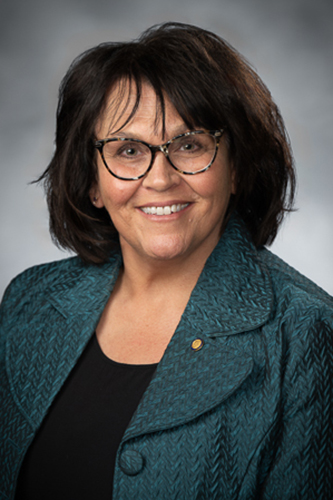
Rep. Lori Dittman
Sponsored bills
Maddy summaryHB 4395 requires school boards to continue investigations into allegations that school personnel harmed student safety or welfare, even if the employee resigns or transfers to another school. It mandates that investigations must be completed regardless of the employee's employment status, and county superintendents must report all such cases - including reasons for suspension - to the state superintendent within seven business days. The state superintendent will maintain a confidential database of all investigated personnel, including the basis for investigations or disciplinary actions. This bill directly affects school personnel, school boards, and county superintendents by ensuring ongoing accountability for potential child safety violations.
Maddy summaryHB 5087 establishes the Interstate Cosmetology Licensure Compact, allowing cosmetologists licensed in West Virginia to practice in other participating states with a single multistate license. It creates the Interstate Cosmetology Licensure Compact Commission to administer the agreement and requires applicants for interstate practice to undergo state and national criminal history checks. The bill directly affects cosmetologists seeking to work across state lines, particularly military members and their spouses, by reducing licensing barriers. Key provisions include standardized background checks, enforcement by the West Virginia Board of Barbers and Cosmetologists, and mechanisms for states to share disciplinary information to protect public safety.
Maddy summaryHB 5101, the Joanna Phillips Domestic Violence Prevention Act, increases penalties for specific domestic violence offenses in West Virginia. It raises the minimum prison sentence for strangulation, suffocation, or asphyxiation of a family or household member (causing injury or loss of consciousness) from one year to two years, and for repeat offenders from one year to three years. For second offenses of domestic battery or assault, the bill sets a minimum jail term of 60 days and increases the maximum fine from $500 to $4,000. The bill also alters bail requirements for domestic violence cases to enhance victim safety protections.
Maddy summaryHB 5088 amends West Virginia's Natural Resource Police Officer Retirement System to adjust retirement benefit calculations based on retirement date. It specifies that officers retiring after July 1, 2029, will receive 2.75% of their final average salary multiplied by years of service (up from 2.5% for those retiring between 2025-2029). The bill also requires additional funding for the retirement system to support these changes. This directly affects current and future Natural Resource Police Officers in West Virginia who retire on or after July 1, 2029. The changes are part of a broader adjustment to retirement benefits under the system's funding structure.
Maddy summaryHB 5401 expands absentee voting eligibility in West Virginia to citizens temporarily residing overseas. To qualify, voters must have been residents of West Virginia before leaving, hold a U.S. passport, not have established permanent residency abroad, and intend to return. They must also be registered or eligible to vote in another U.S. jurisdiction. The bill updates both mail-in and electronic absentee ballot rules to include this group, aligning with federal voting protections for overseas citizens.
Maddy summaryHB 5089 requires West Virginia public schools to accept transcripts from all types of schools (including homeschools, charter schools, private schools, and Hope Scholarship programs) when students enroll or re-enroll. It mandates that public schools record the class, grade, and source (e.g., "homeschool" or "charter school") directly on the student's public school transcript. Schools must also submit annual demographic reports to the Legislative Oversight Commission on Education Accountability (LOCEA) detailing re-enrolling students' backgrounds and prior educational settings. This bill directly affects students transferring between different school types and public schools receiving those students.
Maddy summaryHB 5457 allows West Virginia State Police troopers who receive disability benefits to count half of their disability service time toward retirement eligibility. The bill amends retirement system rules to provide one-half service credit for periods when troopers are on disability leave under existing provisions. This change directly affects active troopers and retirees who have periods of disability service but do not qualify for full retirement credit. It ensures these service periods contribute to retirement benefits without requiring full-time employment. The policy applies specifically to disability service under §15-2A-9 or §15-2A-10 of the West Virginia Code.
Maddy summaryHB 5048 ensures foster children in temporary care facilities continue their education through virtual learning while awaiting residential placement. It requires that virtual instruction occur in the county where the child was last enrolled (or the current county if unavailable, or the nearest capable county), and mandates that virtual learning begins within three days of placement in temporary care. Foster care agencies responsible for the child must receive IT training to support this transition. Once placed with a foster family, all educational records and virtual learning details are transferred to the new county and foster family. The bill directly affects foster children in temporary care and the agencies managing their placement.
Maddy summaryHB 4002 establishes the West Virginia Collaboratory at Marshall University to connect state university research with practical needs of government and citizens. It directs the Collaboratory to focus on workforce development, education, economic growth, and environmental research, requiring state and local agencies to provide free access to infrastructure, personnel, and data for its projects. The bill sets specific funding rules, prohibiting university overhead fees on allocated funds and ensuring funds remain available until spent. An advisory group of legislators, university leaders, and public experts will guide research priorities and review reports, all while exempting advisory meetings from public record requirements.