Issue · Education

Education (Student Financial Aid)

Every education bill, vote, and legislator stance in West Virginia, automatically classified by Maddy, our AI policy reader.

Total bills
44
2026 Regular Session
Top supporter
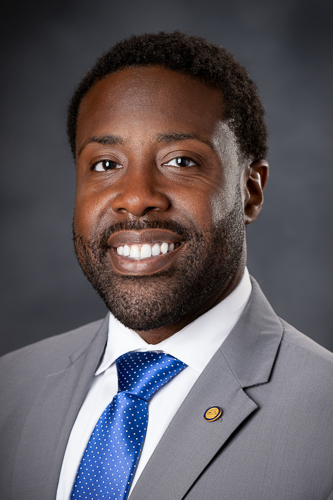
Bill Flanigan
90% support rate
Top opponent
Marty Gearheart
0% support rate
Ranked legislators
10
5 support · 5 oppose
Key legislators

Who's moving student financial aid in West Virginia

Legislators moving student financial aid in West Virginia
Legislator Party Stance Support rate Votes
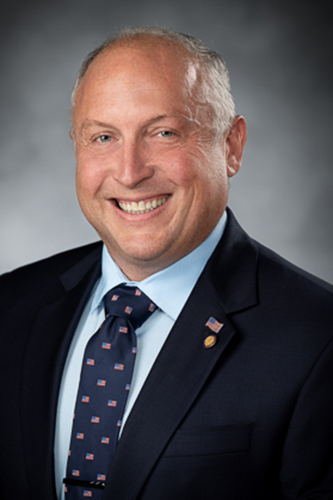
Bill Flanigan
Bill Flanigan House · District 4
R
Strong +
90% 10
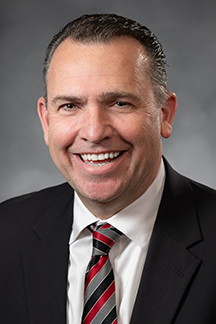
Erica Moore
Erica Moore House · District 15
R
Strong +
89% 9
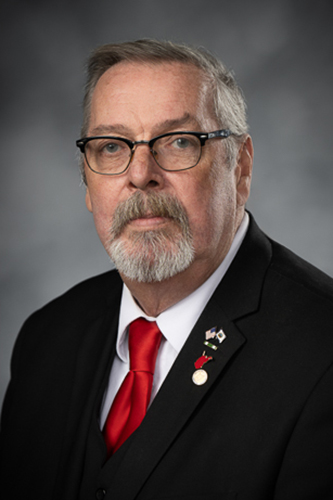
John Jordan
John Jordan House · District 42
R
Strong +
89% 9
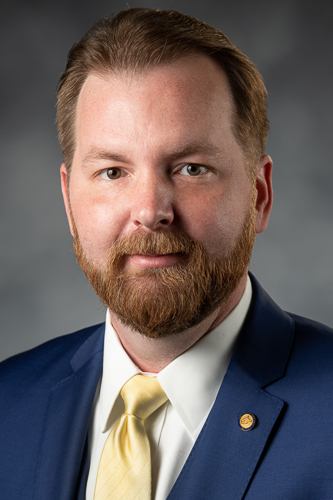
Marshall Clay
Marshall Clay House · District 51
R
Strong +
89% 9
Daniel Linville
Daniel Linville House · District 22
R
Strong +
88% 8
Marty Gearheart
Marty Gearheart House · District 37
R
Strong −
0% 4
Corby Dillon
Corby Dillon House · District 29
R
Strong −
20% 10
Sean Hornbuckle
Sean Hornbuckle House · District 25
D
Oppose
25% 8
Clay Riley
Clay Riley House · District 72
R
Oppose
25% 4
Evan Hansen
Evan Hansen House · District 79
D
Oppose
30% 10
Showing 21–30 of 44 bills

All education bills

signed · West Virginia · House of Delegates Jun 29, 2026

HB 5686: Relating to the timing of payments of annually required deposit into an eligible recipient’s Hope Scholarship account

HB 5686 changes the timing for annual deposits into West Virginia's Hope Scholarship accounts. Starting July 1, 2026, the total annual deposit must be paid in four equal installments: by August 15, October 15, January 15, and April 15 each year. This replaces the previous single annual payment requirement under §18-31-6(d). The bill directly affects Hope Scholarship recipients who receive these annual deposits. The change aims to provide more consistent funding throughout the year.
in committee · West Virginia · House of Delegates Feb 5, 2026

HB 5245: Creating the Governor’s Cup competition

HB 5245 creates the "Governor's Cup Challenge," a yearly athletic competition between Marshall University and West Virginia University in NCAA Division I sports. The winning school earns points based on game outcomes, with the annual champion receiving 65% of scholarship funds generated from 20% of game-related revenue (tickets, merchandise, concessions). These funds support scholarships for West Virginia high school athletes who participated in sports but did not receive athletic scholarships to in-state colleges and are now pursuing degrees at those institutions. The program is administered by the university system's vice chancellor for administration.
in committee · West Virginia · House of Delegates Feb 9, 2026

HB 5384: To authorize the HEPC to be able to adjust the required composite testing score for ACT and SAT in regard to PROMISE scholarship year to year in order to maximize the number of awards

HB 5384 authorizes West Virginia's Higher Education Policy Commission (HEPC) to annually adjust the required composite ACT/SAT scores for the PROMISE scholarship program. This change directly affects West Virginia students applying for PROMISE scholarships, which cover tuition costs at state colleges and universities. The bill allows HEPC to modify the minimum test score thresholds each year to maximize the number of eligible students, without altering the $4,750 award cap or other eligibility requirements like GPA or citizenship. The goal is to ensure scholarship funds are distributed to the highest number of qualifying students based on annual testing data.
signed · West Virginia · Senate Jun 25, 2026

SB 490: Approving short-term training programs for eligibility for federal Workforce Pell Grants

This bill establishes a process for determining which short-term workforce training programs in West Virginia qualify for federal Workforce Pell Grants. It directs the West Virginia Workforce Development Board to assess programs against federal criteria, define key terms, and require reporting from institutions offering eligible programs. The bill directly affects short-term training providers (like vocational courses or certifications) seeking federal funding to help workers access career-focused education. It creates a state-level mechanism to align local programs with federal grant requirements without changing the federal Pell Grant program itself. The summary focuses solely on the eligibility process, as described in the bill's provisions (§5B-12-1 through §5B-12-6).
introduced · West Virginia · Senate Jan 21, 2026

SB 567: Prohibiting charging Hope Scholarship students fees for extracurricular program-related services

SB 567 prohibits county and charter school boards from charging Hope Scholarship students fees for extracurricular activities, such as sports, clubs, or arts programs. It also modifies the academic requirement for students in individualized instructional programs by allowing a certified teacher to review the student's academic work annually instead of requiring standardized test scores. The bill ensures these students can access extracurricular services without additional costs while maintaining accountability through annual teacher reviews reported to county superintendents. This directly affects Hope Scholarship students and school boards managing the program in West Virginia.
passed · West Virginia · House of Delegates Jan 27, 2026

HB 4081: To create the Higher Education Health and Aid Grant.

HB 4081 creates the Higher Education Health and Aid Grant program for West Virginia public colleges with multiple campuses. The bill requires these institutions to use grant funds to establish campus food and health aid stations, specifically for non-perishable food items and basic hygiene products like toothpaste, sanitary supplies, and first-aid items. Funds cannot cover fresh food, medical care, or prescription items. Institutions must track all purchases and inventory monthly, and submit annual reports to the Higher Education Policy Commission detailing program impact on student food/hygiene insecurity.
in committee · West Virginia · Senate Jan 14, 2026

SB 41: Creating Standardized Testing Choice Act

West Virginia's SB 41, the "Standardized Testing Choice Act," permits students in public schools to take the Classical Learning Test (CLT) as an alternative to the ACT or SAT for college admissions and financial aid. Public colleges must accept CLT scores for admissions, and students need a minimum equivalent score of 19 (ACT scale) on the CLT or other tests to qualify for financial aid. The bill requires public school districts to offer the CLT, ACT, or SAT to students in grades 9-12 and the CLT10, Pre-ACT, or PSAT to students in grades 9-10, with districts eligible for reimbursement of related costs. This policy directly affects high school students, public colleges, and school districts across West Virginia.
failed · West Virginia · House of Delegates Mar 14, 2026

HB 4588: Relating to participating in the federal tax credit scholarship program

HB 4588 requires West Virginia's State Treasurer to participate in a federal tax credit program that allows individuals to receive tax credits for contributions to scholarship organizations. The bill mandates the Treasurer to annually identify and publish a list of qualified nonprofit scholarship organizations and eligible schools meeting federal and state requirements. Eligible schools must comply with West Virginia education laws, and students must be eligible for public school enrollment under federal criteria. Scholarship funds can cover elementary and secondary education expenses as defined by federal law, with the Treasurer accepting applications year-round for organization inclusion.
in committee · West Virginia · Senate Jan 20, 2026

SB 166: Relating to eligibility for WV Invests Grant Program

SB 166 amends West Virginia's WV Invests Grant Program to include associate degrees and certificates in emergency medical services (EMS) as eligible post-secondary programs. This change directly affects West Virginia residents pursuing EMS credentials by allowing them to qualify for the grant, which covers tuition and fees at participating institutions. The bill modifies the eligibility requirements in §18C-9-5(a)(8) to explicitly include EMS programs, without altering other existing grant terms like residency, academic standards, or the repayment agreement for graduates who leave the state.
introduced · West Virginia · Senate Jan 14, 2026

SB 202: Exempting certain military veterans and their dependents from tuition

SB 202 would exempt certain military veterans and their families from tuition and fees at West Virginia’s public colleges and universities. It specifically covers: (1) spouses and children of veterans killed in action, missing in action, or who died while serving; (2) disabled veterans with 90%+ service-connected disabilities (since 9/11); and (3) spouses and children of active-duty veterans who died or went missing in service. To qualify, applicants must be West Virginia residents, apply for FAFSA, exhaust other tuition aid, and maintain academic standards. The exemption applies only to undergraduate programs and does not cover special fees like lab costs or parking. The bill is pending in committee and not yet law.
Showing 21 to 30 of 44 bills
Previous 1 2 3 4 5 Next