Issue · Budget & Taxes

Budget & Taxes

Every budget & taxes bill, vote, and legislator stance in West Virginia, automatically classified by Maddy, our AI policy reader.

Total bills
503
2026 Regular Session
Top supporter
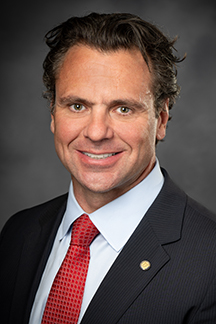
Ryan Browning
93% support rate
Top opponent
Corby Dillon
14% support rate
Ranked legislators
10
5 support · 5 oppose
Key legislators

Who's moving budget & taxes in West Virginia

Legislators moving budget & taxes in West Virginia
Legislator Party Stance Support rate Votes
Ryan Browning
Ryan Browning House · District 28
R
Strong +
93% 46
J.B. Akers
J.B. Akers House · District 55
R
Strong +
93% 48
Jonathan Pinson
Jonathan Pinson House · District 17
R
Strong +
93% 48
Chris Phillips
Chris Phillips House · District 68
R
Strong +
93% 48
Jordan Maynor
Jordan Maynor House · District 41
R
Strong +
93% 48
Corby Dillon
Corby Dillon House · District 29
R
Strong −
14% 47
Shawn Fluharty
Shawn Fluharty House · District 5
D
Oppose
31% 45
Marty Gearheart
Marty Gearheart House · District 37
R
Oppose
33% 37
Evan Hansen
Evan Hansen House · District 79
D
Oppose
40% 48
Mike Pushkin
Mike Pushkin House · District 54
D
Oppose
40% 48
Showing 81–90 of 503 bills

All budget & taxes bills

in committee · West Virginia · House of Delegates Feb 5, 2026

HB 5232: Creating the Police Partnering with Communities Act

HB 5232 establishes the "Police Partnering With Communities Fund" within the West Virginia State Treasurer's office to reimburse police officers for housing costs if they live in designated distressed areas. The bill defines distressed areas as low-income census tracts (with 20%+ poverty rate or below 80% median family income) experiencing higher-than-average crime. Officers must provide proof of residence in these areas and employment with a local police department to receive full housing cost reimbursements. The fund, funded through a separate appropriations bill, aims to strengthen police-community relationships by encouraging officers to live in the neighborhoods they serve. The law takes effect July 1, 2026.
Sub-Topics Appropriations
signed · West Virginia · House of Delegates Jun 29, 2026

HB 5613: Relating to authorizing the Fleet Management Division to use telematics

HB 5613 authorizes West Virginia's Fleet Management Division to use telematics monitoring devices on state vehicles. It directly affects all state agencies and departments (spending units) that operate state vehicles, requiring them to track vehicle activity through these systems. The bill amends existing law to allow the Division to contract for telematics services that monitor vehicle location, usage, and performance, while maintaining existing vehicle log reporting requirements. This replaces outdated provisions and standardizes how state vehicle fleets are managed under the Department of Administration.
introduced · West Virginia · Senate Feb 21, 2026

SB 1051: Creating Charter School Revolving Loan Fund

SB 1051 creates a Charter School Revolving Loan Fund to provide low-interest loans specifically for public charter school facility projects (like building or renovating school buildings) in West Virginia. The fund is administered by the Professional Charter School Board, with loan repayments recycled back into the fund to support future projects. The bill requires the Board to establish rules for the fund's operation and mandates that initial loans be distributed during the 2027 fiscal year, pending state appropriations. This directly affects public charter schools seeking facility funding and the Professional Charter School Board as the fund administrator.
Sub-Topics School Choice
in committee · West Virginia · House of Delegates Feb 17, 2026

HB 5641: To require state, county, municipal, and government-controlled entities to provide timely, public financial transparency through the West Virginia Checkbook system or a substantially similar public transparency platform

HB 5641 requires all state, county, municipal, and government-controlled entities (like boards or commissions) to publicly share financial data through West Virginia's Checkbook system or an approved similar platform. Entities must update financial records within two months of transactions and prominently link to this data on their websites and social media annually. Non-compliance incurs penalties: $500 per quarter for failing to participate, plus escalating monthly fines of $50 per month beyond the two-month deadline for late reporting. The law takes effect for all entities by the start of their 2027 fiscal year.
Tags Government Transparency
signed · West Virginia · House of Delegates Jun 29, 2026

HB 5382: Relating to the Neighborhood Investment Program.

HB 5382 extends the expiration date of West Virginia's Neighborhood Investment Program from July 1, 2026, to July 1, 2031. This program provides tax credits to taxpayers who contribute to certified neighborhood development projects. Contributions made before July 1, 2031, will still qualify for the credit, but no new credits will be available for contributions after that date. The bill ensures continued support for community investment projects through 2031 while clarifying the program's termination timeline.
in committee · West Virginia · House of Delegates Feb 5, 2026

HB 5224: Creating a personal income tax credit for election officials in West Virginia.

HB 5224 creates a personal income tax credit for West Virginia election officials who serve in elections. It provides a $100 credit per election (capped at $200 annually) that directly reduces the tax bill of eligible officials who meet service requirements. To claim the credit, officials must obtain certification from their county commission documenting their election service, which must be submitted to both the Tax Commission and Secretary of State. The credit is nonrefundable, cannot be carried forward to future years, and applies only to taxable years beginning after December 31, 2028.
Sub-Topics Income Tax Tax Credits Tags Elections
signed · West Virginia · Senate Jun 25, 2026

SB 1053: Authorizing Unemployment Automation and Administration Fund to modernize and enhance WorkForce West Virginia

SB 1053 creates a new "Unemployment Automation and Administration Fund" to modernize West Virginia's unemployment system. It requires employers to pay 7% of their quarterly unemployment tax contributions into this fund, with limits: deposits stop if the fund reaches $18 million in a year or if the Unemployment Compensation Trust Fund falls below $300 million. The fund will cover costs for upgrading the unemployment claims system, improving the job search platform, administrative expenses, and workforce development initiatives. This directly affects employers who pay unemployment taxes in West Virginia, redirecting a portion of their payments toward system improvements.
in committee · West Virginia · Senate Feb 4, 2026

SB 735: Phasing out corporate net income tax over 4 years

SB 735 would eliminate West Virginia's corporate net income tax over a four-year period by reducing the tax rate annually until it reaches zero. The bill applies to corporations conducting business in the state, excluding those already exempt under current law. The key mechanism is a scheduled annual reduction in the tax rate, with the tax fully phased out by the end of the four-year period. This change would remove a direct tax on corporate profits, altering the state's primary revenue source for business taxation.
in committee · West Virginia · House of Delegates Feb 5, 2026

HB 5235: Back to school sales tax holiday

HB 5235 updates West Virginia's back-to-school sales tax holiday by increasing the price thresholds for exempt items. It raises the clothing exemption to $150 (from $125), school supplies to $60 (from $50), instructional materials to $25 (from $20), laptop/tablet computers to $600 (from $500), and sports equipment to $180 (from $150). The holiday applies to eligible purchases made during the first Sunday of August plus the previous Friday and Saturday, and the following Monday. This change directly affects West Virginia residents purchasing qualifying school-related items during this specific annual period, reducing their tax burden on those purchases.
in committee · West Virginia · Senate Feb 11, 2026

SB 797: Continuing of independent living and transitional support services for youth

This bill creates a structured support system for West Virginia youth aging out of foster care (typically 18-21 years old). It requires the Department of Human Services to develop a three-phase living arrangement system (supervised independent living, scattered-site housing, and supportive independent living) plus mandatory life skills training in housing, employment, and education. Funding will use per diem rates designed to maximize federal reimbursement, include annual cost-of-living adjustments, and provide monthly stipends to youth for basic living costs. The system must incorporate input from former foster youth, providers, and community partners, with annual reporting on outcomes like housing stability and employment.
Tags Children
Showing 81 to 90 of 503 bills
Previous 1 8 9 10 51 Next