Issue · Budget & Taxes

Budget & Taxes

Every budget & taxes bill, vote, and legislator stance in West Virginia, automatically classified by Maddy, our AI policy reader.

Total bills
503
2026 Regular Session
Top supporter
Ryan Browning
93% support rate
Top opponent
Corby Dillon
14% support rate
Ranked legislators
10
5 support · 5 oppose
Key legislators

Who's moving budget & taxes in West Virginia

Legislators moving budget & taxes in West Virginia
Legislator Party Stance Support rate Votes
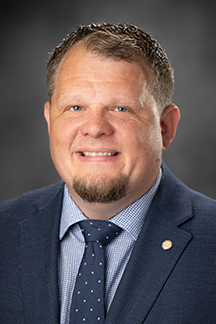
Ryan Browning
Ryan Browning House · District 28
R
Strong +
93% 46
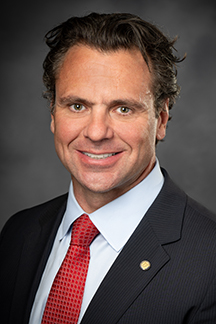
J.B. Akers
J.B. Akers House · District 55
R
Strong +
93% 48
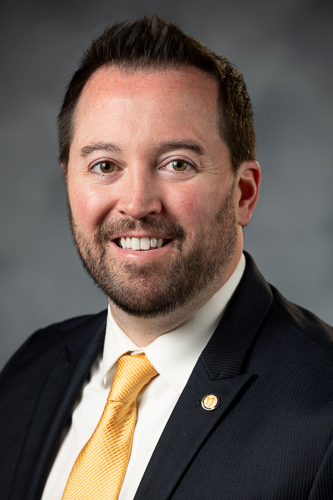
Jonathan Pinson
Jonathan Pinson House · District 17
R
Strong +
93% 48
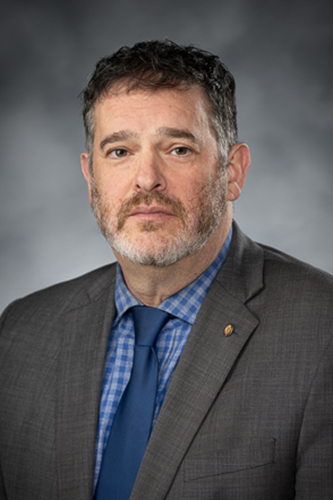
Chris Phillips
Chris Phillips House · District 68
R
Strong +
93% 48
Jordan Maynor
Jordan Maynor House · District 41
R
Strong +
93% 48
Corby Dillon
Corby Dillon House · District 29
R
Strong −
14% 47
Shawn Fluharty
Shawn Fluharty House · District 5
D
Oppose
31% 45
Marty Gearheart
Marty Gearheart House · District 37
R
Oppose
33% 37
Evan Hansen
Evan Hansen House · District 79
D
Oppose
40% 48
Mike Pushkin
Mike Pushkin House · District 54
D
Oppose
40% 48
Showing 71–80 of 503 bills

All budget & taxes bills

in committee · West Virginia · House of Delegates Feb 16, 2026

HB 5566: To establish a centralized tax lien registry to improve tax collection efficiency, enhance transparency, support economic development, and reduce administrative burden.

HB 5566 establishes a centralized State Tax Lien Registry managed by West Virginia's Tax Division, replacing the current system of filing tax liens with individual county recorders. The registry requires the Tax Division to file notices of tax liens (for unpaid state taxes) containing debtor name/address, lien number, and amount owed, making this information publicly searchable online at no cost. This directly affects taxpayers with unpaid final tax liabilities (debtors) and anyone accessing the registry, such as creditors or property buyers. Key mechanisms include centralizing lien records statewide, automatically attaching liens to all debtor property (real and personal), and allowing bulk sale of registry data to cover operational costs, while prohibiting use for marketing. The registry becomes the official record, superseding county filings.
signed · West Virginia · Senate Jun 25, 2026

SB 843: Supplemental Appropriation to Department of Health, fund 5144

SB 843 is a supplemental budget measure that adds $330,000 to the existing appropriation for the Department of Health's Vital Statistics Account (fund 5144) for fiscal year 2026. It specifically increases funding for "Personal Services and Employee Benefits" within this account, using unspent funds identified by the Governor. The bill directly affects the Department of Health's Vital Statistics program, which handles birth, death, and other vital records. This is a procedural budget adjustment to reallocate existing unappropriated funds, not a new policy or program.
in committee · West Virginia · House of Delegates Feb 16, 2026

HB 5575: West Virginia Special Olympics Program.

HB 5575 appropriates $3.5 million from the General Revenue Fund for the West Virginia Special Olympics Program during fiscal year 2027. The funds will support county-level programming ($2 million, allocated equally to all 55 counties at ~$36,363 per county for local events and services) and state headquarters operations ($1.5 million for facilities, equipment, and statewide events). The Department of Education will administer the funds, requiring annual reports on expenditures, athlete participation, and program outcomes to the Joint Committee on Government and Finance. This bill directly affects Special Olympics athletes and local community programs across all West Virginia counties.
Sub-Topics Revenue
in committee · West Virginia · House of Delegates Feb 17, 2026

HB 5672: Relating to collecting a tax from all manufacturers and distributors of opioid drugs

HB 5672 imposes an annual excise tax on opioid manufacturers and distributors selling Schedule II drugs to West Virginia pharmacies. The tax equals one cent per 100 pills multiplied by the previous year's state opioid overdose death count (as reported by the Department of Health). Pharmacies collect this tax from manufacturers/distributors (not patients) and remit it to the Ryan Brown Addiction Prevention and Recovery Fund. This revenue directly funds state addiction prevention and recovery programs. The tax rate adjusts yearly based on updated overdose statistics.
in committee · West Virginia · Senate Feb 9, 2026

SB 866: Eliminating capital gains tax on gold, silver, and cryptocurrency

This bill exempts capital gains from gold, silver, and cryptocurrency transactions from West Virginia's personal income tax. It directly affects residents who sell these assets at a profit, as the state would no longer tax the gain. The key provision removes net capital gains from "precious metal bullion" (like gold/silver coins/bars) and "cryptocurrency" from taxable income under the state's tax code. This creates a specific tax exemption for these assets, distinct from other investment gains. The policy change would apply to all West Virginia taxpayers with qualifying gains, effective upon enactment.
in committee · West Virginia · House of Delegates Mar 11, 2026

HB 5297: Supplemental Appropriation to the Department of Health Facilities - William R. Sharpe Hospital from the Unappropriated Surplus Balance.

HB 5297 adds $4,906,630 in funding from the state's unappropriated surplus balance to William R. Sharpe Jr. Hospital for current operating expenses during fiscal year 2026. This supplemental appropriation directly affects the hospital's budget by redirecting unused state funds that were identified in the Governor's 2026 budget document. The bill does not create new policies or alter existing laws - it simply allocates existing surplus revenue to cover the hospital's operational costs. This is a routine budget adjustment, not a policy change, and it specifically targets the hospital's designated fund (0413) for the 2026 fiscal year.
in committee · West Virginia · House of Delegates Feb 13, 2026

HB 5499: Relating to school system fiscal and governance early warning, stabilization, and accountability.

HB 5499 creates a system to monitor and address financial and governance issues in West Virginia school districts before they escalate. It requires the state to track specific indicators like over-reliance on temporary funding, declining savings, or repeated audit findings, and place districts meeting thresholds on a public "Watch List" with a requirement to submit a corrective action plan. The bill establishes a new independent Office of School System Performance and Accountability (OSPA) to oversee early intervention, stabilization, and transparency, while mandating detailed documentation before state takeover. This system aims to prevent crises through early transparency, local accountability, and structured support for school districts.
signed · West Virginia · Senate Jun 25, 2026

SB 840: Supplemental Appropriation to Department of Human Services, fund 0403

This bill increases funding for West Virginia's Children's Health Insurance Program (CHIP) by adding $422,562 for administrative costs and $449,429 for services under fund 0403. It supplements existing appropriations using an unappropriated balance from the State Fund, General Revenue, to support CHIP operations during fiscal year 2026. The funding directly affects CHIP beneficiaries and program administrators by providing additional resources for program management and services. This is a procedural budget adjustment, not a policy change, and it applies to the fiscal year ending June 30, 2026.
signed · West Virginia · House of Delegates Jun 29, 2026

HB 5480: Relating to establishing the West Virginia Youth Summer Employment and Career Readiness Program.

HB 5480 establishes the West Virginia Youth Summer Employment and Career Readiness Program to provide paid summer jobs and career training for youth aged 14-20, with priority given to those in foster care, receiving public assistance (like TANF or SNAP), or involved in the justice system. Administered by the Department of Commerce’s Division of Workforce Development, the program requires partnerships with private businesses, nonprofits, and government agencies to create work placements and career exploration opportunities. It mandates annual reporting on program effectiveness, allows private funding through matching contributions, and creates a special revenue account to support operations. The goal is to address workforce shortages, retain youth in West Virginia, and build a skilled local workforce through structured employment experiences.
in committee · West Virginia · Senate Feb 9, 2026

SB 849: Supplemental Appropriation to Department of Agriculture, fund 0131

This bill (SB 849) allocates $64,800 from an unappropriated surplus balance in the State Fund to the Moorefield Agricultural Center under the Department of Agriculture for fiscal year 2026. It directly affects the Moorefield Agricultural Center by providing supplemental funding for its operations. The bill adds this specific amount as a new line item to an existing budget account, using money that was not allocated in the original state budget. This is a procedural budget adjustment, not a new policy.
Showing 71 to 80 of 503 bills
Previous 1 7 8 9 51 Next