Issue · Budget & Taxes

Budget & Taxes

Every budget & taxes bill, vote, and legislator stance in West Virginia, automatically classified by Maddy, our AI policy reader.

Total bills
503
2026 Regular Session
Top supporter
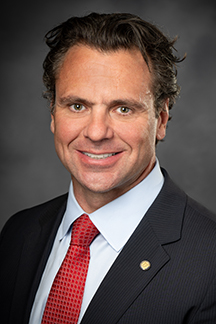
Ryan Browning
93% support rate
Top opponent
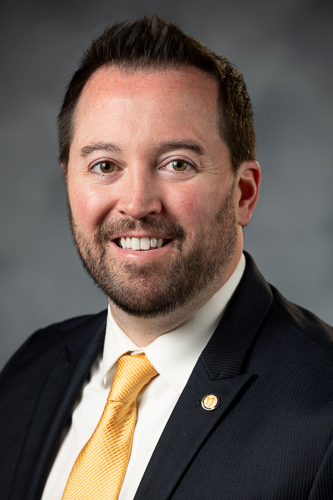
Corby Dillon
14% support rate
Ranked legislators
10
5 support · 5 oppose
Key legislators

Who's moving budget & taxes in West Virginia

Legislators moving budget & taxes in West Virginia
Legislator Party Stance Support rate Votes
Ryan Browning
Ryan Browning House · District 28
R
Strong +
93% 46
J.B. Akers
J.B. Akers House · District 55
R
Strong +
93% 48
Jonathan Pinson
Jonathan Pinson House · District 17
R
Strong +
93% 48
Chris Phillips
Chris Phillips House · District 68
R
Strong +
93% 48
Jordan Maynor
Jordan Maynor House · District 41
R
Strong +
93% 48
Corby Dillon
Corby Dillon House · District 29
R
Strong −
14% 47
Shawn Fluharty
Shawn Fluharty House · District 5
D
Oppose
31% 45
Marty Gearheart
Marty Gearheart House · District 37
R
Oppose
33% 37
Evan Hansen
Evan Hansen House · District 79
D
Oppose
40% 48
Mike Pushkin
Mike Pushkin House · District 54
D
Oppose
40% 48
Showing 11–20 of 503 bills

All budget & taxes bills

in committee · West Virginia · Senate Mar 11, 2026

SB 1084: Supplemental appropriation to Department of Tourism, fund 5450

This bill adjusts state funding for the fiscal year ending June 30, 2026, by moving $8,051.62 from the Department of Human Services to the Department of Tourism. The transferred money will be used to support the Women's Suffragist Monument project under the Division of Culture and History. The legislation expires unused funds from one agency and reallocates them to another without changing the overall budget amount. This is a financial adjustment between state departments rather than a new program or policy initiative.
Sub-Topics Appropriations
passed · West Virginia · Senate Feb 17, 2026

SB 403: Relating to expanding definition of "tourism attraction"

This bill expands the definition of "tourism attraction" under West Virginia's Tourism Development Act to include lodging facilities, allowing hotels and similar accommodations to qualify for state tax credits. The change directly affects businesses operating lodging facilities within the state that wish to participate in the Tourism Development Act credit program. By amending the existing code, the legislation removes lodging facilities from the list of excluded project types while maintaining the current criteria for other tourism attractions like cultural sites, recreation facilities, and entertainment centers. This policy adjustment aims to broaden the range of tourism-related projects eligible for financial incentives without altering the underlying credit structure or eligibility requirements for other attraction types.
in committee · West Virginia · House of Delegates Mar 10, 2026

HCR 32: Requesting the Joint Committee on Government and Finance to direct an early childhood care and education cost estimation study to enable the state to model actual costs of early childhood care and education

This bill requests that the Joint Committee on Government and Finance conduct a study to estimate the actual costs of providing early childhood care and education in West Virginia. The study aims to determine whether current subsidy reimbursement rates accurately reflect the true cost of quality care across different program types, age groups, and geographic regions. If completed, the findings will be reported to government, health, and education committees by December 31, 2026, to help inform future budget decisions and subsidy policies. The bill directly affects state officials responsible for child care funding and policy, as well as early childhood care providers who receive state subsidies.
Sub-Topics Early Childhood
passed · West Virginia · Senate Feb 2, 2026

SB 390: Altering conditions for flood resiliency disbursements

This bill modifies how West Virginia distributes funds from its Flood Resiliency Trust Fund to improve flood prevention and safety. It requires that at least 50% of all disbursements go to low-income areas and households, while another 50% must be used for nature-based solutions like floodplain restoration and property acquisition. The legislation also sets specific conditions for funding political subdivisions, requiring them to adopt updated road and bridge standards, flood hazard bylaws, local hazard mitigation plans, emergency operations plans, and meet FEMA community rating system requirements within 24 months. Ultimately, the State Resiliency Officer retains discretion over fund allocation but must follow these new prioritization rules and approval processes.
in committee · West Virginia · House of Delegates Mar 3, 2026

HCR 25: Requesting a Study on Reducing Non Revenue Water Through Leak Detection, Infrastructure Improvements, and Performance Based Incentives to Stabilize Water Rates

This legislative resolution asks the Joint Committee on Government and Finance to study ways to reduce water loss in public water systems across West Virginia. The study will examine strategies like leak detection, infrastructure upgrades, and performance-based incentives to help water systems save money and stabilize rates for customers. It specifically focuses on identifying systems with the highest water loss and exploring financing options such as special bonds and grant programs to fund improvements. The committee must report its findings and recommendations to the Legislature by December 1, 2026.
Sub-Topics Drinking Water
signed · West Virginia · House of Delegates Aug 13, 2026

HB 5691: Supplemental appropriation, Department of Health

This bill moves approximately $2.98 million from the Attorney General's Consumer Protection Recovery Fund to the Department of Health's general revenue account for fiscal year 2026. The transfer is intended to support the Department of Health's Tobacco Education Program, which is designated under fund 0407 and organization 0506. The legislation expires the surplus funds in the original account and creates a new appropriation line item to allocate the money to the health department. This action is part of the state's regular budget process for managing unappropriated surplus balances within the State Fund, General Revenue.
Sub-Topics Appropriations Revenue
signed · West Virginia · House of Delegates Aug 13, 2026

HB 5694: Supplemental appropriation to Department of Education, fund 0313.

This bill provides additional funding to the West Virginia Department of Education for fiscal year 2026 by allocating money from the state's unappropriated surplus revenue. The legislation directly affects the State Board of Education and State Department of Education by supplementing their existing budget appropriations. Key provisions include specific funding allocations for various programs such as teacher retirement, child nutrition, technology modernization, scholarship programs, and special education services. The bill amends the state budget act to formalize these financial transfers from the general revenue fund to the education department's designated fund.
in committee · West Virginia · Senate Feb 11, 2026

SB 909: Modernizing educational programs and technologies

This bill, titled the Future-Ready Education Act, aims to modernize educational programs and technologies in West Virginia to better prepare students for future workforce needs. It allows local school districts to enter multi-year contracts for educational materials that include technology licensing, provided these contracts offer significant fiscal savings and include a cancellation clause. The legislation extends the Mountain State Digital Literacy Project to include grades 9-12 and adds support for reading, mathematics, science, and career-technical education. Additionally, it authorizes the state to retain $7.1 million from the 2026-2027 school year budget to fund high-quality professional training in the science of reading for kindergarten through fifth-grade teachers, with voluntary participation allowed for public charter school educators.
in committee · West Virginia · House of Delegates Feb 2, 2026

HB 5028: To create the Small-Town Main Street Recovery Act.

HB 5028 creates the Small-Town Main Street Recovery Act, providing grants to West Virginia municipalities with fewer than 25,000 residents. The bill directs the Department of Economic Development to fund storefront upgrades, small business support, and broadband improvements in these communities. Municipalities must coordinate applications with county commissions or regional development authorities to receive priority consideration. The program aims to support economic revitalization in smaller towns through direct financial assistance for key infrastructure and business needs.
Sub-Topics Broadband Access Tags Economic Development Small Business
in committee · West Virginia · House of Delegates Feb 9, 2026

HB 5359: To provide a funding stream from property taxes collected as a result of new high voltage electric transmission projects being constructed to lower electric rates to benefit West Virginians

HB 5359 creates a new tax method for high voltage electric transmission line property in West Virginia, directing property tax revenue from newly constructed transmission projects into the existing Electric Grid Stabilization and Security Fund. This fund will use the collected revenue to support grid stabilization, security, and efficiency upgrades for regulated utilities, including maintenance of coal and natural gas generation facilities serving West Virginia ratepayers. The bill specifies that these funds must be used to lower electricity rates for West Virginia consumers, directly benefiting all ratepayers by reducing costs through improved grid infrastructure. Key provisions include defining "high voltage transmission line property," requiring tax returns to the Board of Public Works, and ensuring unspent fund balances carry forward annually. The bill is currently in the House Finance Committee for review.
Showing 11 to 20 of 503 bills