Issue · Budget & Taxes

Budget & Taxes

Every budget & taxes bill, vote, and legislator stance in West Virginia, automatically classified by Maddy, our AI policy reader.

Total bills
503
2026 Regular Session
Top supporter
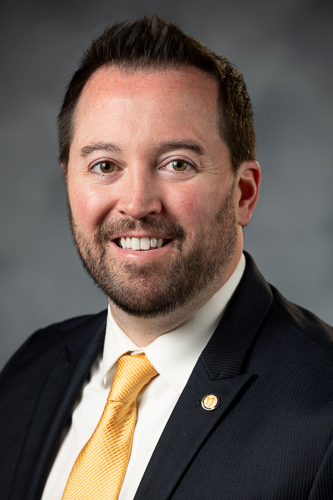
Ryan Browning
93% support rate
Top opponent
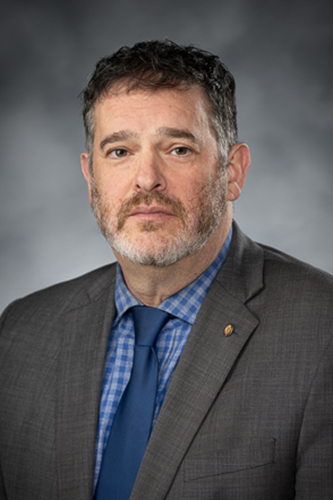
Corby Dillon
14% support rate
Ranked legislators
10
5 support · 5 oppose
Key legislators

Who's moving budget & taxes in West Virginia

Legislators moving budget & taxes in West Virginia
Legislator Party Stance Support rate Votes
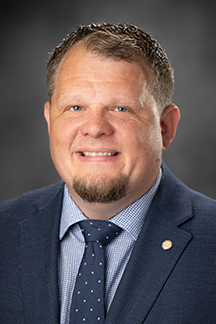
Ryan Browning
Ryan Browning House · District 28
R
Strong +
93% 46
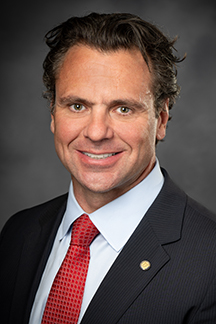
J.B. Akers
J.B. Akers House · District 55
R
Strong +
93% 48
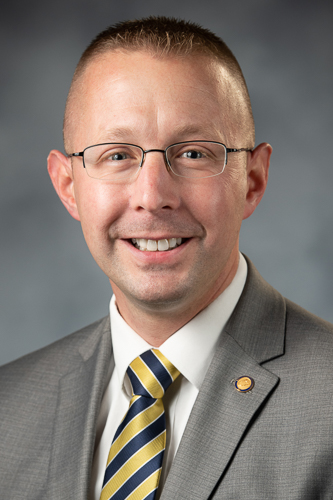
Jonathan Pinson
Jonathan Pinson House · District 17
R
Strong +
93% 48
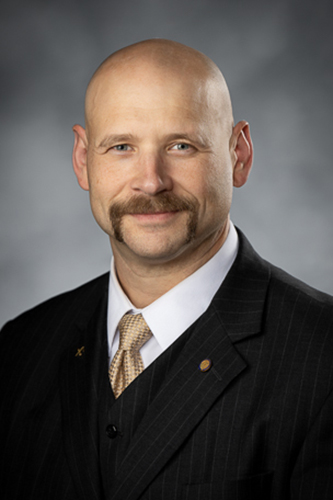
Chris Phillips
Chris Phillips House · District 68
R
Strong +
93% 48
Jordan Maynor
Jordan Maynor House · District 41
R
Strong +
93% 48
Corby Dillon
Corby Dillon House · District 29
R
Strong −
14% 47
Shawn Fluharty
Shawn Fluharty House · District 5
D
Oppose
31% 45
Marty Gearheart
Marty Gearheart House · District 37
R
Oppose
33% 37
Evan Hansen
Evan Hansen House · District 79
D
Oppose
40% 48
Mike Pushkin
Mike Pushkin House · District 54
D
Oppose
40% 48
Showing 181–190 of 503 bills

All budget & taxes bills

in committee · West Virginia · Senate Feb 18, 2026

SB 983: Creating State Tax Lien Registry

SB 983 creates a centralized public database called the State Tax Lien Registry, maintained by West Virginia's Tax Division. It requires the Division to file notices of unpaid tax liens (for final tax debts like fees, penalties, or interest) into this registry, including debtor names, addresses, lien amounts, and basis. Once filed, these liens automatically attach to all of the debtor's real and personal property (tangible and intangible) across all West Virginia counties for 10 years. This registry replaces older county filings and serves as the official record for tax liens against individuals or entities who owe the state money.
in committee · West Virginia · House of Delegates Mar 11, 2026

HB 5301: Supplemental Appropriation to the Department of Human Services- CHIP from the Unappropriated Balance.

HB 5301 increases funding for West Virginia's Children's Health Insurance Program (CHIP) by $871,991 using unused state funds. It specifically adds $422,562 for CHIP administrative costs and $449,429 for CHIP services under the Department of Human Services. This supplemental appropriation draws from the unappropriated balance in the State Fund, General Revenue, to cover existing program expenses during fiscal year 2026. The bill does not change CHIP eligibility or benefits but ensures current funding levels for administration and services.
in committee · West Virginia · House of Delegates Feb 16, 2026

HB 5627: To provide for a $100 tax credit per election for service by an election official to West Virginia Personal income tax liabilities.

HB 5627 creates a $100 nonrefundable personal income tax credit per election for West Virginia election officials who serve at least half a day during an election. The credit is capped at $200 per taxable year and must be used in the year it's earned - unused credits cannot carry forward. To claim the credit, officials must obtain certification from their county commission documenting their service, which is then submitted to the Tax Commission and Secretary of State. The bill requires the Secretary of State to submit biennial reports evaluating the credit's cost-effectiveness starting in 2031. It becomes effective for tax years beginning after December 31, 2028.
Sub-Topics Income Tax Tax Credits Tags Elections
signed · West Virginia · Senate Jun 24, 2026

SB 791: Supplemental appropriation to Department of Homeland Security, fund 0443

SB 791 increases the existing fiscal year 2026 appropriation for the West Virginia Division of Emergency Management (fund 0443) by $13,000, raising the total to $243,000. This supplemental funding directly affects the Division of Emergency Management's operational budget for the fiscal year ending June 30, 2026. The bill uses an unappropriated balance remaining in the State Fund, General Revenue, as identified in the Governor's budget document. It does not create new policies or programs but adjusts an existing funding allocation for emergency management operations. The change is limited to the Division of Emergency Management's current expenses account.
Sub-Topics Appropriations Revenue Tags Emergency Management
introduced · West Virginia · Senate Feb 13, 2026

SB 942: Creating Advanced Baseload Energy Development Act

SB 942, the Advanced-Baseload Energy Development Act, creates a framework to support nuclear reactors and hydrogen energy projects that use carbon capture technology. It establishes a new Advanced Energy Division within the Office of Energy to coordinate development, permit projects, and partner with universities for workforce training. The bill provides tax incentives for qualifying projects, requires community benefit agreements, and allows utilities to recover project costs through rate increases. It specifically targets advanced-baseload energy projects using advanced nuclear reactors or fossil-fuel-derived hydrogen with carbon capture, aiming to leverage West Virginia’s energy infrastructure and workforce.
in committee · West Virginia · House of Delegates Feb 16, 2026

HB 5558: To create the West Virginia Child Investment Account Matching Program.

HB 5558 creates the West Virginia Child Investment Account Matching Program, which provides a one-time state matching contribution (up to $250 per child) to existing federal "Trump Accounts" for eligible children born in West Virginia. The program prioritizes households with incomes under 300% of the federal poverty level and limits annual spending to $2.5 million. The West Virginia State Treasurer administers the program, verifying eligibility and preventing duplicate benefits, but the contributions require annual legislative appropriation and are not guaranteed. This bill directly affects families with children who already participate in the federal Trump Account program.
Sub-Topics Appropriations
in committee · West Virginia · House of Delegates Feb 2, 2026

HB 5024: Relating to the Waiving of Certain DMV Fees for Volunteer Firefighters

HB 5024 removes specific DMV fees for volunteer firefighters in West Virginia, including license plate fees, vehicle registration costs, operator's license fees, and inspection fees. The bill directly affects volunteer firefighters who serve in their communities, waiving these recurring costs associated with vehicle ownership and operation. Key provisions amend existing law to exempt volunteer firefighters from these fees when registering vehicles or obtaining licenses. The bill does not create new fees or alter other existing exemptions, focusing solely on eliminating these costs for the specified group. This is a concrete policy change that reduces financial burdens for volunteer firefighters.
in committee · West Virginia · House of Delegates Mar 11, 2026

HB 5278: Supplemental Appropriation to the Department of Human Services-Division of Human Services from the Unappropriated Balance

HB 5278 is a supplemental budget bill that increases existing funding for the West Virginia Department of Human Services' Division of Human Services (fund 0403, organization 0511) for fiscal year 2026. It specifically adds $1,630,466 to "Personal Services and Employee Benefits" and $3,846,107 to "Current Expenses" from the state's unappropriated general revenue balance. This bill directly affects the Division of Human Services' operational budget, allowing it to cover personnel costs and ongoing expenses without new taxes or policy changes. The funding adjustment uses money already set aside but not allocated in the Governor's initial budget for FY2026.
signed · West Virginia · House of Delegates Jun 26, 2026

HB 5277: Supplemental Appropriation to the Department of Health Facilities-Welch Community Hospital, William R. Sharpe Jr. Hospital, and Mildred Mitchell-Bateman Hospital from the Unappropriated Surplus Balance

HB 5277 is a funding bill that allocates $1 million to Welch Community Hospital, $3.4 million to William R. Sharpe Jr. Hospital, and $4.3 million to Mildred Mitchell-Bateman Hospital from West Virginia's unappropriated surplus balance. These funds are designated specifically for capital improvements, repairs, and equipment at each hospital during fiscal year 2026. The bill supplements existing appropriations by adding these new funding lines to the hospitals' respective budgets. It directly affects the three named hospitals by providing additional resources for facility maintenance and infrastructure. The bill does not create new policies or programs but reallocates existing surplus funds for capital purposes.
in committee · West Virginia · House of Delegates Feb 6, 2026

HB 5279: Supplemental Appropriation to the Department of Education-Hope Scholarship Program from Excess Lottery Surplus

HB 5279 redirects $12.66 million in unspent lottery surplus funds to the Hope Scholarship Program for the 2026 fiscal year. This supplemental appropriation directly affects students and families using the Hope Scholarship Program by providing additional funding for educational expenses. The bill uses existing unappropriated lottery revenue (not new taxes) to support the program, as specified in the Governor’s budget document. It does not create new policy or eligibility rules but allocates previously identified surplus funds to an existing scholarship program.
Showing 181 to 190 of 503 bills
Previous 1 18 19 20 51 Next