Issue · Budget & Taxes

Budget & Taxes

Every budget & taxes bill, vote, and legislator stance in West Virginia, automatically classified by Maddy, our AI policy reader.

Total bills
503
2026 Regular Session
Top supporter
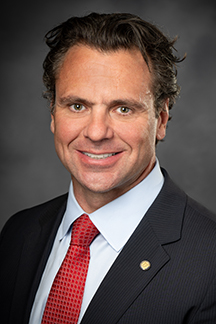
Ryan Browning
93% support rate
Top opponent
Corby Dillon
14% support rate
Ranked legislators
10
5 support · 5 oppose
Key legislators

Who's moving budget & taxes in West Virginia

Legislators moving budget & taxes in West Virginia
Legislator Party Stance Support rate Votes
Ryan Browning
Ryan Browning House · District 28
R
Strong +
93% 46
J.B. Akers
J.B. Akers House · District 55
R
Strong +
93% 48
Jonathan Pinson
Jonathan Pinson House · District 17
R
Strong +
93% 48
Chris Phillips
Chris Phillips House · District 68
R
Strong +
93% 48
Jordan Maynor
Jordan Maynor House · District 41
R
Strong +
93% 48
Corby Dillon
Corby Dillon House · District 29
R
Strong −
14% 47
Shawn Fluharty
Shawn Fluharty House · District 5
D
Oppose
31% 45
Marty Gearheart
Marty Gearheart House · District 37
R
Oppose
33% 37
Evan Hansen
Evan Hansen House · District 79
D
Oppose
40% 48
Mike Pushkin
Mike Pushkin House · District 54
D
Oppose
40% 48
Showing 161–170 of 503 bills

All budget & taxes bills

in committee · West Virginia · Senate Feb 6, 2026

SB 818: Supplemental appropriation to Executive Civil Contingent Fund, fund 0105

This bill adds a $10 million supplemental appropriation to the Governor’s Office Civil Contingent Fund (fund 0105) for fiscal year 2026, specifically designated for "Flood Resiliency - Surplus." The funds will be transferred directly to the Flood Resiliency Trust Fund (fund 1070) as specified in the bill. It adjusts the state budget by reallocating an unappropriated surplus balance identified in the Governor’s budget document. This is a procedural budget amendment affecting state fund allocation, not a new policy or direct service for residents.
signed · West Virginia · Senate Jun 25, 2026

SB 827: Supplemental appropriation to Department of Human Services, fund 0486

SB 827 increases existing funding for several West Virginia Department of Human Services case worker programs in the 2026 fiscal year. It adds specific amounts to budget lines for Child Protective Services, Social Services, Adult Protective Services, and Youth Services case workers. The bill uses unappropriated state funds identified in the Governor’s budget without creating new programs or policies. It directly affects these DHS divisions by providing additional resources for their current operations.
Sub-Topics Appropriations
in committee · West Virginia · House of Delegates Feb 17, 2026

HB 5646: To jumpstart the state’s State Resiliency and Flood Protection Act to allow the Resiliency Office to begin the work of assisting areas of the state prone to flooding, to undertake actions to reduce or prevent future flooding.

HB 5646 increases the West Virginia Flood Resiliency Trust Fund to $250 million and allocates $1 million from the Revenue Shortfall Fund to the Disaster Recovery Trust Fund to assist communities affected by 2024-2025 flooding. The bill requires the State Resiliency Office to develop a flood protection plan using at least 6% of federal Community Development Block Grant-Disaster Recovery funds. It mandates annual expenditure reports and budget requests to the Resiliency Office Board, enabling the office to begin flood prevention work in vulnerable areas. The legislation directly supports flood-prone communities and state recovery efforts through concrete funding mechanisms.
in committee · West Virginia · House of Delegates Feb 16, 2026

HB 5571: To provide a pay equity salary adjustment for non-uniformed employees of the Division of Corrections and Rehabilitation

HB 5571 provides a $6,000 pay equity adjustment over three years ($2,000 annually) for non-uniformed administrative staff in West Virginia's Division of Corrections and Rehabilitation. The increases begin July 1, 2026, and apply to full-time equivalent employees not in uniformed roles, such as office or support positions. Funding comes from general revenue appropriations for state divisions, while regional jail staff receive funding from a special revenue fund. This bill directly affects non-uniformed correctional facility employees who face recruitment and retention challenges, without altering existing pay grade maximums.
Sub-Topics Revenue
signed · West Virginia · House of Delegates Aug 13, 2026

HB 5288: Supplemental Appropriation to the Department of Agriculture-West Virginia Spay Neuter Assistance Fund from Special Revenue

HB 5288 provides additional funding to West Virginia's existing Spay Neuter Assistance Fund, which helps low-income pet owners cover spaying and neutering costs for their animals. The bill supplements an unappropriated balance from the 2026 fiscal year budget to increase the fund's allocation without changing program eligibility or requirements. This is a procedural funding adjustment, not a new policy, and directly supports the state's veterinary assistance program for pet sterilization. The fund operates under West Virginia Code Chapter 19, continuing existing services for qualifying residents.
in committee · West Virginia · House of Delegates Feb 3, 2026

HB 5078: Related to child tax credit

HB 5078 creates a refundable state child tax credit for West Virginia residents who claim the federal child tax credit for eligible children. The credit equals 50% of the federal child and dependent care tax credit amount claimed on the federal return, directly supporting working families with children. For tax years starting January 1, 2025, any credit amount exceeding the resident's state income tax liability is refunded to the individual. This policy change expands state support for families already qualifying for the federal credit, aiming to reduce child poverty and bolster local economies.
Sub-Topics Income Tax Tax Credits Tags Children
in committee · West Virginia · Senate Feb 10, 2026

SB 706: Modifying severance tax on newly drilled oil and natural gas wells

SB 706 modifies West Virginia's severance tax for oil and natural gas producers by temporarily reducing the tax rate for newly drilled wells. It lowers the tax rate to 3% (from 5%) for 24 months starting from the first sale of natural gas or oil from wells drilled after June 30, 2026. This applies specifically to newly completed wells, while existing wells and other production types maintain their standard rates (2.5% or 5% depending on production volume and drilling method). The bill directly affects oil and gas producers who drill new wells after the effective date, offering a short-term tax incentive to encourage new development. The change is part of the state's severance tax structure under §11-13A-3a of the West Virginia Code.
in committee · West Virginia · House of Delegates Feb 16, 2026

HB 5544: Creating deductions for contributions to Trump accounts

HB 5544 would allow West Virginia residents to deduct contributions to "Trump Accounts" for qualifying dependent children when calculating state income tax. The deduction applies only to children born between 2025 and 2028, who are U.S. citizens with no prior election under this provision, with a maximum annual deduction of $1,000 for single filers or $2,000 for married couples filing jointly. Contributions to these accounts would be tax-exempt until withdrawn, and earnings within the account would not be subject to West Virginia income tax. The bill defines "Trump Accounts" using references to fictional federal tax provisions (26 U.S. Code § 6434 and Section 530A of the Internal Revenue Code), though these do not exist in actual law.
Sub-Topics Income Tax
in committee · West Virginia · House of Delegates Feb 16, 2026

HB 5390: Establishing fiscal notes submitted to the Legislature constitute sworn testimony

HB 5390 establishes that fiscal notes (financial impact statements) submitted to the West Virginia Legislature by state agencies, political subdivisions, or public officials are legally considered sworn testimony. The bill imposes criminal penalties for knowingly submitting false or misleading fiscal notes, treating such acts as perjury, while creating a safe harbor for those who voluntarily correct errors made in good faith before a bill's final vote. Key provisions require corrected notes to clearly identify changes and explain the reason for corrections, and mandate referral to prosecutors if credible evidence of intentional falsification exists. This directly affects state agencies and officials preparing fiscal notes, ensuring accountability for financial impact assessments used in legislative decision-making.
in committee · West Virginia · Senate Feb 6, 2026

SB 806: Clarifying definition of “farm” or “farmland” for real property tax assessment purposes

SB 806 clarifies West Virginia's definition of "farm" or "farmland" for property tax purposes. It allows landowners or tenants to operate non-farming business activities (like agritourism or small retail) on qualifying farmland without losing its tax classification, as long as farming remains the primary and predominant use. The bill specifies that land cannot be considered "primarily for farming" if other commercial enterprises fundamentally alter the land's agricultural use. This directly affects farmers who diversify their operations but maintain farming as their main activity, ensuring they retain eligible tax treatment. The commissioner of agriculture will help determine if land qualifies under this definition.
Sub-Topics Property Tax Tags Agriculture
Showing 161 to 170 of 503 bills
Previous 1 16 17 18 51 Next