Issue · Budget & Taxes

Budget & Taxes

Every budget & taxes bill, vote, and legislator stance in West Virginia, automatically classified by Maddy, our AI policy reader.

Total bills
503
2026 Regular Session
Top supporter
Ryan Browning
93% support rate
Top opponent
Corby Dillon
14% support rate
Ranked legislators
10
5 support · 5 oppose
Key legislators

Who's moving budget & taxes in West Virginia

Legislators moving budget & taxes in West Virginia
Legislator Party Stance Support rate Votes
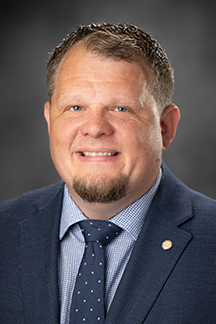
Ryan Browning
Ryan Browning House · District 28
R
Strong +
93% 46
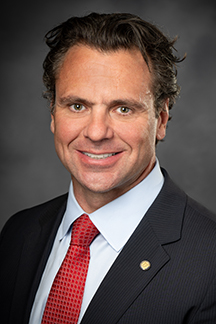
J.B. Akers
J.B. Akers House · District 55
R
Strong +
93% 48
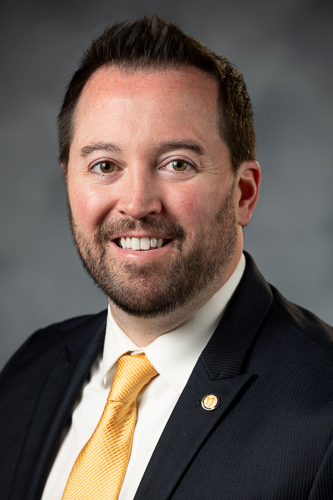
Jonathan Pinson
Jonathan Pinson House · District 17
R
Strong +
93% 48
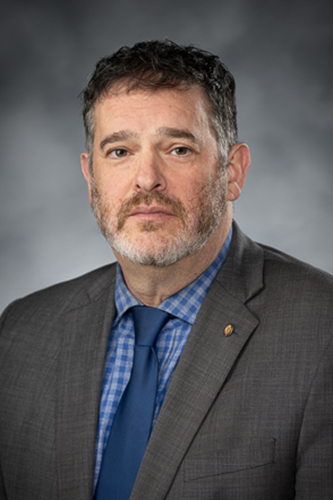
Chris Phillips
Chris Phillips House · District 68
R
Strong +
93% 48
Jordan Maynor
Jordan Maynor House · District 41
R
Strong +
93% 48
Corby Dillon
Corby Dillon House · District 29
R
Strong −
14% 47
Shawn Fluharty
Shawn Fluharty House · District 5
D
Oppose
31% 45
Marty Gearheart
Marty Gearheart House · District 37
R
Oppose
33% 37
Evan Hansen
Evan Hansen House · District 79
D
Oppose
40% 48
Mike Pushkin
Mike Pushkin House · District 54
D
Oppose
40% 48
Showing 121–130 of 503 bills

All budget & taxes bills

in committee · West Virginia · House of Delegates Feb 23, 2026

HB 5651: Microbusiness Support & Simplification Act

HB 5651 creates a statewide program to support West Virginia microbusinesses (defined as businesses with 9 or fewer employees). It establishes a permanent state fund to provide grants for training, equipment, and microloans through partner organizations, while requiring state agencies to pay certified microbusiness vendors within 15 days for goods or services. The bill also mandates simplified compliance guides for small businesses when new rules affect them and encourages awarding small state contracts to certified microbusinesses. This program prioritizes rural areas, veteran-owned businesses, and entrepreneurs lacking traditional financing access.
Tags Small Business
in committee · West Virginia · House of Delegates Feb 6, 2026

HB 5293: Supplemental Appropriation to the Department of Human Services - Community Mental Health Services from Federal Block Grants.

HB 5293 is a procedural bill that adjusts existing federal funding allocations for West Virginia's Community Mental Health Services. It shifts $200,000 from the "Federal Coronavirus Pandemic" funding category to the "Personal Services and Employee Benefits" category within the same fiscal year (2026). This reallocation does not add new funding but modifies how existing federal block grant money will be used for staffing and operations. The bill directly affects the Department of Human Services' Community Mental Health Services program, ensuring funds are directed toward personnel costs. It is a routine budget adjustment, not a policy change, and requires no new legislative action beyond the funding realignment.
signed · West Virginia · House of Delegates Jun 29, 2026

HB 5438: To modify the foundation allowance to improve instructional programs.

HB 5438 modifies West Virginia's school funding formula to direct additional resources toward instructional improvements and technology. It allocates 10% of the local share increase for instructional programs (with $150,000 minimum per county) and 20% for instructional technology (with $30,000 minimum per county), both calculated based on attendance and enrollment data. County school boards may use up to 50% of instructional funds for hiring educators or technology specialists, subject to state superintendent approval, but cannot increase central office staff beyond four positions. The bill also requires funding for the Third Grade Success Act and allows county boards to use allocated funds for Safe Schools Fund projects. This directly affects all West Virginia county school districts and their budgeting for classroom programs and technology resources.
Sub-Topics School Funding
in committee · West Virginia · House of Delegates Feb 5, 2026

HB 5257: Relating to education to children and adults housed in correctional facilities and regional jails

HB 5257 removes language requiring specific state funding appropriations for education services for children and adults in correctional facilities and regional jails. It amends West Virginia Code §18-20-5 to eliminate the current requirement that such education must be funded through dedicated state budget allocations. This change allows the State Board of Education, Department of Education, and State Superintendent to provide educational services in these facilities without needing separate annual funding bills. The bill directly affects incarcerated youth and adults who would continue to receive educational opportunities under existing state and federal requirements, contingent on available funding.
Sub-Topics State Budget
in committee · West Virginia · Senate Feb 9, 2026

SB 876: Supplemental appropriation to Department of Health Facilities, fund 0412

SB 876 allocates supplemental funds from West Virginia's unappropriated surplus to three state hospitals: $1 million for Welch Community Hospital, $3.4 million for William R. Sharpe Jr. Hospital, and $4.3 million for Mildred Mitchell-Bateman Hospital. The funds are designated specifically for capital improvements, repairs, and equipment at these facilities during the 2026 fiscal year. This appropriation directly affects the operational capacity of these three hospitals by providing resources for infrastructure maintenance. As a procedural supplemental bill, it reallocates existing surplus funds without creating new policy or affecting broader populations.
in committee · West Virginia · Senate Feb 12, 2026

SB 761: Relating to in-state production of value-added forest products

This bill creates tax credits for West Virginia manufacturers that transform locally harvested wood into finished "value-added" products like plywood, wood pellets, or engineered lumber. It provides tiered credits ($1.25-$3 per ton) based on the volume of West Virginia-sourced wood processed, with higher rates for new facilities or expansions ($2.50-$6 per ton) for five years. To qualify, manufacturers must meet a "minimum transformation standard" (e.g., altering wood’s structure), avoid basic handling like debarking, and self-report production data. Credits are capped at $1.25 million annually per facility and apply to corporate or personal income tax. The law aims to incentivize local processing of forest resources while preventing credits for raw log handling.
in committee · West Virginia · House of Delegates Feb 26, 2026

HB 5474: Gateway to the Gorge Outdoor Recreation Industry Act

HB 5474 creates a tax credit for businesses in West Virginia's outdoor recreation industry located between Charleston and the New River Gorge. The bill directly affects qualifying outdoor recreation businesses operating in this specific corridor, including those offering activities like hiking, biking, and fishing. It establishes a tax credit to reduce business taxes for eligible operations, aiming to encourage economic growth and job creation in the region. The legislation cites the area's natural resources, transportation access, and appeal to remote workers as key reasons for this incentive.
in committee · West Virginia · House of Delegates Feb 6, 2026

HB 5308: Supplemental Appropriation to the State Board of Education - Hope Scholarship Program from Lottery Surplus.

HB 5308 adds $30,498 in funding from the state lottery surplus to the Hope Scholarship Program for fiscal year 2026. This supplemental appropriation uses an unappropriated surplus balance identified in the Governor’s budget document to support the program’s existing operations. The bill does not change eligibility, program rules, or student benefits - only increasing available funds for scholarships. It was introduced in the West Virginia House of Delegates on February 6, 2026.
in committee · West Virginia · House of Delegates Feb 16, 2026

HB 5534: To reduce all titled vehicle personal property taxation values, except for mobile homes, from a Class IV assessment valuation to a Class II

HB 5534 would reclassify titled vehicles (like cars and trucks) in West Virginia from a higher tax class (Class IV) to a lower tax class (Class II) for property tax purposes. This change would directly affect vehicle owners in municipalities who pay personal property tax on their titled vehicles, excluding mobile homes. The bill modifies West Virginia Code §11-8-5 to move titled vehicles from municipal Class IV valuation to residential Class II valuation. If passed, this would lower the taxable value of these vehicles, reducing their property tax burden compared to current rates. The bill is currently pending in the House Finance Committee.
Sub-Topics Property Tax
in committee · West Virginia · Senate Feb 12, 2026

SB 936: Providing WV certified thoroughbred eligibility

SB 936 defines "West Virginia certified thoroughbred" horses and sets requirements for these horses to compete in restricted races, including specific purse calculations and eligibility rules. The bill increases the $1 million annual funding cap for restricted races at racetracks that previously didn't participate in the West Virginia Development Fund before 1992, and adds an inflation adjustment to revenue from betting pools deposited into the state Excess Lottery Revenue Fund. It directly affects West Virginia racetracks, thoroughbred horse owners, and the state's funding distribution for horse racing operations. The bill modifies existing code sections to implement these eligibility standards and financial adjustments for restricted thoroughbred racing events.
Showing 121 to 130 of 503 bills
Previous 1 12 13 14 51 Next