

Maddy summaryHB 2329 amends Washington state law to clarify that licensed midwives may delegate certain midwifery tasks to medical assistants and coordinate with international board-certified lactation consultants. The bill specifically updates statutes to allow midwives to authorize medical assistants to perform tasks within the assistants' training and scope of practice, while maintaining required supervision standards. It also explicitly confirms that midwives may work with lactation consultants without restrictions. This directly affects midwives, medical assistants, and lactation consultants by expanding midwives' ability to delegate routine care tasks under supervision. The policy change streamlines midwifery practice without altering core supervision requirements.
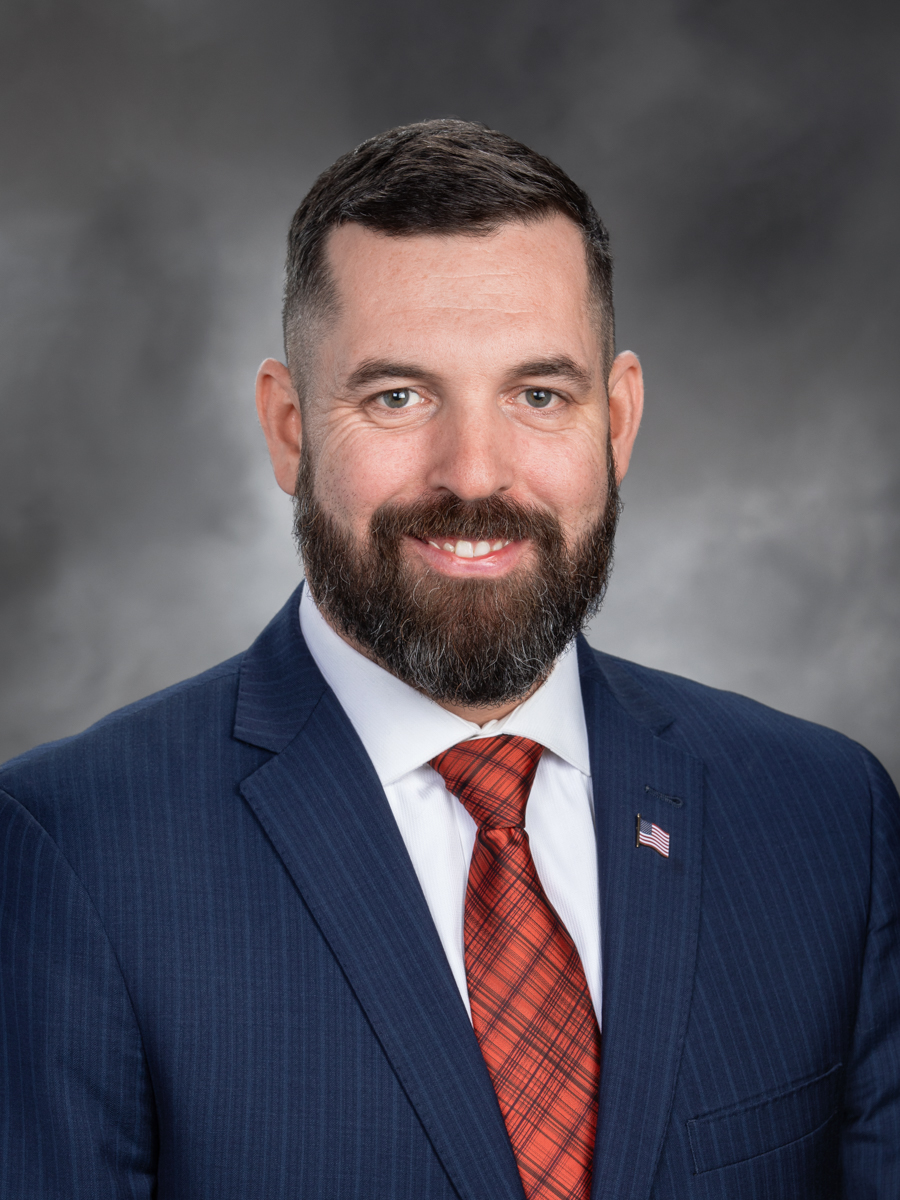
Rep. Matt Marshall
Sponsored bills
Maddy summaryHJM 4012 is a Washington State House Joint Memorial urging Congress to pass the Major Richard Star Act (H.R. 2102), which would amend federal law to extend "full concurrent receipt" benefits to combat-injured veterans regardless of their years of service. Currently, veterans with less than 20 years of service who are medically retired due to combat injuries receive less federal disability compensation than those with 20+ years, creating inequity. The memorial requests Congress schedule a vote on H.R. 2102 to resolve this disparity and fulfill the nation's obligation to all combat-injured veterans. This is a procedural request to the federal government, not a state law.
Maddy summaryThis bill is a ceremonial resolution (HR 4691) adopted by the Washington State House of Representatives on February 16, 2026. It formally commends the contributions of U.S. presidents, specifically highlighting George Washington and Abraham Lincoln's roles in establishing freedom and ending slavery, and recognizes the third Monday in February as Presidents' Day. The resolution does not create new laws or affect any individuals or policies; it solely expresses the House's symbolic honor for presidential legacies. It directly affects no one but serves as a formal statement of recognition by the state legislature.
Maddy summaryThis is a ceremonial resolution (not substantive legislation) passed by the Washington state House of Representatives. It formally congratulates the Seattle Seahawks football team for winning the 2025 NFL regular season, NFC West Division championship, and Super Bowl 60. The resolution specifically recognizes their 14-3 record, defensive dominance, key player achievements (including MVP Kenneth Walker III), and community contributions. It has no legal effect beyond expressing the House's recognition and appreciation to the team organization.
Maddy summaryHB 2514 establishes a memorial on the Washington state capitol campus to honor service members from Washington who died in Operation Iraqi Freedom, Operation Enduring Freedom, and Operation New Dawn (collectively termed the "global war on terror"). The bill creates a work group with legislative, veteran, and state agency representatives to plan the memorial’s design, location, funding, and construction. It requires the work group to submit recommendations to the capitol committee by July 2027, including names to honor, potential sites, and budget details. The memorial must also include a reflective component acknowledging veterans who died by suicide after service. This is a commemorative measure with no immediate policy or funding changes.
Maddy summaryHB 2175 exempts nonprofit organizations that provide free durable medical equipment to patients from Washington's retail sales and use taxes on items necessary for their operations. These providers must be federally tax-exempt under 501(c), not charge patients, and be licensed in Washington. The exemption expires January 1, 2037, and includes a review clause to potentially extend it if the policy increases access to medical equipment for Washington residents.
Maddy summaryHB 2146 defines and strengthens criminal penalties for sexual exploitation of minors in Washington State. It makes it a crime for anyone to force a minor into sexually explicit conduct for photos or live performances (section 1a), aid or invite minors into such situations (1b), or for parents/guardians to permit it (1c). The bill upgrades this offense to a class B felony under state law, increasing penalties. It directly affects minors who may be exploited, perpetrators of such acts, and caregivers who fail to protect minors. The law focuses on specific, concrete prohibitions rather than broader policy changes.
Maddy summaryHB 2719 creates the empowerED scholarship program, providing education savings accounts for foster care students in Washington state (ages 5-21) who are in care or have aged out. The program allows foster parents, caregivers, or guardians to use state-funded accounts - managed via a state-administered debit card - to cover qualified education expenses at private schools, home-based instruction, or other approved services. It explicitly permits religious private schools to participate, aligning with recent U.S. Supreme Court rulings on education funding. The bill aims to address educational instability faced by foster care students by ensuring funding follows the student across placements, with strict oversight to prevent misuse of funds.
Maddy summaryHB 2712 requires Washington school districts to conduct all collective bargaining negotiations (including contract talks and grievance meetings) publicly, either in person or via video streaming, and to post all negotiation documents and final agreements on their public website within two business days. It mandates public notice of meetings per the Open Public Meetings Act (chapter 42.30 RCW) but does not require public comment during negotiations or cover post-agreement grievance proceedings. The bill directly affects school districts and their negotiations with employee organizations, ensuring transparency in the bargaining process. Violations would be treated as breaches of the Open Public Meetings Act.
Maddy summaryWashington State's legislature is requesting Congress to call a constitutional convention under Article V of the U.S. Constitution. The application seeks to propose amendments that would impose fiscal restraints on federal spending, limit federal government power and jurisdiction, and restrict terms for federal officials and members of Congress. This is a procedural request (not a law) from Washington, with specific conditions to ensure the convention focuses only on these topics and cannot alter the Bill of Rights. The request is currently under review by the State Government & Tribal Relations committee.