

Maddy summaryHB 2110 establishes minimum personnel requirements for ambulance services during interfacility specialty care transports, which are transfers of critically ill or injured patients between medical facilities. The bill requires ambulances providing specialty care transport - defined as care needing physician, registered nurse, or specially trained paramedic-level personnel - to have sufficient staff, including at least one emergency medical technician (EMT) under secretary-promulgated standards. It amends existing Washington state law (RCW 18.73.030 and 18.73.150) to clarify definitions and standards for these specialized transports, ensuring consistent protocols for patient safety during critical transfers. This directly affects ambulance services, EMTs, and hospitals coordinating patient transfers.
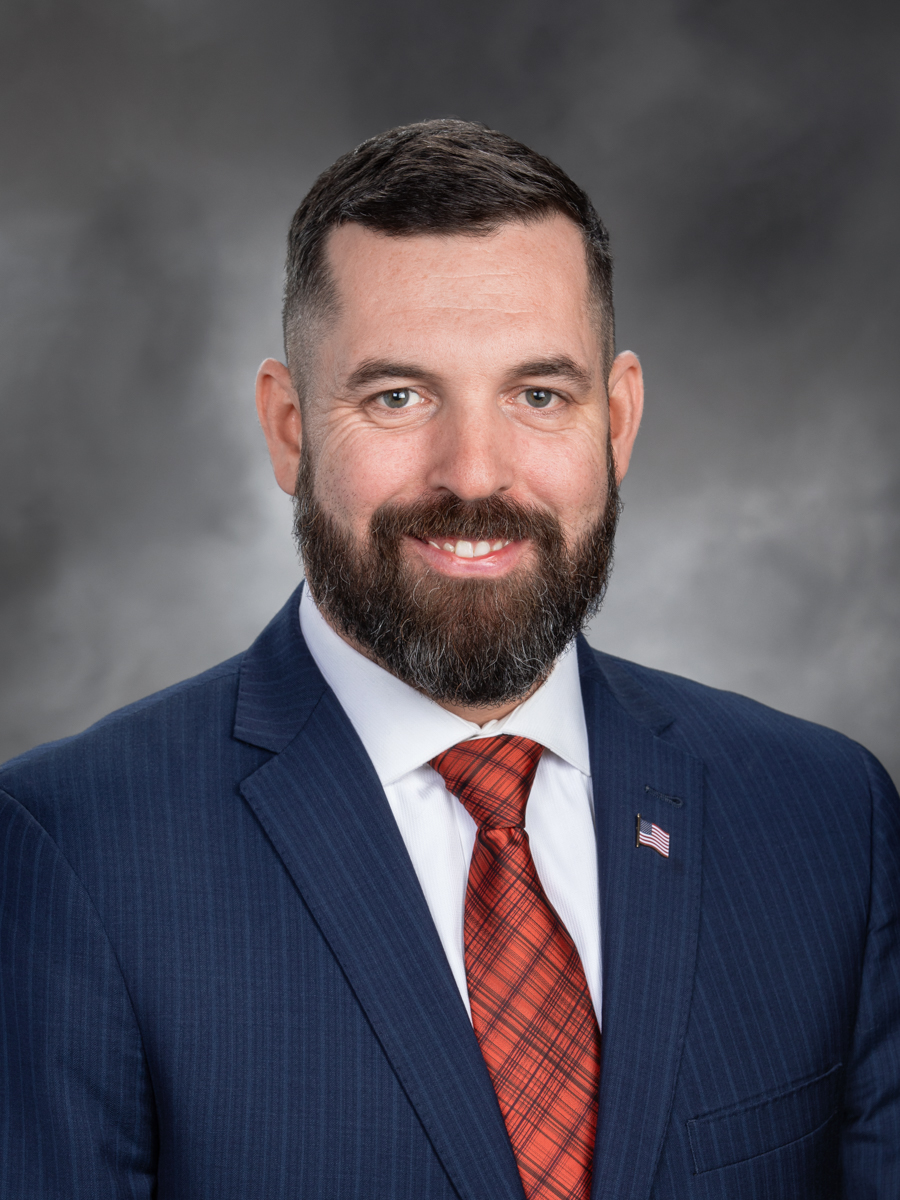
Rep. Matt Marshall
Sponsored bills
Maddy summaryThis bill is a House resolution that formally recognizes Representative Virginia "Jenny" Graham for her public service in the Washington State House of Representatives. It highlights her eight-year tenure, her advocacy for public safety, and her work on community safety and veterans' issues. The resolution does not create new laws or policies but serves as an official acknowledgment of her contributions and legacy.
Maddy summaryThis bill is a House resolution that formally honors John Michael Sattgast for his 35 years of dedicated service as a communications professional for the House Republican Caucus in the Washington State Legislature. It recognizes his work producing over 4,000 radio stories and coordinating media coverage for state representatives, as well as his leadership roles with the National Conference of State Legislatures. The resolution acknowledges his contributions to sharing legislative history and public information, noting his receipt of the 2023 Legislative Staff Achievement Award. This measure serves as a commemorative tribute rather than establishing new policy or affecting government operations.
Maddy summaryThis bill formally acknowledges the service of Representative Steve Tharinger to his district and the Washington state legislature. It recognizes his long career in public service, including his time as a Clallam County Commissioner, his work on the House Capital Budget Committee, and his advocacy for environmental protection and healthcare. The resolution serves as a commemorative tribute to his contributions and personal qualities rather than establishing new laws or policies.
Maddy summaryHB 2636 requires independent, balanced reviews of Washington's K-12 public education system to assess whether current policies and funding effectively support student success. It establishes a 15-member Public Education Review Advisory Council - including educators, administrators, fiscal experts, and non-legislative representatives - to evaluate existing laws and funding based on five criteria: achieving legislative goals, improving student outcomes, cost-effectiveness, ongoing relevance, and efficient resource use. The council must annually recommend priority policies for review to the legislature and provide annual reports analyzing these evaluations. These reviews aim to identify policies that should be maintained, modified, consolidated, or eliminated, particularly those enacted without adequate funding. The bill directly affects state education policy decisions and resource allocation for all public school districts and students across Washington.
Maddy summaryHB 2133 makes permanent a property tax exemption for multipurpose senior citizen centers that was originally established temporarily in 2017. The bill modifies state law to ensure these centers no longer lose their tax exemption after the temporary period ends, directly affecting qualifying senior centers that provide community services. This change removes the temporary nature of the exemption created under Chapter 301, Laws of 2017, ensuring ongoing tax relief for these facilities.
Maddy summaryThis bill updates the specific duties that various types of medical assistants, including certified, hemodialysis, phlebotomist, and registered medical assistants, are authorized to perform in Washington state. It details a range of tasks from fundamental procedures like sterilizing equipment and taking vital signs, to more advanced clinical duties such as performing venipuncture, administering certain medications, and assisting with minor office surgeries. The legislation also specifies limitations on these duties, such as restrictions on administering experimental drugs, and outlines supervision requirements by a healthcare practitioner for tasks like establishing intravenous lines or treating syphilis via telemedicine. By defining these roles, the bill impacts medical assistants and the healthcare practitioners who delegate and supervise their work.
Maddy summaryWashington State's HJM 4004 is a joint memorial requesting Congress to amend the Marine Mammal Protection Act. It asks for expanded authority allowing state and tribal managers to use adaptive management tools - including lethal removal of sea lions - to protect endangered salmon stocks across all Washington marine waters and Puget Sound, beyond the current limited Columbia River authorization. The memorial cites a 2022 study showing pinniped populations contribute to salmon declines and a 2018 law that successfully reduced sea lion predation on the Columbia River. This request seeks to extend similar flexibility statewide for salmon recovery efforts. (Procedural memorial; not a bill with binding effect.)
Maddy summaryHB 1002 recognizes posttraumatic stress disorder (PTSD) as an occupational disease for county coroners, medical examiner personnel, and investigative staff in Washington State. It amends workers' compensation rules (RCW 51.08.142) to allow these workers to file claims for PTSD-related injuries, which were previously excluded. The bill requires pre-employment psychological exams for some groups (like firefighters and law enforcement) hired after specific dates to confirm no preexisting PTSD. This change directly affects public safety workers in high-stress roles who develop PTSD from job-related trauma, expanding their eligibility for workers' compensation coverage.
Maddy summaryHB 2417 updates Washington's military justice code to extend specific victim protections to members of the state National Guard (organized militia) who experience crimes while serving in their state capacity. It directly affects National Guard members who are victims of offenses under the state military code. The bill establishes concrete rights including protection from the accused, timely notice of court proceedings, the right to be heard at key hearings, privacy safeguards, and access to restitution. These provisions align state military justice standards with federal protections to ensure consistent victim treatment during both federal and state service.