Maddy summaryThis bill establishes that food products cannot use dairy product names like "yogurt," "milk," or "cheese" unless they meet specific U.S. Food and Drug Administration (FDA) standards for dairy. It directly affects food manufacturers who currently market non-dairy products (e.g., plant-based milks) using traditional dairy names. The bill amends federal law to require that any food using such names must be made primarily from mammal milk (lacteal secretion), not plant-based ingredients, and clarifies that the FDA will enforce this rule through new guidance. The FDA must issue enforcement guidance within 180 days and report on enforcement actions to Congress within two years.
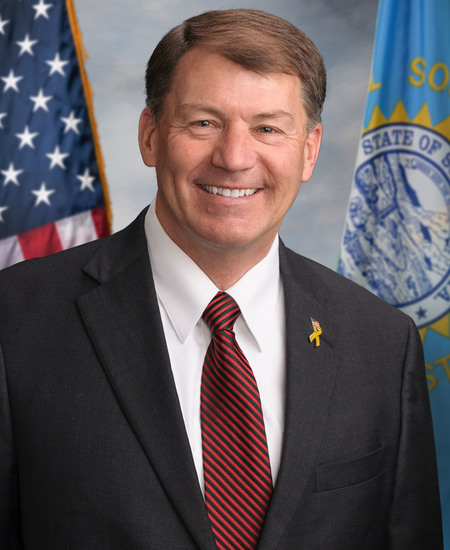
Sen. Mike Rounds
Sponsored bills
Maddy summaryThe Unleashing AI Innovation in Financial Services Act creates a new pathway for financial institutions to test AI-powered financial products with regulatory flexibility. Financial institutions can apply to their regulatory agency for an "alternative compliance strategy" that would temporarily waive or modify certain regulations for a limited time, provided they demonstrate how the AI test project serves the public interest, improves consumer access, and manages risks. Regulatory agencies must review applications within 120 days and report annually to Congress on outcomes of these AI test projects without disclosing proprietary information. This law directly affects banks, brokerages, investment firms, and other financial institutions regulated by agencies like the SEC, CFPB, and FDIC.
Maddy summaryThis bill (S 2425) makes it unlawful to access property under the jurisdiction of U.S. intelligence agencies if the property is clearly marked as closed or restricted, without authorization. It directly affects individuals who enter or access such marked facilities or property, including unauthorized visitors, trespassers, or potentially journalists. The key provision requires clear marking of restricted areas and imposes escalating penalties: up to 180 days in jail or a fine for a first offense, up to 3 years for a second offense, and up to 10 years for third or subsequent offenses. The law amends the National Security Act of 1947 to add this specific security measure for intelligence community property.
Maddy summaryThis bill expands Medicare Part B coverage to include specific pharmacist services, directly affecting Medicare beneficiaries and pharmacists who provide these services. It defines "pharmacist services" as evaluations and treatments for illnesses like COVID-19, flu, RSV, or strep throat, or services addressing public health emergencies, requiring collaboration with physicians as state law permits. Medicare would pay 80% of the lower of the actual charge or 85% of the physician payment rate (100% for public health emergencies), and prohibits balance billing for these services. The changes take effect January 1, 2026.
Maddy summaryThis bill streamlines environmental reviews for certain housing projects under the National Environmental Policy Act (NEPA). It reclassifies HUD-funded housing activities into three categories: some (like tenant assistance) become fully exempt from review, others (like rehabbing small buildings) get simplified "categorical exclusion" status if they don’t alter environmental conditions, and infill projects (new construction on previously disturbed urban land surrounded by development) receive streamlined review. The bill directly affects HUD housing programs, developers of infill projects, and local governments managing housing approvals. It aims to reduce review times and administrative costs, with HUD required to report annually on these impacts, particularly for affordable housing.
Maddy summaryThe BUILD Housing Act streamlines environmental review processes for federal housing assistance programs. It allows the Department of Housing and Urban Development (HUD) to designate certain HUD-funded housing projects as "special projects" for environmental review under the National Environmental Policy Act (NEPA), reducing administrative steps. This directly affects HUD housing programs, particularly enabling federally recognized tribes to assume environmental review responsibilities instead of relying solely on states or local governments. The bill modifies existing law to include tribes as eligible entities for these reviews, using the federal definition of "Indian Tribe" from the Native American Housing Act.
Maddy summaryThis bill clarifies that the federal Consumer Financial Protection Bureau (CFPB) cannot enforce its rules on insurance companies regulated by state insurance departments when those companies are engaged in insurance activities. It directly affects insurance companies operating under state regulation by limiting the CFPB's authority over their insurance-related business. The key provision amends federal law to state that the CFPB may not enforce its rules regarding insurance business, and requires federal enforcement of related laws to be narrowly construed when insurance is involved. A new rule of construction explicitly favors state insurance regulators' authority over such companies.
Halt All Lethal Trafficking of Fentanyl Act or the HALT Fentanyl Act This act permanently places fentanyl-related substances as a class into schedule I of the Controlled Substances Act. A schedule I controlled substance is a drug, substance, or chemical that has a high potential for abuse; has no currently accepted medical value; and is subject to regulatory controls and administrative, civil, and criminal penalties under the Controlled Substances Act. Under the act, offenses involving fentanyl-related substances are triggered by the same quantity thresholds and subject to the same penalties as offenses involving fentanyl analogues (e.g., offenses involving 100 grams or more trigger a 10-year mandatory minimum prison term). Additionally, the act establishes a new, alternative registration process for certain schedule I research. The act also makes several other changes to registration requirements for conducting research with controlled substances, including permitting a single registration for related research sites in certain circumstances, waiving the requirement for a new inspection in certain situations, and allowing a registered researcher to perform certain manufacturing activities with small quantities of a substance without obtaining a manufacturing registration. Finally, the act expresses the sense that Congress agrees with the interpretation of the Controlled Substances Act in United States v. McCray , a 2018 case decided by the U.S. District Court for the Western District of New York. In that case, the court held that butyryl fentanyl, a controlled substance, can be considered an analogue of fentanyl even though, under the Controlled Substances Act, the term controlled substance analogue specifically excludes a controlled substance.
Maddy summaryThis bill authorizes the minting of commemorative coins for the 2028 Los Angeles Olympic and Paralympic Games and the 2034 Salt Lake City Olympic and Paralympic Winter Games. It specifies four coin types ($5 gold, $1 silver, half-dollar, and proof silver $1) with defined quantities and designs reflecting U.S. athletic participation. A surcharge on each coin sale (e.g., $35 for $5 coins) funds the respective Olympic committees' legacy programs, including youth sports initiatives. The coins are legal tender but intended solely for commemoration, with surcharges directed to the organizing committees after covering minting costs.
Maddy summaryThis bill requires beef products labeled "Product of U.S.A." to be made exclusively from cattle born, raised, and slaughtered entirely within the United States. It creates a new labeling standard under the Federal Meat Inspection Act, applying to all beef sold domestically. The rule does not apply to beef intended for export to foreign countries. This directly affects beef producers, processors, and retailers who market products with this specific label.