Maddy summaryHRES 153 is a ceremonial resolution expressing condolences to the families and loved ones of the 67 victims who died in two aviation incidents: American Eagle Flight 5342 and U.S. Army flight PAT 25, which crashed near Washington, D.C.'s Reagan National Airport on January 29, 2025. It specifically honors the victims - many connected to Wichita, Kansas (known as the "Air Capital of the World") - and extends sympathies to affected communities including Wichita, Kansas, and the National Capital Region. The resolution also commends first responders who aided in the recovery efforts. As a non-binding expression of sympathy with no policy changes, it does not affect laws or regulations.
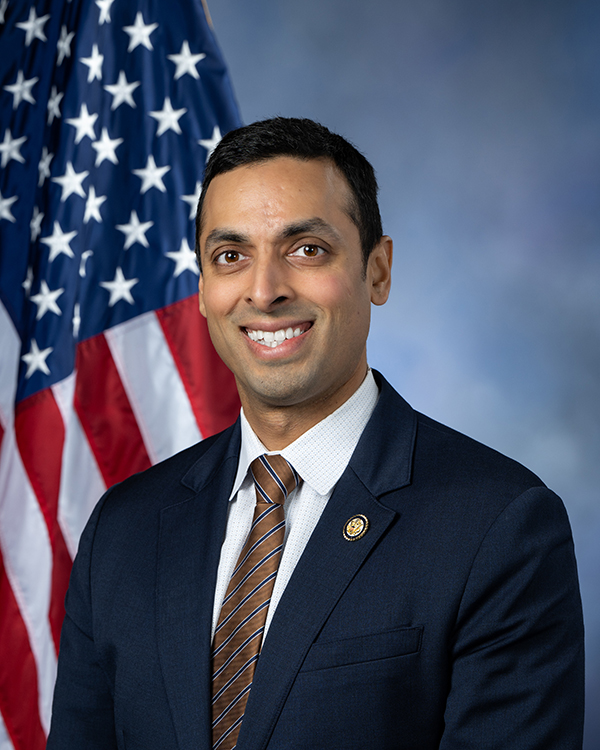
Rep. Suhas Subramanyam
Sponsored bills
Maddy summaryHR 1787 authorizes the U.S. Mint to produce commemorative coins honoring baseball legend Roberto Clemente, including $5 gold, $1 silver, and half-dollar coins, with specific specifications for weight, size, and metal content. The bill requires the coins to feature Clemente's image and commemorative inscriptions, and mandates a surcharge ($35 for gold, $10 for silver, $5 for half-dollar) paid to the Roberto Clemente Foundation for its educational, youth sports, and disaster relief programs. All coins must be minted in 2027, sold at face value plus surcharge and production costs, and will be legal tender. The bill focuses solely on the coin program, not broader policy changes.
Safe Schools Improvement Act This bill requires states to direct their local educational agencies (LEAs) to establish policies that prevent and prohibit bullying and harassment of elementary and secondary school students. In particular, these policies must prohibit bullying and harassment based on race, color, national origin, disability, religion, or sex. Sex includes sexual orientation, gender identity, and sex characteristics (including intersex traits). Further, LEAs must provide (1) students, parents, and educational professionals with annual notice of the conduct prohibited in their disciplinary policies; (2) students and parents with grievance procedures that target such conduct; and (3) the public with annual data on the incidence and frequency of that conduct at the school and LEA level. The Department of Education must conduct and report on an independent biennial evaluation of programs and policies to combat bullying and harassment in elementary and secondary schools. The National Center for Education Statistics must collect state data to determine the incidence and frequency of the conduct prohibited by LEA disciplinary policies.
Maddy summaryThis bill (HJRES 63) would rename the Robert E. Lee Memorial, a National Park Service site in Arlington, Virginia, to "Arlington House National Historic Site." It directly affects the National Park Service, which manages the site, and all federal government documents, maps, and records referencing the location. The key provision updates all official references to the site to the new name and repeals two prior resolutions that established the memorial. As a procedural renaming bill, it does not create new policies or funding but changes the site's official designation.
Maddy summaryThe Keep Americans Safe Act (HR 1674) restricts the sale, transfer, and possession of large capacity ammunition feeding devices (LCFDs) - defined as magazines or similar devices holding more than 15 rounds of ammunition - for most individuals. Exceptions allow law enforcement officers (including campus law enforcement), retired officers, and nuclear security personnel to possess LCFDs under specific conditions. The bill requires new LCFDs to have serial numbers and manufacturing dates, permits federal seizure of violative devices, and authorizes federal grant programs to fund buy-back initiatives for LCFDs. It directly affects gun owners and manufacturers while preserving access for covered law enforcement and security personnel.
Maddy summaryHR 1657, the Humane Cosmetics Act of 2025, prohibits cosmetic companies from conducting or contracting animal testing for products sold in the U.S. beginning one year after the law takes effect. It also bans the sale or transport of cosmetics developed using such testing after that date, with limited exemptions (e.g., for foreign regulatory requirements or when no non-animal safety alternatives exist). The bill directly affects cosmetic manufacturers, retailers, and distributors by requiring them to shift to non-animal testing methods. The Food and Drug Administration (FDA) will enforce the law, including reviewing records and imposing civil penalties for violations.
Maddy summaryHR 1659, the Truck Parking Safety Improvement Act, creates a federal grant program to address commercial truck parking shortages on highways. It authorizes $151 million annually (2025-2029) for states, local governments, tribes, and other eligible entities to build or improve public parking facilities for commercial motor vehicles. Projects must be on or near highways, include safety features, and provide free, publicly accessible parking - prohibiting fees for drivers. The bill also requires annual reports to Congress evaluating parking availability and project effectiveness.
Maddy summaryThe PAST Act of 2025 amends the Horse Protection Act to ban harmful practices known as "soring," which deliberately cause pain to horses to exaggerate their gait for shows. It specifically prohibits devices like action devices (e.g., boots causing friction) and weighted shoes on Tennessee Walking Horses, Racking Horses, and Spotted Saddle Horses at events. The bill increases penalties, including escalating disqualifications for repeat offenses (180 days → 1 year → 3 years) and raises fines for violations to $5,000 per offense. It also requires stricter licensing for inspectors and mandates public posting of violation records to help event organizers enforce rules.
Maddy summaryHR 1695, the Guarding Readiness Resources Act, clarifies how the National Guard Bureau handles reimbursement funds from states. It requires that funds received from states (including Puerto Rico, DC, Guam, and the Virgin Islands) for using military property must be credited to specific accounts and can only be used by the Department of Defense for repairing, maintaining, or replacing assets directly supporting National Guard units operating under state control. This bill directly affects states that reimburse the National Guard Bureau and ensures these funds are restricted to maintaining military assets, not general purposes.
Maddy summaryThe American Dream and Promise Act of 2025 would create pathways to permanent residency for certain immigrant youth who entered the U.S. as children (Dream Act component) and for individuals from countries with Temporary Protected Status or Deferred Enforced Departure (American Promise Act component). To qualify, applicants must meet continuous physical presence requirements (since January 1, 2021 for Dream Act applicants, and for 3+ years for American Promise applicants), pass background checks, and satisfy educational or employment criteria. Conditional permanent resident status would be granted initially, with the option to convert to full permanent residency after meeting additional requirements like earning a degree, serving in the military for two years, or demonstrating three years of earned income. The bill includes fee exemptions for low-income applicants, establishes a grant program to assist applicants with legal help, and creates specific procedures for background checks and appeals.