Maddy summaryThis bill creates a tax credit for businesses selling products made with U.S.-grown cotton. The credit equals 24% of the cotton's market value if processed only in the U.S. or in countries with U.S. trade deals, or 18% for other processing locations. To qualify, cotton must be digitally traced from U.S. farms to finished products and certified by the USDA as meeting origin requirements. It directly affects clothing and textile manufacturers selling qualifying products in the U.S. market.
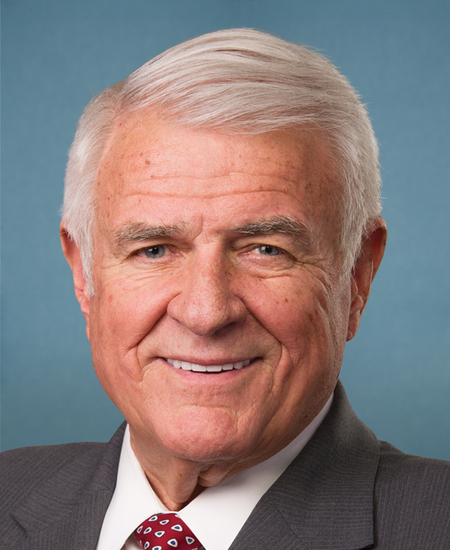
Rep. John R. Carter
Sponsored bills
Maddy summaryHR 4105, the VET Act of 2025, establishes a federal grant program to help veterans, active-duty service members transitioning out of the military, and their spouses secure jobs in the energy industry. The program provides grants to energy companies (including manufacturers of solar, wind, or nuclear equipment) to cover costs like job training, recruitment, and relocation for eligible individuals - prioritizing those with military energy experience, in opportunity zones, or facing barriers like homelessness. Grants are capped at $10,000 per hire, with a maximum $500,000 annual limit per company, funded at $60 million yearly from 2026-2031. Companies must report on job retention, employee satisfaction, and program outcomes to the Department of Labor, with a final evaluation due to Congress by 2030.
Maddy summaryThis resolution (HRES 998) is a symbolic House of Representatives commendation honoring President Trump, U.S. military/intelligence agencies, and Justice Department personnel for the alleged success of "Operation Absolute Resolve" in apprehending Venezuelan leader Nicolás Maduro. It cites Maduro's charges (including narcoterrorism conspiracy) and the Maduro regime's alleged dismantling of Venezuelan democracy, state-sponsored drug trafficking, and human rights abuses. The resolution expresses support for Venezuela's democratic transition but contains no new policy, funding, or legal changes. As a procedural resolution, it does not directly affect any individuals or alter laws.
Maddy summaryThis bill modifies federal sentencing for young people under 18 who were previously trafficked, abused, or assaulted before committing violent crimes. It allows judges to sentence below mandatory minimums and suspend parts of a sentence to account for the trauma the offender experienced. The law specifically applies to those convicted of violent offenses after the bill's enactment, provided the court finds clear evidence they were victimized under specific federal trafficking or abuse laws within the prior year. It directly affects minors with documented histories of victimization who commit violent acts, giving judges discretion to consider their trauma during sentencing.
Maddy summaryHR 909, the Crime Victims Fund Stabilization Act of 2025, modifies how funds from the False Claims Act are deposited into the Crime Victims Fund. It specifies that from 2025 through 2029, certain False Claims Act proceeds (specifically those for qui tam plaintiff payments and government damage reimbursements) cannot be deposited into the fund. This change directly affects the composition of the Crime Victims Fund by excluding these specific revenue streams during the specified period. The bill does not create new benefits or alter victim services; it only adjusts fund allocation rules for existing False Claims Act revenues.
Miracle on Ice Congressional Gold Medal Act This act provides for the award of Congressional Gold Medals to the members of the 1980 U.S. Olympic men's ice hockey team in recognition of the team's achievement at the 1980 Winter Olympic Games.
Maddy summaryThis bill amends the Natural Gas Act to give the Federal Energy Regulatory Commission (FERC) exclusive authority to approve U.S. LNG export terminal projects, requiring FERC to deem such exports consistent with the public interest. It directly affects natural gas companies seeking to build or expand export facilities and streamlines FERC's review process by removing prior requirements for interagency coordination. The bill clarifies that FERC's decisions won't override existing sanctions laws, including restrictions on trade with countries designated as state sponsors of terrorism under current law. This change aims to accelerate domestic LNG export projects while maintaining legal safeguards for national security and foreign policy.
Maddy summaryHR 6383, the Brandon Act Training and Protocol Act, requires the Department of Defense to create a strategic plan addressing mental health and suicide prevention among military members. The plan mandates uniform protocols for members seeking mental health help on their own and standardized training for commanders, medical staff, and enlisted leaders on recognizing distress, supporting referrals, and responding appropriately. It also establishes a certification process to confirm personnel complete required training. This bill directly affects all members of the Armed Forces through improved mental health access and support, while requiring commanders and medical personnel to implement new protocols. The focus is on concrete policy changes to standardize mental health services within the military.
Maddy summaryHRES 782 is a non-binding House resolution expressing condolences to victims of the July 4, 2025, catastrophic floods in Texas, which caused at least 135 deaths (including 37 children) and widespread destruction. It honors first responders who rescued over 850 people and community heroes like camp staff who saved children, while committing the House to stand with affected Texans. The resolution does not create new laws or allocate funds - it formally mourns the loss of life, recognizes acts of courage, and urges prioritization of rebuilding infrastructure and support for vulnerable residents. This symbolic gesture was introduced by multiple Texas representatives and referred to the Transportation Committee.
Maddy summaryHR 5981, the VA Billing Accountability Act, requires the Department of Veterans Affairs (VA) to stop billing veterans for care or medications if the VA delayed sending payment notices due to its own errors. Specifically, it creates a two-year window (ending two years after enactment) where veterans won’t have to pay if they received care or medications but weren’t notified of required payments more than 180 days later for VA facilities or more than 18 months for non-VA care. The bill also sets strict deadlines for VA to send billing notices and mandates that veterans receive clear options to apply for waivers or set up payment plans if notices are late. This directly affects veterans who received delayed billing notices due to VA administrative errors, ensuring they aren’t charged for delays the VA caused. The law terminates after two years, with the VA required to review billing procedures within 180 days of enactment.