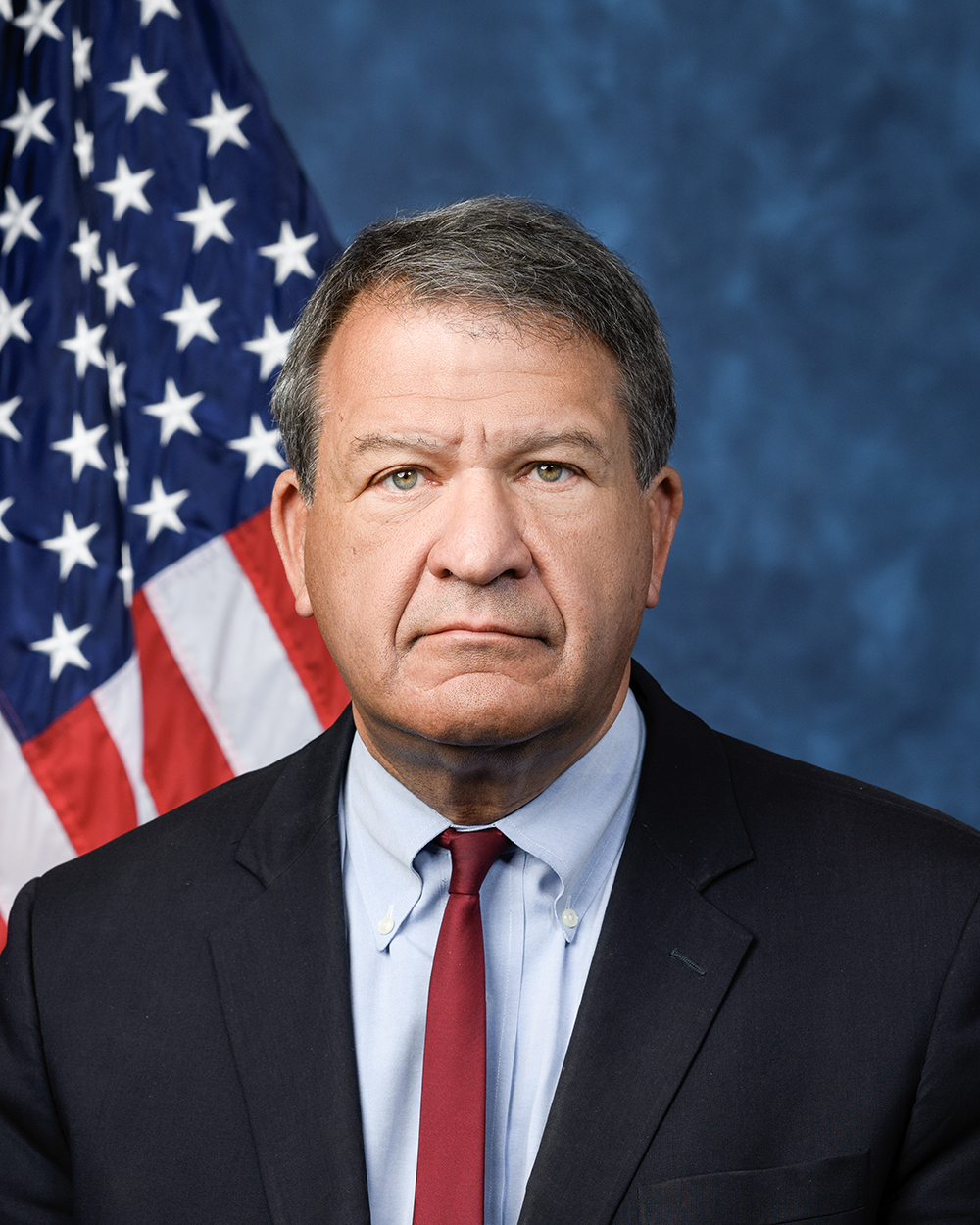
Photo of George Latimer
D United States House · District 16 · New York On the 2026 ballot

Rep. George Latimer

Compare
Total votes
669
all sessions
Attendance
98%
13 missed
Near the chamber average
With party
97%
of cast votes
Near the chamber average
Bipartisan score
2%
crosses aisle rarely
Near the chamber average
Sponsored
476
bills & resolutions
Higher than 79% of chamber peers
Committees
6
assignments
476 bills and resolutions

Sponsored bills

Total
476
Primary
10
Co-sponsor
466
This page
476
matching current filters
Co-sponsor HR 8881
Passed · Washington House · Co-sponsor
SBA Artificial Intelligence Utilization Act of 2026

Maddy summaryThe SBA Artificial Intelligence Utilization Act of 2026 requires the Small Business Administration to submit annual reports detailing its use of artificial intelligence and machine learning. These reports must cover the benefits and risks of this technology, including how it impacts operations, and outline strategies to maintain human oversight in important decisions. Additionally, the bill mandates that the SBA Administrator provide a briefing to congressional committees within 30 days of submitting each report. This legislation directly affects the SBA by establishing a formal process for evaluating and managing the adoption of AI tools within the agency.

Passed Jun 24, 2026 1 co-sponsor
Co-sponsor HR 826
Passed · Washington House · Co-sponsor
COVID Fraud Transparency Act of 2026

COVID Fraud Transparency Act of 2026 This bill requires the Small Business Administration's Office of Inspector General to report quarterly to Congress about fraud cases involving certain COVID-19 loans (e.g., Paycheck Protection Program loans). The report must include the number and total dollar amount of such loans, number of new cases of fraud and suspected fraud, number of fraud cases resolved, and types of such cases of fraud. The reporting requirements terminate two years after this bill is enacted.

Passed Jun 24, 2026 1 co-sponsor
Co-sponsor HR 9404
In committee · Washington House · Co-sponsor
VA Home Loan Navigator Act

Maddy summaryThe VA Home Loan Navigator Act establishes a free, voluntary program to help veterans and eligible borrowers navigate VA home loan benefits. The Department of Veterans Affairs will fund independent, neutral organizations to provide education, counseling on loan processes, and assistance with issues like foreclosure prevention and understanding costs. To ensure fairness, the law strictly prohibits these service providers from receiving payments from lenders or real estate agents and requires them to remain operationally separate from any mortgage or brokerage businesses. Designated entities must meet specific criteria, including HUD approval and a primary mission of serving military families, while individual counselors must be certified and recertified every three years. The program will be monitored through regular reports to Congress evaluating borrower satisfaction and outcomes such as foreclosure prevention rates.

In committee Jun 23, 2026 1 co-sponsor
Co-sponsor HR 9370
In committee · Washington House · Co-sponsor
Protect Local Funding Act

Maddy summaryThe Protect Local Funding Act prohibits federal agencies from finalizing, implementing, or enforcing a specific proposed rule regarding federal financial assistance scheduled for publication in May 2026. This legislation directly affects the Office of Management and Budget and other federal agencies by legally blocking them from acting on that particular regulation. By preventing the enforcement of this rule, the bill aims to stop a specific administrative action that could impact how federal funds are distributed. The measure does not alter existing funding programs but rather serves as a procedural barrier to a future regulatory change.

In committee Jun 18, 2026 1 co-sponsor
Co-sponsor HR 9350
In committee · Washington House · Co-sponsor
No 9/11 Family Left Behind Act of 2026

Maddy summaryThe No 9/11 Family Left Behind Act of 2026 provides an additional lump-sum payment to certain eligible families of victims of state-sponsored terrorism. This extra payment equals 5.8573 percent of the original judgment amount awarded to those who have not yet received a prior payment under the existing law. The bill requires the Special Master to notify eligible claimants within 90 days of the act's enactment and to process their claims for this additional amount within 90 days of receiving the necessary information. Funding for these payments will come from any unappropriated funds in the U.S. Treasury.

In committee Jun 18, 2026 1 co-sponsor
Co-sponsor HR 9265
In committee · Washington House · Co-sponsor
To amend the Richard B. Russell National School Lunch Act to require participation in the summer EBT program as a condition of participating in the school lunch program, and for other purposes.

Maddy summaryThis bill requires states and tribal organizations that run school lunch programs to also participate in the Summer EBT program, which provides food assistance to children during summer breaks. For the summers of 2024 through 2026, participation in the summer program remains voluntary for these entities. Starting in summer 2027, joining the summer program becomes mandatory for any state or tribal organization that already participates in the school lunch program. The legislation also updates administrative rules to ensure states submit management plans for these programs by specific deadlines each year.

In committee Jun 11, 2026 1 co-sponsor
Co-sponsor HRES 1342
In committee · Washington House · Co-sponsor
Expressing support for the designation of June 5, 2026, as "National Gun Violence Awareness Day" and June 2026 as "National Gun Violence Awareness Month".

Maddy summaryThis resolution expresses support for designating June 5, 2026, as National Gun Violence Awareness Day and June 2026 as National Gun Violence Awareness Month. The bill calls on the public to wear orange on the designated day to honor victims and promote awareness of gun safety. It highlights statistics on gun-related deaths and injuries to underscore the need for community discussions on making neighborhoods safer.

In committee Jun 4, 2026 1 co-sponsor
Co-sponsor HR 9097
In committee · Washington House · Co-sponsor
American Manufacturing Revitalization Exchange Program Act of 2026

Maddy summaryThe American Manufacturing Revitalization Exchange Program Act of 2026 establishes a new international exchange program designed to address skilled labor shortages in the U.S. manufacturing sector by sending American workers to allied nations for training. Administered by the Assistant Secretary for Educational and Cultural Affairs within the Department of State, the program will select up to 10 participants annually who must be U.S. citizens with prior apprenticeship or higher education experience in manufacturing fields. These selected individuals will travel to allied countries for up to 12 months to gain hands-on expertise in strategic industries such as robotics, semiconductors, and aerospace, while also serving as cultural ambassadors. Upon returning to the United States, participants are expected to share their newly acquired skills and knowledge with domestic employers and training institutions, and the program will conclude two years after its enactment.

In committee Jun 2, 2026 1 co-sponsor
Co-sponsor HR 9048
In committee · Washington House · Co-sponsor
Celiac Safety Act of 2026

Maddy summaryThe Celiac Safety Act of 2026 officially classifies gluten-containing grains as a major food allergen under federal law, directly impacting the food industry and individuals with celiac disease or gluten intolerance. This change requires manufacturers to label products containing wheat, rye, barley, or their crossbred hybrids with the same prominence as other major allergens like milk. The new labeling requirements will not take effect until 18 months after the law is enacted, giving businesses time to adjust their packaging and production processes.

In committee May 29, 2026 1 co-sponsor
Co-sponsor HR 9036
In committee · Washington House · Co-sponsor
American High-Speed Rail Act

Maddy summaryThe American High-Speed Rail Act expands federal funding and streamlines regulations to support the development of high-speed and higher-speed rail projects across the United States. It authorizes billions of dollars in grants for corridor planning, technology improvements, and construction, while allowing the federal government to cover up to 100% of project costs under specific conditions. The bill also introduces new provisions to facilitate land acquisition, prioritize border projects, and extend labor protections to workers involved in federally funded rail infrastructure. Additionally, the legislation defines higher-speed rail as trains traveling between 110 and 186 miles per hour and includes tax incentives for rail carriers that sell or lease property to support these projects.

In committee May 26, 2026 1 co-sponsor
Showing 41 to 50 of 476 bills
Previous 1 … 4 5 6 … 48 Next