

Maddy summaryThis bill restricts access to Treasury payment systems (including the Bureau of the Fiscal Service) to only Treasury employees with a "fully successful" performance rating and at least one year of civil service, or contractors/outsiders with security clearances, required privacy/cybersecurity training, ethics agreements, and no conflicts of interest. It treats non-government users accessing these systems as government employees for ethics rules and defines specific actions (like stopping payments) as "personal and substantial participation" in government matters. The Treasury Inspector General must investigate any unauthorized access within 30 days and report to Congress, detailing the breach, security risks, and any halted payments. The bill directly affects Treasury staff, contractors, and any external entities accessing federal payment systems.
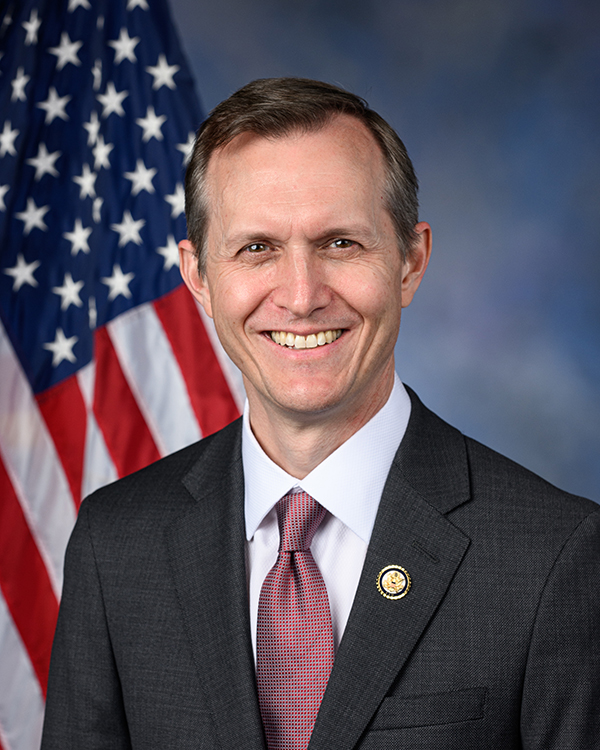
Rep. George Whitesides
Sponsored bills
Maddy summaryThis bill makes payments related to the Chiquita Canyon landfill event tax-free for affected residents. It allows individuals to exclude compensation received for property damage, relocation costs, or other losses (from May 2022 onward) from government agencies, Waste Connections, or their insurers from taxable income. The tax relief applies specifically to payments received on or after March 1, 2024, for the elevated temperature landfill event in Los Angeles County. It directly benefits residents who received such payments due to the 2022 landfill incident.
Maddy summaryThis bill creates a new grant program to fund high-quality workforce development programs at community colleges. It directs the Secretary of Labor to award competitive grants to community colleges that partner with employers in high-skill, high-wage, or in-demand industries to develop programs leading to nationally or regionally portable postsecondary credentials. The grants require evidence-based program design, employer engagement, and tracking of outcomes like program completion rates and job advancement for participants. Funded at $65 million annually from 2026-2031, the program prioritizes serving individuals with employment barriers, incumbent workers, and new workforce entrants through community college partnerships.
Maddy summaryThis bill expands 529 college savings account flexibility by allowing funds to cover costs for industry-recognized postsecondary credentials, not just traditional degrees. It defines "qualified expenses" to include tuition/fees for recognized credential programs (like certifications or apprenticeships), required testing fees, and continuing education needed to maintain credentials. To qualify, programs must meet specific criteria, such as appearing on state lists under the Workforce Innovation and Opportunity Act or being listed in VA or Defense directories. The change applies to 529 distributions made after the law's enactment, giving families more options to use these accounts for job-focused training.
Protect Our Letter Carriers Act of 2025 This bill requires or authorizes certain actions related to the U.S. Postal Service (USPS). The bill requires the Department of Justice to appoint an assistant U.S. attorney in each judicial district to coordinate and supervise the investigation and prosecution of various crimes related to postal services (for example, assault on a postal service employee, breaking into a post office, or obstruction of mails). The bill also requires the U.S. Sentencing Commission to amend sentencing guidelines to provide that the assault or robbery of a postal employee shall be treated the same as the assault of a law enforcement officer. Additionally, the bill authorizes appropriations for the USPS to install high security collection boxes and replace older versions of the universal mailbox key with electronic versions.
Maddy summaryThe Disaster Resiliency and Coverage Act of 2025 creates a federal program that provides grants to states and tribal governments to help homeowners in high-risk disaster areas make their homes more resilient. The program covers specific mitigation activities like reinforcing roofs, installing flood barriers, and creating fire-resistant features, with a $10,000 per household limit. Homeowners must have an adjusted gross income under $250,000 ($500,000 for joint returns) to qualify. The bill also includes tax benefits, allowing these grant amounts to be excluded from gross income and providing a 30% tax credit for qualifying mitigation expenditures.
Maddy summaryThe Scientific Integrity Act requires federal agencies that fund, conduct, or oversee scientific research to adopt policies preventing political interference in scientific work. These policies must prohibit suppressing, altering, or delaying the communication of scientific findings and ensure hiring and decisions are based on expertise - not politics. Agencies must appoint a Scientific Integrity Officer to enforce the policies, handle complaints, and submit annual reports to Congress and the Office of Science and Technology Policy. The bill directly affects scientists and staff in covered agencies by safeguarding their ability to share research freely and maintain ethical standards in scientific communication.
Maddy summaryHR 836, the Emergency Wildfire Fighting Technology Act of 2025, requires the Secretaries of Agriculture and the Interior to evaluate the container aerial firefighting system (CAFFS) for wildfire suppression. Within 90 days of enactment, they must assess CAFFS's potential to mitigate and suppress wildfires, and submit a report to relevant congressional committees within 120 days. This procedural bill directly affects federal wildfire response agencies and focuses solely on mandating an evaluation of this specific technology, with no new funding or policy changes proposed.
Maddy summaryThis bill establishes a federal right to access contraception, protecting individuals' ability to obtain contraceptives and health care providers' ability to offer them without government interference. It prohibits states from banning or restricting contraceptive services, products, or information, including laws that force providers to deny care based on personal beliefs or limit access to specific methods. The law immediately overrides conflicting state regulations and ensures that contraception remains available regardless of factors like race, income, disability, or location. It applies to all individuals and providers, building on existing federal protections like the Affordable Care Act's coverage requirements.
Maddy summaryHR 869, the Keep Our PACT Act, mandates specific annual funding levels for two key education programs: Title I of the Elementary and Secondary Education Act (ESEA) and the Individuals with Disabilities Education Act (IDEA). For Title I, it requires funding in fiscal years 2026-2035 that equals the difference between the 2025 funding level and set annual dollar targets (e.g., $20.5 billion for 2026). For IDEA, it sets mandatory annual funding levels that gradually increase to reach 40% of the national average per-pupil expenditure for students with disabilities by 2035. The bill directly affects public school districts and students, particularly those with disabilities, by guaranteeing these funding levels rather than relying on annual appropriations.