Issue · Education

Education

Every education bill, vote, and legislator stance in Washington, automatically classified by Maddy, our AI policy reader.

Total bills
352
2025-2026 Regular Session
Top supporter
Claire Wilson
89% support rate
Top opponent
Zach Hall
13% support rate
Ranked legislators
10
5 support · 5 oppose
Key legislators

Who's moving education in Washington

Legislators moving education in Washington
Legislator Party Stance Support rate Votes
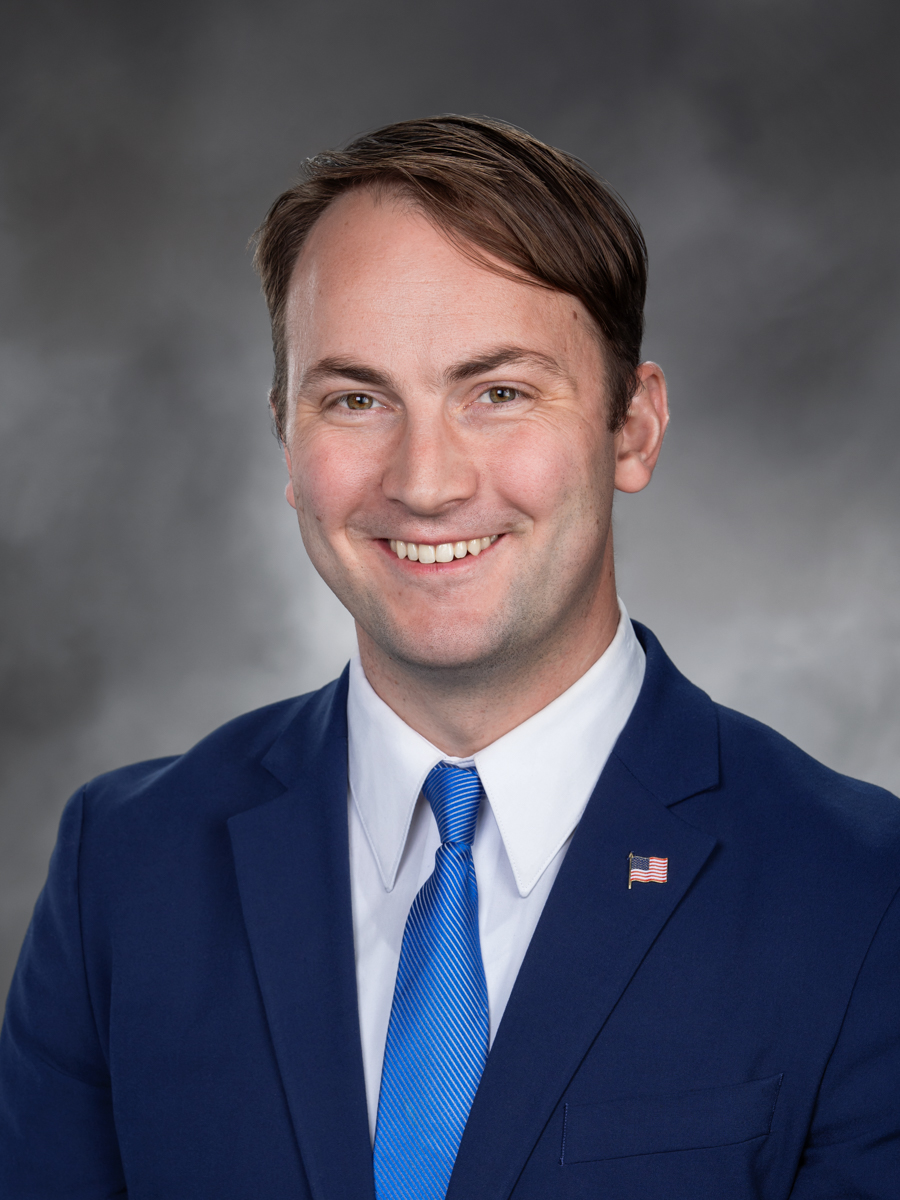
Claire Wilson
Claire Wilson Senate · District 30
D
Strong +
89% 74
Adison Richards
Adison Richards House · District 26
D
Strong +
88% 190
Yasmin Trudeau
Yasmin Trudeau Senate · District 27
D
Strong +
86% 74
Vandana Slatter
Vandana Slatter Senate · District 48
D
Strong +
86% 75
RS
Rebecca Saldaña Senate · District 37
D
Strong +
86% 74
Zach Hall
Zach Hall House · District 5
D
Strong −
13% 135
Leonard Christian
Leonard Christian Senate · District 4
R
Strong −
14% 74
Jim McCune
Jim McCune Senate · District 2
R
Strong −
14% 72
Drew MacEwen
Drew MacEwen Senate · District 35
R
Strong −
16% 73
Shelly Short
Shelly Short Senate · District 7
R
Strong −
18% 74
Showing 31–40 of 352 bills

All education bills

in committee · Washington · Senate Feb 26, 2026

SB 6227: Formalizing data collection protocols to support parenting students.

SB 6227 requires Washington colleges and universities to establish consistent statewide data collection protocols to identify parenting students (parents enrolled in higher education). It directs the Higher Education Coordinating Board to develop these protocols, form a work group with college leaders and student advocates, and encourage institutions to submit annual data to the state education data center. The bill aims to make parenting students' needs visible for better policy decisions, resource allocation, and support programs related to childcare and financial aid. This data-driven approach seeks to improve retention and graduation rates for parenting students without directly funding new services.
in committee · Washington · House Jan 30, 2026

HB 2324: Concerning tuition waivers for children of eligible veterans.

HB 2324 creates a mandatory tuition and fee waiver for children of veterans who died or became totally disabled in active federal military service, as well as for their surviving spouses or domestic partners. To qualify, recipients must be Washington domiciliaries aged 17-26 (for children) or Washington residents (for survivors), with survivors having up to 10 years to use benefits. The waiver covers all tuition and fees (including a $500 annual stipend for textbooks), but is limited to 250 quarter credits per recipient and requires satisfactory academic progress. This policy directly affects dependents of veterans meeting specific service criteria, such as combat deployment or service-connected disability, as defined by federal standards.
in committee · Washington · Senate Jan 30, 2026

SB 6209: Concerning financial aid awards for students attending private four-year institutions of higher education.

This bill adjusts Washington State's financial aid program for students attending private four-year colleges. It sets specific maximum grant amounts for private non-profit institutions ($9,739 through 2025-26, then 50% of public research institution awards starting 2026-27) and for private for-profit institutions (similar fixed amounts through 2025-26, transitioning to 50% of public awards in 2026-27). The policy directly affects students enrolled at eligible private four-year colleges in Washington, including both non-profit and for-profit institutions. The key change is shifting from fixed annual amounts to a formula tied to public institution awards beginning in 2026-27.
in committee · Washington · House Jan 27, 2026

HB 2318: Adjusting the early achievers quality improvement awards.

HB 2318 adjusts eligibility requirements for quality improvement awards within Washington's Early Achievers program, which rates child care and early learning programs. The bill specifies that award recipients must serve at least 5% of enrolled children receiving state subsidies, Early Childhood Education and Assistance Programs (EEAP), or Head Start funding. It maintains the program's five-tiered rating system, requires free initial ratings for participants, and mandates public reporting of ratings on a parent-friendly website. The bill also preserves provisions for professional development pathways and voluntary participation for non-subsidized providers, while keeping school-age care exempt. This change directly affects licensed child care centers, family home providers, and early learning programs receiving state funding.
Sub-Topics Early Childhood
in committee · Washington · House Feb 19, 2026

HB 2262: Concerning civics education for public school students through instruction and information about the production and use of official signatures.

Washington's HB 2262 requires public high schools to include signature instruction in civics education starting in the 2027-28 school year. The bill mandates that civics courses teach students to produce a legible, repeatable handwritten signature - covering historical context including how signature practices have historically limited participation by marginalized groups - without requiring students to actually sign documents for course credit. It also directs the state to collect and publish annual data on ballot rejections due to signature mismatches, broken down by voter age, to improve election processes. The law directly affects all Washington public high school students and aims to address barriers in voting and civic participation.
Sub-Topics K-12 Education
in committee · Washington · Senate Feb 4, 2026

SB 6118: Requiring cardiac emergency response plans in schools.

SB 6118 requires Washington school districts to create cardiac emergency response plans for all schools and athletic facilities, focusing on rapid response to cardiac arrests. The plans must include designated response teams (staff, coaches, nurses), strategic placement of AEDs (aiming for 3-minute access), annual team training per American Heart Association guidelines, and coordination with local emergency services. Implementation depends on state funding for AEDs, staff training, and plan maintenance, with schools updating plans annually. The bill directly affects school districts, staff, and students by mandating concrete emergency protocols to improve cardiac arrest outcomes on school property.
Sub-Topics School Safety
in committee · Washington · Senate Jan 30, 2026

SB 6217: Expanding access to the Washington college grant to students enrolled in eligible postsecondary nondegree credential programs.

SB 6217 expands Washington's college grant program to cover students enrolled in eligible certificate or diploma programs that do not lead to a degree (nondegree credential programs). It affects Washington residents pursuing these shorter-term training programs starting in the 2027-28 academic year. The bill adds this category to existing eligibility requirements, including financial need and residency, while maintaining the same grant structure and academic progress rules as degree programs. This change aims to increase access to affordable workforce training for students seeking credentials like nursing assistants or IT certifications.
in committee · Washington · House Feb 4, 2026

HB 2440: Addressing records maintained by the office of the education ombuds.

HB 2440 strengthens confidentiality rules for education complaint records handled by Washington's Education Ombuds office. It prohibits disclosing identifying information about students, complainants, or individuals involved in complaints, except with written consent, for legislative investigations into ombuds misconduct, or for governor inquiries requiring such details. The bill requires the ombuds to redact other individuals' identifying information when providing complainants access to their own complaint records. It also allows sharing deidentified data with the state education data center while maintaining strict confidentiality. The law defines "identifying information" as details that could reasonably identify someone in a school community.
in committee · Washington · House Feb 4, 2026

HB 2443: Creating the armed forces reserve postsecondary education grant.

HB 2443 creates a state-funded grant program to help Washington state military reservists and their spouses or dependents pay for college. Eligible participants must be stationed in Washington, enrolled in an accredited Washington institution, and agree to serve one year in the reserves for each year they receive the grant. The grant covers tuition (up to University of Washington rates), books ($500), and fees, but cannot reduce other financial aid. If participants don’t fulfill their service obligation, they must repay the grant with interest, and the state can collect repayments through wage garnishment. The program is administered by the Office of Student Financial Assistance.
in committee · Washington · Senate Feb 26, 2026

SB 6052: Establishing a statewide digital transcript data-sharing environment.

SB 6052 creates a secure, statewide digital platform for schools and colleges to share student transcripts electronically. It requires all Washington public K-12 schools, charter schools, tribal education schools, and public colleges to use this system, eliminating the need for separate data-sharing agreements between institutions. The platform mandates that students or their parents must give express, revocable permission before transcripts are shared, ensuring privacy control. Private four-year colleges in Washington may choose to participate but are not required to join the system.
Sub-Topics K-12 Education
Showing 31 to 40 of 352 bills
Previous 1 3 4 5 36 Next