

Introduced Mar 9, 2018
1 co-sponsor
Total votes
18,133
all sessions
Attendance
73%
5,440 missed
Lower than 90% of chamber peers
With party
98%
of cast votes
Lower than 100% of chamber peers
Bipartisan score
1%
crosses aisle rarely
Higher than 97% of chamber peers
Sponsored
655
bills & resolutions
Near the chamber average
Committees
3
assignments
655 bills and resolutions
Sponsored bills
Total
655
Primary
203
Co-sponsor
452
This page
655
matching current filters
Introduced Mar 9, 2018
1 co-sponsor
Introduced Mar 9, 2018
1 co-sponsor
Prescription Monitoring Program; prescriber and dispenser patterns, annual review, report.
Requires the Director of the Department of Health Professions to annually review controlled substance prescribing and dispensing patterns. The bill requires the Director to conduct such review in consultation with an advisory panel consisting of representatives from the relevant health regulatory boards, the Department of Health, the Department of Medical Assistance Services, and the Department of Behavioral Health and Developmental Services. The bill requires the Director to make any necessary changes to the criteria for unusual patterns of prescribing and dispensing and report any findings and recommendations for best practices to the Joint Commission on Health Care by November 1 of each year. This bill is identical to
Signed into law Mar 9, 2018
0 co-sponsors
Schedule VI; delivery of prescription devices on behalf of medical equipment supplier.
Provides that a permitted manufacturer, wholesale distributor, warehouser, nonresident warehouser, third-party logistics provider, or nonresident third-party logistics provider or registered nonresident manufacturer or nonresident wholesale distributor (the provider) may deliver a Schedule VI prescription device directly to an ultimate user or consumer, provided that the provider is delivering on behalf of and has entered into an agreement with (i) a medical equipment supplier that has received a valid order from a prescriber authorizing the dispensing of the Schedule VI prescription device or (ii) a medical director of a home health agency, nursing home, assisted living facility, or hospice who has requested the distribution of the Schedule VI prescription device to be administered by persons authorized to administer such devices. The bill directs the Board of Pharmacy to promulgate regulations to implement the provisions of the measure within 280 days. This bill is identical to
Signed into law Mar 9, 2018
1 co-sponsor
Introduced Mar 9, 2018
1 co-sponsor
Introduced Mar 8, 2018
1 co-sponsor
Death certificates; medical certification, electronic filing, hospice.
Requires a licensed funeral director, funeral service licensee, or representative of the office of the state anatomical program who first assumes custody of a dead body to complete and file a certificate of death with the State Registrar of Vital Records using the Electronic Death Registration System and provides that when a death occurs under the care of a hospice provider, the medical certification shall be completed by the decedent's health care provider and filed electronically with the State Registrar of Vital Records using the Electronic Death Registration System for completion of the death certificate. This bill is identical to
Passed Mar 8, 2018
1 co-sponsor
Introduced Mar 8, 2018
1 co-sponsor
Introduced Mar 8, 2018
1 co-sponsor
Ask Maddy
·
AI policy assistant
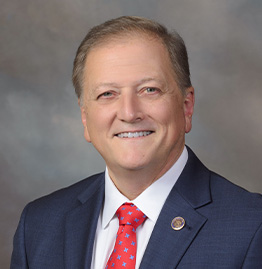
Ask Maddy about Chris Head
Scope: virginia
Hi! I can help you understand Chris Head's legislative record. What would you like to know?
Try one of these
i
Maddy answers using official bill text and legislative records. Always verify before sharing.
Sources cited inline