

Maddy summaryThe FAST Fix Act of 2023 amends the Small Business Act to prioritize federal technology funding for small businesses in states that historically receive fewer Small Business Innovation Research (SBIR) and Small Business Technology Transfer (STTR) Phase I awards. It defines "underperforming States" as the 18 states with the lowest SBIR/STTR Phase I awards and requires the Small Business Administration to prioritize applications from businesses in these states. The bill also sets a $500,000 funding cap per award over two years, waives matching requirements for underperforming states, and mandates biennial reporting on program outcomes and state performance. This directly affects small businesses in 18 specific states and the Small Business Administration’s administration of the FAST program.
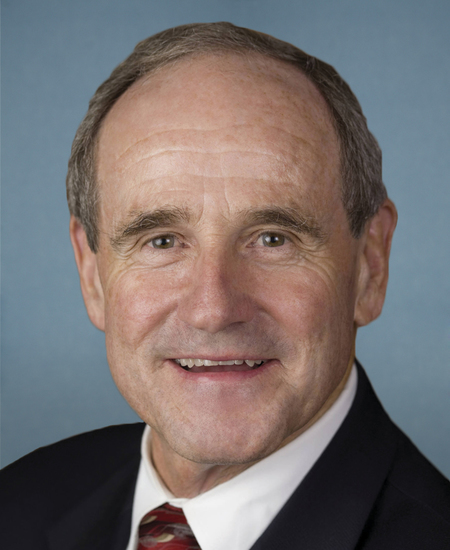
Sen. James E. Risch
Sponsored bills
Maddy summaryThis bill (SJRES 22) seeks to block a specific rule issued by the Department of Education regarding federal student loan modifications. It targets the rule titled "Waivers and Modifications of Federal Student Loans," which included a one-time debt relief program announced in October 2022. The resolution requests Congress disapprove the rule under the Congressional Review Act, preventing the Department from implementing it. If approved, the rule would have no legal effect, directly affecting how student loan borrowers could access modifications or debt relief under that specific policy.
Maddy summaryThis bill prohibits public colleges and universities from denying religious student groups access to campus facilities or official recognition that is available to other student organizations. It directly affects public institutions of higher education and religious student organizations by requiring equal treatment based on the institution's policies for non-religious groups. The key provision states that no federal funds can be withheld from an institution that denies a religious group access to facilities or recognition due to its religious beliefs, practices, speech, leadership standards, or conduct codes. The law applies to all public colleges receiving funds under the Higher Education Act of 1965.
Maddy summaryThe CURD Act (S 981) defines "natural cheese" in federal law to clarify labeling standards. It specifies that natural cheese must be made by coagulating milk proteins (without added non-milk ingredients that alter its core composition) and excludes processed cheeses like pasteurized process cheese, cheese spreads, and grated American cheese. This directly affects cheese manufacturers, who must label products consistently with the new definition, and consumers, who gain clearer information about product types. The bill requires labels using "natural cheese" to comply with this definition, ensuring transparency without restricting terms like "all-natural" in other contexts.
Maddy summaryThis concurrent resolution (SCONRES 8) expresses Congress's formal opinion that tax-exempt fraternal benefit societies - mutual aid organizations operating under IRS Section 501(c)(8) - have long provided essential community benefits. It highlights that these societies, with approximately 7 million members nationwide, contribute over $3.8 billion annually through charitable work, volunteerism, and financial security programs. The resolution affirms that their tax-exempt status continues to support their mission and relieve pressure on government safety net programs. As a non-binding statement of congressional sentiment, it does not change tax law or create new obligations.
Maddy summaryS 959, the Stopping Traffickers and Their Accomplices Act of 2023, requires abortion providers to notify the National Human Trafficking Hotline within 24 hours if they reasonably suspect a patient is a trafficking victim. It mandates annual human trafficking training for all staff at abortion facilities and requires providers to submit certification of training completion. Violations of the reporting or training requirements incur penalties of $10,000 per violation for failure to report or $1,000 per day for training non-compliance. The bill directly affects abortion providers and their employees, with state attorneys general authorized to enforce these requirements through civil actions.
Maddy summaryThe Northwest Energy Security Act (S 966) requires federal agencies managing the Columbia River dams (FCRPS) to operate them strictly according to the 2020 Supplemental Opinion, which guides river operations. It prohibits any changes restricting hydroelectric power generation or Snake River navigation at FCRPS dams without explicit new federal law passed after this bill’s enactment. The bill allows limited operational adjustments only for public safety or grid reliability, with amendments requiring unanimous agreement among the three Secretaries (Interior, Energy, and Army). This directly affects how federal agencies manage dam operations in Washington, Oregon, and Idaho, preventing unilateral changes to power generation or river access. The law clarifies that routine maintenance and capital improvements for authorized dam purposes remain permitted.
Maddy summaryThis bill proposes a constitutional amendment to require the U.S. Supreme Court to have exactly nine justices. Currently, Congress sets the Court's size through legislation, but this amendment would make the nine-justice structure a permanent requirement in the Constitution. It would need ratification by three-fourths of state legislatures within seven years to become part of the Constitution. If adopted, it would prevent Congress from changing the Court's size via ordinary legislation.
Maddy summaryS 934 amends the Department of Energy Organization Act to assign specific energy emergency and security responsibilities to Assistant Secretaries of Energy. The bill directs these officials to manage infrastructure protection, cybersecurity, supply chain resilience, emergency planning, and response coordination, including providing technical assistance to states, local governments, or energy entities upon request. It requires the Secretary of Energy to ensure these functions are performed in coordination with other federal agencies. This change directly affects the Department of Energy’s internal structure and its interactions with state/local governments and energy sector partners during crises.
Maddy summaryThis bill requires TSA to deny airport security access to travelers presenting certain immigration enforcement documents (like deportation warrants or "Notice to Appear" forms) at checkpoints. It mandates TSA to notify immigration agencies when such documents are presented and to collect biometric data (fingerprints, photos) from non-citizens without valid ID who cannot verify U.S. citizenship. Travelers departing for deportation are exempt from entry restrictions. The law directly affects individuals under immigration supervision attempting to access secured airport areas using prohibited documents.