Maddy summaryThe Supporting Newborn Parents Act of 2026 creates a new tax credit of $2,000 for each child born to a taxpayer during the tax year. To receive this credit, parents must have earned income, with the maximum amount limited to 20% of their earnings, and the benefit phases out as family income rises. The bill allows parents to request an advance payment of the credit shortly after a child's birth by providing their information when applying for a Social Security number. Additionally, the legislation requires the Treasury to establish an online portal to help parents understand how to make elections regarding advance payments and estimated income figures.
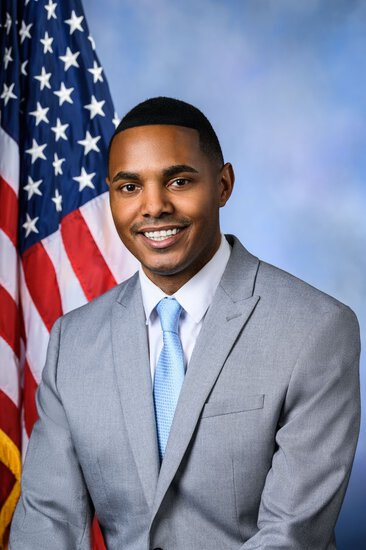
Rep. Ritchie Torres
Sponsored bills
Maddy summaryThe Universal School Meals Program Act of 2026 mandates that all public schools provide free breakfast and lunch to every enrolled student, regardless of income. It establishes specific funding rates for these meals, adjusts payments based on the use of locally sourced food, and eliminates the ability of schools to collect debt for unpaid charges. Additionally, the bill expands free meal access to summer programs, afterschool care, and incarcerated juveniles while updating poverty measurement standards across various federal education and nutrition laws.
Maddy summaryThis bill designates the U.S. Chancery building in Pristina, Kosovo, as the "Eliot L. Engel Building" to honor a specific individual. It requires all future legal documents, maps, and official records to use this new name instead of the current designation. The change is purely symbolic and does not alter the building's function or the operations of the U.S. government in Kosovo.
Maddy summaryThe FLEX Act amends the Elementary and Secondary Education Act to increase funding for high-quality charter schools. It raises required funding reserves for program expansion (from 12.5% to 15% and 22.5% to 25%) and mandates at least 30% of funds be reserved for charter school facilities, national activities, and program support. The bill explicitly allows funding for "addition or expansion of programs" at existing charter schools (e.g., new academic programs or personalized learning) and permits single-sex educational services. It also clarifies that funds can cover facility operations, renovations, and student transportation needs. This directly affects charter schools, state education entities administering grants, and charter management organizations receiving federal support.
Maddy summaryThe TRUST Act of 2025 amends the Federal Deposit Insurance Act to increase the asset threshold for banks qualifying for less frequent examinations. It raises the threshold from $3 billion to $6 billion in assets for well-managed institutions under Section 10(d). This change directly affects larger banks meeting the revised criteria, reducing their required examination frequency. The key mechanism is modifying specific asset value thresholds in existing regulatory provisions without altering the underlying examination standards.
Maddy summaryThis resolution reaffirms the House of Representatives' support for the Taiwan Relations Act and longstanding bipartisan U.S. policy toward Taiwan. It highlights key provisions such as maintaining commercial and cultural ties, emphasizing regional peace, and providing Taiwan with defensive arms. The document also reiterates the Six Assurances, which clarify that the U.S. does not set a date for ending arms sales, will not mediate between Taiwan and China, and will not pressure Taiwan to negotiate with China. By restating these principles, the bill aims to reinforce the current framework without introducing new legal obligations or changing existing policy.
Maddy summaryThe Connected Vehicle Security Act of 2026 restricts the importation, sale, and manufacture of vehicles and related technology from specific countries, including China, Russia, Iran, and North Korea, to address national security concerns. The law defines prohibited items as connected vehicles, their software, and hardware components and sets different effective dates, with vehicle bans starting in 2027 and hardware restrictions beginning in 2030. A government official can grant exceptions for specific items after reviewing security risks and notifying Congress, while the agency must publish annual reports on enforcement actions and compliance.
Maddy summaryThis bill seeks to overturn a specific rule issued by the Bureau of Consumer Financial Protection that would have removed previous restrictions on how financial institutions advertise remittance transfer fees and speeds. By using a congressional disapproval process, the measure aims to reinstate the earlier regulations that prohibited misleading claims about the cost or timing of sending money home. If passed, the bill would prevent the Bureau from enforcing the new guidelines that allowed for more flexible marketing practices regarding international money transfers. The legislation directly impacts banks, money transfer services, and consumers who rely on these financial tools.
Maddy summaryThis resolution expresses the House of Representatives' support for keeping United States troops as part of the Kosovo Force (KFOR). The bill directly affects the roughly 600 U.S. military personnel currently stationed in Kosovo and the NATO mission they support. It asserts that maintaining this presence is vital for stabilizing the region amid ongoing tensions between Kosovo and Serbia. The text urges that American forces remain in Kosovo until the peace mission is fully completed.
Maddy summaryThis resolution expresses the House of Representatives' sense that the United States must permanently end the unhoused crisis by 2029 while protecting the civil and human rights of unhoused individuals. It calls for specific actions such as allocating billions of dollars in funding for affordable housing, expanding access to healthcare and food assistance, and removing barriers that prevent people with criminal records from receiving public services. The text also urges the government to decriminalize behaviors like sleeping in public or panhandling, prohibit discrimination based on housing status, and establish legal protections for those providing services to unhoused communities. Additionally, it requests the creation of more accurate methods for counting the unhoused population and mandates annual reports on law enforcement interactions with this population.