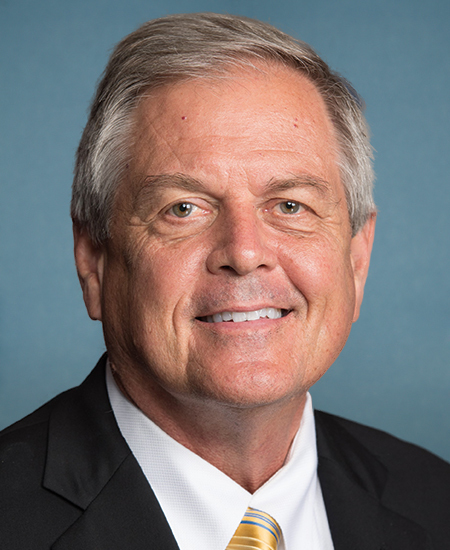
Photo of Ralph Norman
R United States House · District 5 · South Carolina

Rep. Ralph Norman

Compare
Total votes
2,837
all sessions
Attendance
95%
142 missed
Lower than 94% of chamber peers
With party
81%
of cast votes
Lower than 97% of chamber peers
Bipartisan score
10%
crosses aisle rarely
Higher than 96% of chamber peers
Sponsored
1,401
bills & resolutions
Near the chamber average
Committees
6
assignments
1,401 bills and resolutions

Sponsored bills

Total
1,401
Primary
77
Co-sponsor
1,324
This page
1,401
matching current filters
Primary HR 7628
In committee · Vermont House · Lead sponsor
To repeal the provision of law that provides automatic pay adjustments for Members of Congress.

Maddy summaryHR 7628 repeals a provision in the 1946 Legislative Reorganization Act that automatically adjusted Members of Congress' pay based on federal employee raises. This change directly affects current and future members of Congress by removing automatic pay increases, requiring Congress to pass separate legislation for any future pay adjustments. The bill takes effect when the 120th Congress convenes, ending a long-standing practice of automatic compensation changes.

In committee Feb 20, 2026 0 co-sponsors
Co-sponsor HRES 1060
In committee · Vermont House · Co-sponsor
Expressing support for the designation of April 5, 2026, as "Barth Syndrome Awareness Day".

Maddy summaryHRES 1060 is a symbolic resolution designating April 5, 2026, as "Barth Syndrome Awareness Day" in the U.S. House of Representatives. It directly supports individuals and families affected by Barth syndrome, a rare genetic disorder primarily impacting males that causes heart, muscle, and immune system issues. The resolution expresses support for raising public awareness, improving early diagnosis, advancing research, and developing treatments for this condition - though it does not create new funding or policy changes. It serves as a non-binding statement of recognition by Congress, acknowledging the challenges faced by the small patient community (fewer than 160 diagnosed in the U.S.) and the need for greater attention to this ultrarare disease.

In committee Feb 11, 2026 1 co-sponsor
Co-sponsor HR 260
Passed · Vermont House · Co-sponsor
No Tax Dollars for Terrorists Act

Maddy summaryThe No Tax Dollars for Terrorists Act requires the U.S. State Department to identify foreign countries and organizations receiving U.S. foreign aid that have provided financial or material support to the Taliban, including the amounts of aid they receive and the support they give to the Taliban. It mandates a strategy to use U.S. aid to discourage such support, with initial and follow-up reports to Congress on the strategy and its implementation. The bill also demands detailed reports on U.S. cash assistance programs in Afghanistan and the Afghan Fund, explaining how funds are transferred (including traditional money transfer systems) and how safeguards prevent Taliban access.

Passed Feb 10, 2026 1 co-sponsor
Co-sponsor HR 34
In committee · Vermont House · Co-sponsor
LASSO Act

Maddy summaryThe LASSO Act requires 10% of annual revenue generated from public lands managed by the Interior Department and Agriculture Department (including national forests and Outer Continental Shelf areas) to be deposited into the Social Security Trust Fund. This directly affects the Social Security Trust Fund by increasing its funding, while ensuring no fee hikes for public land activities or reductions in funds for states, tribes, or local governments. The bill mandates this transfer annually without altering existing revenue-sharing agreements or pricing structures. It aims to bolster Social Security finances through a specific, measurable mechanism tied to federal land management.

In committee Feb 10, 2026 1 co-sponsor
Co-sponsor HR 7300
In committee · Vermont House · Co-sponsor
Make Elections Great Again Act

Maddy summaryThe Make Elections Great Again Act (HR 7300) would require voters to present photo identification to cast ballots in person or by mail for federal elections, with limited exceptions for religious objections or military voters. It would establish new requirements for proving U.S. citizenship during voter registration, including documentary proof of citizenship and proof of state residency. The bill would change mail-in ballot procedures by requiring voters to request mail-in ballots (rather than universal mail-in voting), implementing barcode tracking for mail-in ballots, and setting strict deadlines for ballot receipt. These provisions would apply to all states for federal elections held in 2027 or later, affecting how voters register, vote in person, and submit mail-in ballots for federal office elections.

In committee Feb 2, 2026 1 co-sponsor
Co-sponsor HR 6675
In committee · Vermont House · Co-sponsor
DISPOSAL Act

Maddy summaryHR 6675, the DISPOSAL Act, requires the General Services Administration (GSA) to sell or lease six specific federal buildings in Washington, D.C. (including the Frances Perkins, Forrestal, and Humphrey buildings) at fair market value or for up to 99 years. The bill mandates relocating federal agencies currently occupying these buildings to other locations, prohibits foreign ownership of the properties, and exempts the disposal from certain environmental and historic preservation requirements. Proceeds from sales must first cover relocation costs and GSA implementation expenses before any remaining funds go to deficit reduction. The law expires on December 31, 2028, and does not allow judicial review of GSA actions under this bill.

In committee Feb 2, 2026 1 co-sponsor
Primary HR 6536
In committee · Vermont House · Lead sponsor
Rural Depositories Revitalization Study Act

Maddy summaryThis bill requires the Federal Reserve, Comptroller of the Currency, and FDIC to study how to improve growth, capital, and profitability for rural banks. The study will identify regulatory barriers in current federal laws or rules that may limit rural bank expansion or new bank openings in rural areas. The agencies must submit a report to Congress within six months of the bill's enactment. The bill itself does not change regulations or provide funding - only mandates the study.

In committee Feb 2, 2026 0 co-sponsors
Co-sponsor HR 7296
In committee · Vermont House · Co-sponsor
SAVE America Act

Safeguard American Voter Eligibility Act or the SAVE America Act This bill requires individuals to provide documentary proof of U.S. citizenship when registering to vote, and requires photo identification to vote, in federal elections. Specifically, the bill prohibits states from accepting and processing an application to register to vote in a federal election unless the applicant presents documentary proof of U.S. citizenship. The bill specifies what documents are considered acceptable proof of U.S. citizenship, such as identification that complies with the REAL ID Act of 2005 that indicates U.S. citizenship. Further, the bill (1) prohibits states from registering an individual to vote in a federal election unless, at the time the individual applies to register to vote, the individual provides documentary proof of U.S. citizenship; and (2) requires states to establish an alternative process to demonstrate U.S. citizenship. Each state must take affirmative steps on an ongoing basis to ensure that only U.S. citizens are registered to vote, which shall include establishing a program to identify individuals who are not U.S. citizens using information supplied by certain sources. Additionally, states must remove noncitizens from their official lists of eligible voters. The bill (1) provides for a private right of action for certain violations, and (2) establishes criminal penalties for certain offenses. Individuals voting in federal elections must present an eligible photo identification document. An individual who votes by absentee ballot must submit a copy of their identification document with both the request for, and the submission of, the absentee ballot.

In committee Jan 30, 2026 1 co-sponsor
Co-sponsor HR 7235
In committee · Vermont House · Co-sponsor
Protecting Motherhood Act

Maddy summaryHR 7235, the "Protecting Motherhood Act," requires all federal agencies to stop using the term "birthing person" in official documents and instead use specific terms like "female," "mother," "pregnant woman," or "woman." It directly affects federal agencies that produce regulations, forms, or communications, mandating the use of these defined terms when referring to individuals based on biological sex. The bill provides detailed definitions for terms like "female" (based on biological sex at conception) and "pregnant woman" (an adult human female carrying a child). The law takes effect 30 days after enactment. This is a procedural change focused solely on terminology in government documents, with no direct impact on healthcare access or services.

In committee Jan 23, 2026 1 co-sponsor
Showing 51 to 60 of 1,401 bills
Previous 1 … 5 6 7 … 141 Next