Maddy summaryThis bill prohibits the U.S. Department of Defense from requiring defense contractors to report greenhouse gas emissions. It specifically bans the Secretary of Defense from mandating any "greenhouse gas inventory" or reports on Scope 1, Scope 2, or Scope 3 emissions from contractors holding federal defense contracts. The law directly affects defense contractors who would otherwise have been required to track and disclose their emissions data. It removes a specific reporting requirement for contractors under Defense Department contracts, without altering other environmental regulations.
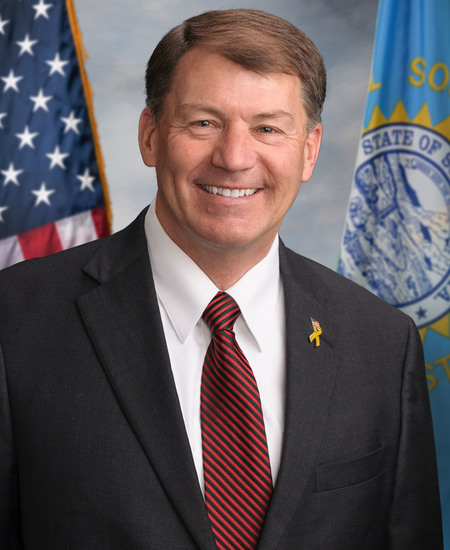
Sen. Mike Rounds
Sponsored bills
Maddy summaryThis Senate resolution (SRES 10) proposes a symbolic gesture: lowering the U.S. flag to half-staff on January 22 each year to "memorialize the unborn." It references the 1973 Roe v. Wade ruling and the 2022 Supreme Court decision overturning it, citing that over 60 million unborn children have "perished" since 1973. The resolution encourages the public to observe this day by lowering flags to mourn and honor those affected, while also urging legislators to support laws respecting "the sanctity of life." As a non-binding resolution, it does not create new laws or policies but makes a symbolic recognition.
Maddy summaryThis bill prohibits abortions performed specifically because a prenatal test or diagnosis indicates the unborn child has Down syndrome. It makes it a federal crime for medical providers to perform such abortions, with potential penalties of up to five years in prison or fines, and allows civil lawsuits by affected individuals (like parents or the woman) seeking damages. The law requires medical professionals to report suspected violations to law enforcement and mandates courts to protect the privacy of women seeking such abortions. It explicitly states the bill does not create a right to abortion or affect existing abortion access, focusing solely on banning disability-based abortion decisions.
National Cemeteries Preservation and Protection Act of 2022 This act addresses the administration and jurisdiction of national cemeteries. Specifically, the act requires the Department of Veterans Affairs (VA) to pay a plot or interment allowance for a veteran if the veteran was buried before March 15, 2022, in a cemetery on trust land owned by, or held in trust for, a tribal organization, and the organization that maintains or operates the cemetery applies for such allowance. Such allowance is only authorized if a plot or interment allowance was not already paid for the burial of such veteran. The act also authorizes the VA to designate green burial sections in national cemeteries (i.e., sections of cemeteries in which the remains of individuals have been prepared for interment in a manner not involving chemicals or embalming fluids and have been interred in a natural manner or completely biodegradable burial receptacle). The act authorizes the Department of the Army to transfer certain lands to the VA to expand the Fort Bliss National Cemetery. In addition, the act authorizes the Department of the Interior to transfer certain land to the VA for the land to be used as a national cemetery. Finally, the act prohibits persons who have committed certain crimes from being interred or memorialized in a cemetery in the National Cemetery Administration or in Arlington National Cemetery.
Emmett Till and Mamie Till-Mobley Congressional Gold Medal Act of 2021 This act provides for the posthumous presentation of a Congressional Gold Medal in commemoration of Emmett Till and Mamie Till-Mobley. After it is awarded, the medal shall be given to the National Museum of African American History and Culture.
Iran Hostages Congressional Gold Medal Act This bill provides for the award of a Congressional Gold Medal to the 53 hostages of the Iran Hostage Crisis (November 4, 1979-January 21, 1981) in recognition of their bravery and endurance throughout their captivity.
Repealing Existing Substandard Provisions Encouraging Conciliation with Tribes Act or the RESPECT Act This act repeals certain provisions related to the treatment of Indians, including provisions on hostile tribes, alcohol, work requirements, penalties for truancy, and placement of youth in reform school without the consent of a parent or guardian.
Supply Chain Disruptions Relief Act This bill modifies the treatment of liquidations of new motor vehicle inventory as qualified LIFO (last in first out accounting method) inventory. It allows new motor vehicle dealers to elect to wait until the end of 2025 to replace their inventory for purposes of determining income attributable to the sale of such inventory during 2020 and 2021.
This bill defers the collection of income taxes from a U.S. national who is unlawfully or wrongfully detained abroad until 180 days after such national is released from detention, returns to the United States, or departs the detaining country. It also requires the reimbursement of penalties for late payment of income taxes that become due during such detainment. The bill suspends for 270 days after the release of a U.S. national the running of a statute of limitations for the collection of income taxes deferred by this bill. The deferral allowed by this bill does not apply to social security taxes imposed on employees.
Defense of United States Infrastructure Act of 2021 This bill sets out programs and requirements related to critical infrastructure and cybersecurity threats, including (1) a pilot program to enable federal and nonfederal entities to share information in order to prevent, identify, and mitigate cyber threats; (2) reporting about the federal government's efforts to support security certifications for information technology; and (3) a working group to develop a strategy for implementing security measures for foundational internet protocols.