

Maddy summaryThis bill reauthorizes federal research funding for preterm birth prevention and infant care through 2029, extending the previous program period. It mandates a comprehensive study by the National Academies on the financial costs of preterm births (including NICU stays and long-term family expenses), factors influencing preterm birth rates, and opportunities for early detection. The study requires a final report with raw data to Congress within 24 months, covering research strategies, state best practices, and precision medicine approaches. The bill directly affects the Department of Health and Human Services (which must establish an interagency working group), the National Academies (as the study contractor), and Congress (as the recipient of the final report).
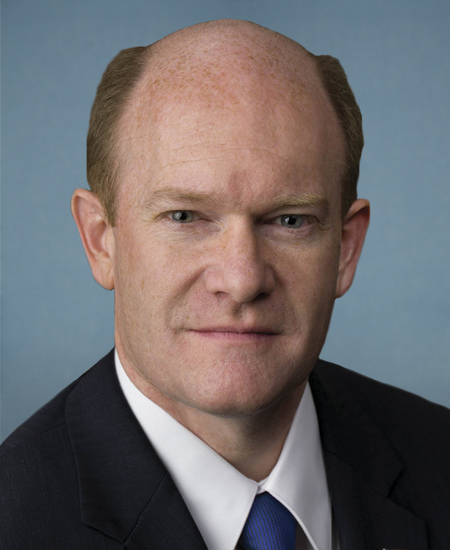
Sen. Christopher A. Coons
Sponsored bills
This bill increases the annual limit on the tax credit for qualified railroad track maintenance expenses (also referred to as the short line railroad tax credit) and expands eligibility for claiming the credit. Under current law, the tax credit is limited each tax year to $3,500 multiplied by the sum of the number of miles of railroad track owned or leased by the taxpayer (miles owned or leased) and the number of railroad track miles assigned to the taxpayer by a Class II or III railroad (miles assigned). This bill increases the annual limit to $6,100 multiplied by the sum of miles owned or leased and miles assigned. The $6,100 amount used in the calculation of the tax credit limit is adjusted for inflation for tax years beginning after 2025. The bill also expands eligibility for the tax credit to include gross expenses for maintaining railroad tracks owned or leased as of January 1, 2024. Under current law, the tax credit is limited to gross expenses for maintaining railroad tracks owned or leased as of January 1, 2015.
Maddy summaryThis bill strengthens enforcement of the Animal Welfare Act by giving the Attorney General new authority to sue violators and seek penalties up to $10,000 per day for ongoing violations. It requires dealers and exhibitors to hold valid licenses for animal sales or transport and allows seized animals to be taken by the government if they’re harmed by violations. Fines collected from violations will fund temporary care for animals during legal cases. The law directly affects animal dealers, exhibitors, and enforcement agencies (USDA and DOJ), clarifying that violations include breaches of related rules and regulations.
Assault Weapons Ban of 2025 This bill makes it a crime to knowingly import, sell, manufacture, transfer, or possess a semiautomatic assault weapon (SAW) or large capacity ammunition feeding device (LCAFD). The prohibition does not apply to a firearm that is (1) manually operated by bolt, pump, lever, or slide action, except for certain shotguns; (2) permanently inoperable; (3) an antique; (4) only capable of firing rimfire ammunition; or (5) a rifle or shotgun specifically identified by make and model. The bill also exempts from the prohibition the following, with respect to a SAW or LCAFD: importation, sale, manufacture, transfer, or possession related to certain law enforcement efforts, or authorized tests or experiments; importation, sale, transfer, or possession related to securing nuclear materials; and possession by a retired law enforcement officer. The bill permits continued possession, sale, or transfer of a grandfathered SAW, which must be securely stored. A licensed gun dealer must conduct a background check prior to the sale or transfer of a grandfathered SAW between private parties. The bill permits continued possession of, but prohibits sale or transfer of, a grandfathered LCAFD. Newly manufactured LCAFDs must display serial number identification. Newly manufactured SAWs and LCAFDs must display the date of manufacture. The bill also allows a state or local government to use Edward Byrne Memorial Justice Assistance Grant Program funds to compensate individuals who surrender a SAW or LCAFD under a buy-back program.
Maddy summaryThe Retirement Savings for Americans Act of 2025 would establish a new government-managed retirement savings program called the American Worker Retirement Fund, primarily for workers without access to employer-sponsored retirement plans. It would automatically enroll eligible workers at a 3% contribution rate (with the option to opt-out) and provide a government match tax credit of up to 5% of income for contributions. The fund would be invested in various options including government securities, fixed-income, and stock index funds, managed by an independent board of experts. Participants would have access to their funds at retirement age with multiple withdrawal options, and the program would include financial literacy requirements to help participants make informed decisions. This program would directly affect qualifying workers (employees without retirement plans or independent contractors without retirement plans) and participating employers who would be required to enroll eligible workers.
Maddy summaryThis bill directs the Department of Education to use the International Holocaust Remembrance Alliance (IHRA) definition of antisemitism when reviewing discrimination complaints under Title VI of the Civil Rights Act. It specifically applies to cases involving discrimination based on Jewish ancestry or ethnic characteristics in schools and programs receiving federal funding. The bill clarifies that this guidance does not expand the Department’s authority, alter existing discrimination standards, or affect First Amendment rights. It aims to ensure consistent enforcement against antisemitism in federally funded education settings, building on existing Department practices since 2019.
Maddy summaryThe Equality Act (S 1503) amends existing civil rights laws to explicitly prohibit discrimination based on sexual orientation and gender identity in employment, housing, public accommodations, credit, and jury service. It expands the definition of "sex" in federal civil rights laws to include sexual orientation and gender identity, clarifying that discrimination based on these factors is prohibited under current law. The bill directly affects individuals, businesses, government entities, and service providers by requiring compliance with these expanded anti-discrimination protections. It does not create new rights but makes clear that existing protections against sex discrimination already cover sexual orientation and gender identity, as affirmed by the Supreme Court in Bostock v. Clayton County. The legislation aims to provide consistent nationwide protections against discrimination that LGBTQ+ people have historically faced in key areas of public life.
Maddy summaryS 1504, the Claiming Age Clarity Act, changes Social Security Administration terminology by 2027 to replace terms like "early eligibility age" and "full retirement age" with clearer phrases such as "minimum monthly benefit age" and "standard monthly benefit age." It also eliminates the term "delayed retirement credit" and refers to age 70 as the "maximum monthly benefit age" instead. These changes apply to all Social Security Administration materials, including online resources and printed guides, directly affecting how beneficiaries and the public understand retirement benefit options.
Maddy summaryS 1505 requires the Social Security Administration to mail paper statements to all individuals with Social Security numbers under specific age-based schedules: upon entering the workforce or starting a new job, then every 5 years starting at age 25, every 2 years at age 55, and annually at age 60. The bill mandates these paper statements regardless of whether individuals have created an online "my Social Security" account. Beneficiaries may opt out of receiving paper statements if they choose. This bill directly affects all Social Security beneficiaries with account numbers, ensuring they receive regular updates about their benefits.
Maddy summaryThis resolution (SRES 98) condemns the Chinese government's implementation of Hong Kong's National Security Law and the Article 23 Ordinance, which the Senate states have undermined Hong Kong's autonomy, rule of law, and freedoms. It specifically urges accountability for actions like the sentencing of pro-democracy figures (including Jimmy Lai) and calls for Hong Kong authorities to drop related charges. The resolution also advocates for U.S. and international efforts to adjust Hong Kong's voting status at multilateral organizations, arguing that Hong Kong no longer maintains meaningful independence from mainland China. As a non-binding resolution, it does not enact new laws but formally expresses the Senate's position on these matters.