Maddy summaryThis bill amends bankruptcy law to prevent the sale or sharing of genetic information (such as DNA data) in bankruptcy cases without explicit written consent. It requires bankruptcy trustees to delete genetic data from estate records unless it's sold with consent from every affected person, including those not involved in the case. The law applies to all bankruptcy cases pending or filed after enactment, directly affecting bankruptcy trustees and estate managers handling genetic data. It does not create new privacy protections outside bankruptcy proceedings.
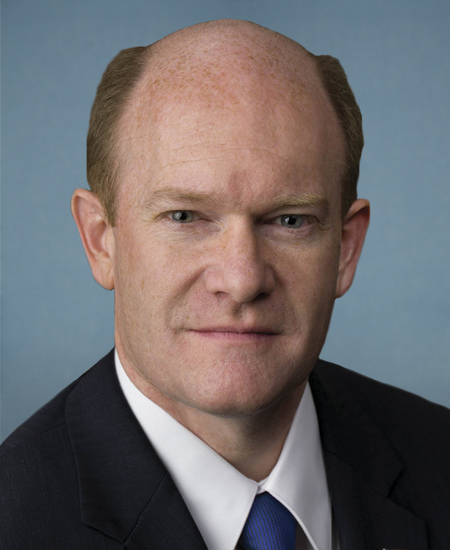
Sen. Christopher A. Coons
Sponsored bills
Maddy summaryThe Ban Congressional Stock Trading Act (S 1879) requires current and new Members of Congress, along with their spouses and dependent children, to divest or place certain investments in qualified blind trusts. It defines "covered investments" broadly to include stocks, bonds, commodities, and derivatives, while excluding diversified mutual funds, Treasury securities, and retirement plan investments. Members must complete this process within 120 days of enacting the law (with possible 180-day extensions), and new members have 120 days after taking office to comply. The law mandates public reporting of assets placed in blind trusts and imposes civil penalties for non-compliance, equal to a monthly portion of the member's salary. This legislation directly affects congressional staff members and their immediate families who hold financial interests that could create conflicts of interest.
Maddy summaryThe Crime Victims Fund Stabilization Act of 2025 amends the law governing deposits into the Crime Victims Fund, adding two new sources: funds from declined criminal prosecutions (without conviction) and certain False Claims Act recoveries (from 2025 through 2030). It specifically excludes two types of False Claims Act funds from these deposits: payments to whistleblowers (qui tam plaintiffs) and reimbursements for government fraud damages. This bill directly affects the Crime Victims Fund, which provides support to victims of crime, and adjusts how federal agencies handle False Claims Act cases. The changes aim to modify the fund's funding sources without altering the False Claims Act itself.
Maddy summaryThe United States Foundation for International Food Security Act of 2025 establishes a private, nonprofit foundation to improve global food security through agricultural investments, operating separately from the U.S. government. The foundation will fund locally-led projects that increase agricultural productivity, build resilient food systems, and reduce hunger, requiring cost matching from non-U.S. sources and conducting impact evaluations to measure results. It cannot fund countries that support terrorism or violate human rights, and must coordinate with existing U.S. food security programs while advancing national security interests. Governed by a board of directors (max 15 members with political balance), the foundation must report annually to Congress on its activities, results, and use of taxpayer funds. This approach aims to improve efficiency, accountability, and impact in U.S. international food security efforts.
Maddy summaryThis bill (S 1896) clarifies that the term "export" in defense technology licensing rules includes reexports, third-party transfers, temporary imports, and brokering activities for defense articles and services. It directly affects U.S. companies and government agencies handling advanced technology exports to Australia, the United Kingdom, and Canada. The key change modifies existing law to explicitly cover these additional transfer methods under the expedited review process. This update ensures consistent application of review procedures for all specified technology transfers to these three countries. The bill does not create new restrictions but refines how existing export definitions apply.
Maddy summaryThis resolution (SRES 240) affirms that diversity, equity, inclusion, and accessibility are core U.S. values and emphasizes the need to address ongoing discrimination across multiple sectors. It directly affects workplaces, K-12 and higher education systems, healthcare, housing, government programs, and the military by citing data on persistent inequities - such as racial disparities in housing discrimination, wage gaps, and underrepresentation in leadership. The resolution does not create new laws but encourages federal, state, and local entities to adopt inclusive policies and remove barriers to opportunity. It references evidence from agencies like the Department of Housing and Urban Development and the Equal Employment Opportunity Commission to support its focus on systemic discrimination. The Senate calls for promoting environments where all individuals can achieve their full potential.
Maddy summaryS 1843, the Second Chance Reauthorization Act of 2025, extends funding for existing federal reentry programs through 2030 instead of 2023. It updates timeframes across multiple programs, including state reentry demonstration projects (adding substance use disorder treatment and housing services), family-based substance abuse grants, prison education evaluations, career training for incarcerated individuals, and community mentoring programs. These programs directly support people returning from incarceration by providing critical services like recovery support, job training, and transitional housing. The bill makes no new policy changes but continues current federal funding mechanisms for reentry assistance.
Maddy summaryThis bill requires U.S. public schools (K-12) to integrate Asian American, Native Hawaiian, and Pacific Islander history into existing American history and civics curricula. It amends the Elementary and Secondary Education Act to mandate that state standards, teacher training programs, and national assessments explicitly include this history. Key provisions include adding specific language to curriculum guidelines, teacher certification requirements, and the National Assessment of Educational Progress. The law directly affects school districts, educators, and students by requiring comprehensive coverage of these histories within current educational frameworks.
Maddy summaryS 1833, the Leadership in CET Act, creates a 5-year pilot program to speed up patent examinations for specific critical technologies like AI systems, semiconductor designs, and quantum computing. It allows qualifying U.S. applicants (excluding foreign entities of concern) to submit patent applications for these technologies under an accelerated review process, with a limit of 15,000 applications total. The program requires applicants to certify inventors haven't filed more than four similar applications previously and mandates public reporting on application numbers and patents issued. The pilot ends after 5 years or 15,000 accepted applications, whichever comes first, and requires a final report to Congress on its effectiveness.
Maddy summaryS 1593, the Small Business Liberation Act, exempts small business concerns from import duties imposed under Executive Order 14257 (related to national emergencies). This applies to goods imported by or for small businesses defined by the Small Business Act (15 U.S.C. 632). The bill directly affects small businesses importing goods during declared national emergencies by removing a specific tariff burden. It provides a concrete policy change by excluding qualifying small businesses from duties that would otherwise apply to their imports under the emergency order. The exemption is limited to duties from this specific executive order, not broader tariff policies.