Maddy summaryS 2225, the Prevent Interruptions in Physical Therapy Act of 2025, allows physical therapists to use temporary replacement therapists (locum tenens) under Medicare for outpatient physical therapy services. The bill amends Medicare rules to apply the same provisions currently used for physicians' services to physical therapy services, meaning therapists can now fill in gaps during staff shortages without disrupting patient care. This directly affects physical therapists providing Medicare-covered outpatient therapy and Medicare beneficiaries receiving those services. The change takes effect after the bill is enacted, ensuring continuity of care when therapists are unavailable.
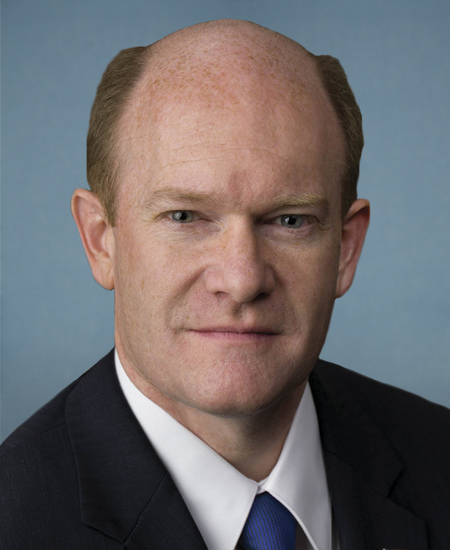
Sen. Christopher A. Coons
Sponsored bills
Maddy summaryThe GLOBE Act of 2025 is a comprehensive bill aimed at advancing LGBTQI rights globally through several key mechanisms. It requires U.S. diplomatic posts to document and respond to violence against LGBTQI people abroad, establishes sanctions against individuals responsible for human rights violations against LGBTQI people, and creates a Special Envoy for LGBTQI rights. The bill also reforms immigration policies to better protect LGBTQI refugees and asylum seekers, and expands U.S. foreign assistance to support LGBTQI rights organizations globally. These provisions directly affect LGBTQI individuals worldwide, U.S. diplomatic personnel, and organizations receiving U.S. foreign assistance.
Maddy summaryThis bill reauthorizes two existing federal diabetes programs through 2027. It provides $160 million annually for fiscal years 2026 and 2027 for the Special Diabetes Program for Type I Diabetes (serving people with Type I diabetes) and the Special Diabetes Program for Indians (serving Native American communities through Indian Health Services). A final $40 million is allocated for October-December 2027 for both programs, with all funds remaining available until expended. The bill extends current funding levels without changing program eligibility or structure.
Maddy summaryS 2212, the VISIBLE Act, requires immigration enforcement officers to visibly display their agency name and either their last name or unique badge number during all public-facing immigration enforcement activities in the United States. This applies to officers from U.S. Customs and Border Protection, U.S. Immigration and Customs Enforcement, and other authorized personnel during actions like stops, arrests, raids, or warrant service. The bill mandates that this identification be clearly legible from 25 feet away on outermost clothing, prohibits non-medical face coverings that obscure it (except in covert operations or hazardous conditions), and requires annual reports to Congress on compliance and disciplinary actions. It aims to increase transparency during immigration enforcement interactions where the public may be present.
Maddy summaryS 2204 (Protecting America’s Diplomatic Workforce Act) sets strict limits on staff reductions at key diplomatic agencies, including the State Department, USAID, and the Peace Corps. It prohibits separating more than 50 employees in a 6-month period without congressional review, requiring agencies to submit detailed justifications covering mission impact, diplomatic engagement, and compliance with civil service rules. The bill mandates a minimum 60-day notice for affected employees and updates procedures for Foreign Service layoffs to prioritize performance and tenure. These changes aim to prevent sudden workforce cuts that could weaken U.S. diplomatic capabilities.
Maddy summaryThe Break the Cycle of Violence Act establishes federal grants to fund community-based violence intervention programs that aim to reduce gun violence through evidence-based strategies. It creates a National Community Violence Response Center to coordinate efforts and provide technical assistance, while directing funding to communities disproportionately affected by violence, particularly those with high homicide rates. The bill includes provisions for hospital-based violence intervention programs, trauma-informed services, and job training programs for opportunity youth (ages 16-25 not in education or employment) to address root causes of violence. Funding for these programs totals $300 million in 2026, increasing to $700 million annually through 2033 for the Department of Health and Human Services, plus $1.5 billion for job training programs through the Department of Labor.
Maddy summaryThe Senate resolution SRES 306 supports designating June 26 as "LGBTQI+ Equality Day" to commemorate three landmark Supreme Court rulings on that date: *Lawrence v. Texas* (2003, ending criminalization of same-sex intimacy), *United States v. Windsor* (2013, striking down DOMA), and *Obergefell v. Hodges* (2015, guaranteeing same-sex marriage). It encourages public celebrations to educate about ongoing LGBTQI+ discrimination while acknowledging these court victories were not enough to eliminate barriers. The resolution is symbolic - non-binding and non-enforceable - focusing on raising awareness rather than creating new laws. It explicitly calls for future legislation to address discrimination in areas like employment, housing, and public accommodations.
Maddy summarySRES 310 is a symbolic Senate resolution recognizing Tunisia as the birthplace of the Arab Spring and commending its early democratic reforms following the 2011 revolution. It expresses concern over recent democratic backsliding under President Kais Saied, including the suspension of Parliament, consolidation of presidential power, and suppression of political dissent. The resolution urges Tunisia to release political prisoners, restore judicial independence, and respect freedom of assembly and press. As a non-binding resolution, it does not create new laws but formally expresses U.S. support for Tunisia’s democratic norms and calls for specific actions by the Tunisian government.
This resolution recognizes religious freedom as a fundamental human right and expresses concern over threats to religious freedom around the world, such as through harassment, violence, and imprisonment.
Maddy summaryS 2179, "Canyon’s Law," bans the use of M-44 devices (sodium cyanide-based poisoners) on public lands managed by federal agencies like the National Park Service, U.S. Fish and Wildlife Service, and Bureau of Land Management. The bill prohibits placing, deploying, or using these devices on public land and requires all existing devices to be removed within 30 days of enactment. It directly affects federal land management agencies and any entity currently authorized to use M-44s, such as state wildlife or livestock control programs. The law aims to prevent further harm to people, non-target wildlife (including endangered species like eagles and bears), and pets, following documented incidents of poisoning and animal deaths.