Maddy summaryThis bill provides back pay to federal employees, military personnel, and certain contractors who lost compensation due to a government funding lapse during the period from October 1, 2025, through the bill's enactment date. It appropriates funds from the Treasury to cover "standard employee compensation" (including base pay, allowances, and benefits) for all covered individuals during the shutdown period, requiring agencies to distribute payments within 7 days of enactment. The funds may only be used for this specific purpose and cannot be redirected to other agency needs. The pay is retroactive to September 30, 2025, treating affected individuals as if they had received full pay continuously during the shutdown.
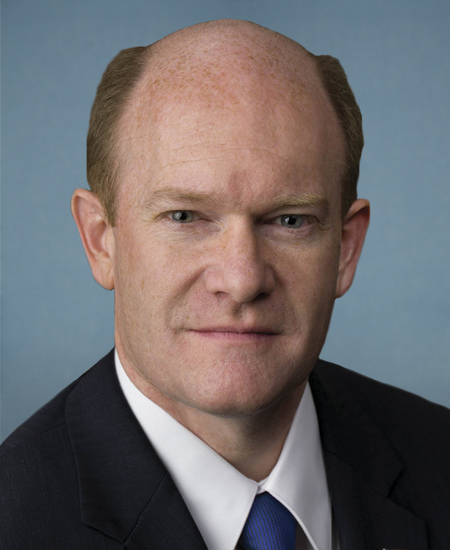
Sen. Christopher A. Coons
Sponsored bills
Maddy summaryThis bill ensures federal employees, contractors, and military personnel affected by a government shutdown starting October 1, 2025, receive their regular pay and benefits during the shutdown period. It appropriates funds to cover standard pay, allowances, and benefits for "covered individuals" until appropriations are enacted (the "termination date"). The bill also prohibits agencies from implementing layoffs or placing employees on administrative leave for more than 10 workdays during the shutdown. It applies retroactively to September 30, 2025, and charges the costs to future appropriations.
Maddy summaryThis Senate resolution designates the week beginning October 12, 2025, as "National Wildlife Refuge Week." It recognizes the National Wildlife Refuge System's role in conserving wildlife habitats, supporting recreational activities like birdwatching and fishing, and contributing to local economies, without creating new policies or funding. The resolution encourages public observance and highlights the system's ecological and cultural significance.
Maddy summaryThis resolution designates October 1, 2025, as "Energy Efficiency Day" to recognize the economic and environmental benefits of energy efficiency. It celebrates private sector innovation and federal energy efficiency policies, referencing historical achievements like over 80 quadrillion BTUs in energy savings and $1 trillion in annual cost avoidance. The resolution has no binding provisions and is purely ceremonial, calling for public observance through programs and activities. It does not create new laws or directly affect any specific groups.
Maddy summaryS 2994, the Voter Purge Protection Act, prevents states from removing voters from registration lists based on non-voting or failure to respond to mail. It requires states to use verified evidence - like death records or permanent out-of-state moves - for removals, not just non-voting history. Voters removed must receive 48-hour notice with reinstatement options, and states must publicly announce list maintenance efforts. The bill also allows voters to update their address through election day at polling locations or central sites, ensuring continued eligibility after moving within the same state. This directly protects voters who might otherwise be incorrectly purged due to administrative errors or lack of contact.
Maddy summaryThis bill provides emergency financial relief for federal employees affected by government shutdowns. It allows workers on furlough or working without pay during a shutdown lasting at least two weeks to withdraw up to $30,000 (adjusted annually for inflation) from their Thrift Savings Plan (TSP) retirement accounts without the usual 10% tax penalty. The bill also prevents missed TSP loan payments during shutdowns from being treated as taxable distributions, protecting employees from unexpected tax bills. These provisions apply to withdrawals and loan payments made after September 30, 2025, directly supporting federal workers facing income disruption during funding lapses.
Maddy summarySRES 427 designates October 8, 2025, as "National Hydrogen and Fuel Cell Day" through a ceremonial Senate resolution. It does not create new laws, funding, or affect specific groups; it simply establishes a commemorative day to recognize hydrogen and fuel cell technologies. The resolution highlights the U.S. leadership in these technologies and their applications in energy, transportation, and grid resilience, but contains no policy changes or obligations.
Maddy summaryThis resolution (SRES 418) expresses the U.S. Senate's support for designating September 20-27, 2025, as "National Estuaries Week." It does not create new laws or funding but aims to raise public awareness about the ecological and economic importance of estuaries. The resolution highlights estuaries' role in supporting jobs, economic output, and coastal protection, while acknowledging ongoing threats like pollution and habitat loss. It is a symbolic gesture directed at the public, government officials, and organizations working to protect estuaries.
Maddy summaryThe America’s CHILDREN Act of 2025 would create a pathway to permanent residency for young adults who entered the U.S. as children and were dependents of nonimmigrant workers (with specific work visas, excluding certain categories) for at least 8 years. To qualify, applicants must have graduated from a U.S. college or university, been lawfully present in the U.S. for 10 years total, and meet other eligibility criteria like not being inadmissible. The bill includes key protections: it prevents "aging out" by using the date a parent’s visa petition was filed to determine child status (instead of current age), allows reconsideration of past denials under the new rules, and retains priority dates for family-based immigration applications. This directly affects young adults who grew up under these visa statuses and completed higher education in the U.S.
Maddy summaryThis bill provides $5 million annually (2026-2030) to states for improving stillbirth data collection and research, directly affecting state health departments and public health officials. It requires states to collect deidentified stillbirth data - including risk factors - using existing systems like fetal mortality reviews, while ensuring strict privacy compliance. The bill also allocates $1 million yearly to develop standardized data collection guidelines and public educational materials about stillbirths, with input from medical professionals and bereavement organizations. It mandates a public HHS report within five years containing these guidelines and educational resources to improve data consistency and awareness. The legislation focuses on enhancing data quality for research and public health, without altering medical care or insurance coverage.