Maddy summaryThis bill provides temporary funding for military pay and certain civilian employee salaries during fiscal year 2026 if Congress hasn’t passed regular appropriations. It covers all active-duty military members, reserve personnel on active duty or training, and civilian employees of the Defense Department, Coast Guard, intelligence community (including the CIA and National Intelligence Director’s office). The funding remains available until either regular appropriations are enacted, the Intelligence Authorization Act passes, or September 30, 2026. It does not change existing pay policies but ensures continuous payment during budget gaps.
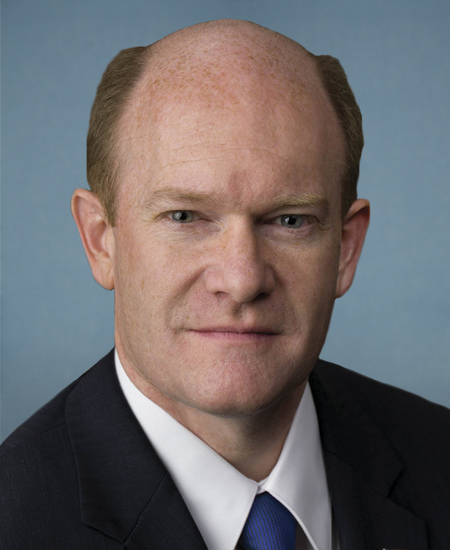
Sen. Christopher A. Coons
Sponsored bills
Maddy summaryThis bill establishes a U.S. government task force to prepare sanctions against Chinese entities if the People's Republic of China (PRC) takes actions threatening Taiwan's sovereignty, such as military aggression, territorial occupation, or cyberattacks. The PRC Sanctions Task Force, to be created within 180 days of enactment, will identify potential targets, assess existing and needed sanctions authorities, and coordinate with allies to minimize economic impacts on the U.S. and partners. It requires annual classified reports to Congress detailing target entities, potential economic effects, and strategies for imposing sanctions. The bill directly affects U.S. agencies (State, Treasury, Commerce) and could impact PRC entities supporting actions against Taiwan, but it does not authorize sanctions itself - only prepares the framework for potential future action.
Maddy summaryThis bill streamlines defense technology transfers between the U.S., Australia, and the U.K. by removing specific regulatory barriers under the Arms Export Control Act. It allows direct reexports or transfers of defense articles between these governments without requiring presidential consent, and eliminates certification requirements for commercial technical assistance or manufacturing agreements involving Australia or the U.K. The policy change directly affects U.S. defense contractors, government agencies, and the AUKUS partnership by simplifying cross-border defense cooperation. These provisions aim to accelerate joint military technology sharing while maintaining compliance with existing export control frameworks.
Maddy summaryThis bill requires the U.S. State Department to submit annual reports for five years detailing connections between Haitian criminal gangs and political/economic elites, including gang leaders, activities, and how elites collaborate with gangs to advance interests. The reports must identify specific individuals and organizations linked to gangs, assess threats to Haiti and U.S. interests, and propose solutions. Following the first report, the President must impose sanctions - including blocking U.S. property and denying visas - on foreign persons (individuals or entities outside U.S. jurisdiction) identified as having significant links to these colluding groups. Exceptions apply for humanitarian aid and compliance with international obligations. The law expires five years after enactment.
Maddy summaryS 1000 creates a new position for a U.S. Ambassador-at-Large for Arctic Affairs within the State Department. This official, appointed by the President with Senate approval, will coordinate U.S. foreign policy across Arctic-related issues including national security, environmental protection, indigenous engagement, resource management, and scientific research. The role will oversee efforts involving multiple federal agencies and work with Arctic Council nations (U.S., Canada, Denmark, Iceland, Norway, Sweden, Finland, and Russia). The bill defines the "Arctic region" to include northern U.S. territories, Arctic waters, and the Aleutian Chain, establishing this position to centralize U.S. policy coordination in the region.
Maddy summaryThis Senate resolution commemorates the seventh anniversary of journalist Jamal Khashoggi's murder in 2018 and calls on Saudi Arabia to ensure accountability for those responsible. It specifically urges Saudi authorities to release individuals wrongfully detained - including Nourah al-Qahtani, Abdulrahman al-Sadhan, and others - and to respect freedoms of press, assembly, and association. The resolution acknowledges U.S. sanctions against 17 Saudis linked to Khashoggi's killing but does not impose new legal requirements, serving as a formal statement of U.S. policy.
Maddy summarySRES 475 is a symbolic Senate resolution designating November 1, 2025 (the first Saturday of November) as "National Bison Day." It directly affects all Americans by officially recognizing this date for public observance. The resolution acknowledges bison's historical, cultural, and economic significance, particularly to Native American tribes and rural communities, and builds on an existing annual tradition celebrated since 2012. The Senate encourages the public to observe the day with appropriate ceremonies and activities, though the resolution contains no new laws or funding.
Maddy summaryThis bill ensures uninterrupted access to SNAP (food stamps) and WIC benefits during government funding gaps in fiscal year 2026. It authorizes the Treasury to provide emergency funds if Congress fails to pass full-year appropriations for the Department of Agriculture by September 30, 2025, covering all missed benefits retroactively from September 30, 2025. State agencies administering these programs would be reimbursed for costs incurred during the funding lapse. The funding automatically terminates once Congress passes 2026 appropriations or by September 30, 2026.
Maddy summaryThis bill requires the USDA to reimburse states for costs they incurred while operating the SNAP program during a federal funding gap, provided states followed federal rules. It directly affects state agencies administering SNAP, ensuring they aren't financially burdened when Congress fails to pass annual funding. The key provision mandates reimbursement for all eligible costs during the lapse, covering the period when SNAP benefits would otherwise have stopped. It does not change SNAP eligibility, benefit levels, or program rules - it only addresses financial responsibility during funding interruptions.
Maddy summaryThis resolution designates October 19-25, 2025, as "National Chemistry Week" to recognize chemistry's role in daily life and innovation. It directly supports the 36th annual National Chemistry Week event, which focuses on public education about chemistry's applications (like food, medicine, and energy) and aims to inspire youth, especially underrepresented groups, to pursue STEM careers. The resolution commends organizations like the American Chemical Society and groups promoting diversity in chemistry for their outreach. As a ceremonial resolution, it has no legal effect but formally acknowledges these efforts.