Maddy summaryThis bill prevents U.S. federal courts from issuing orders (such as injunctions, stays, or declarations) that stop enforcement of laws against people or entities not directly involved in a lawsuit (non-parties). It requires that such orders only apply if a non-party is represented through a party acting under standard legal rules. The law applies to all federal courts, including those in U.S. territories, and modifies related procedures for temporary restraining orders and declaratory judgments to enforce this restriction. Its core change limits court authority to affect non-parties regarding statutes, regulations, or government actions.
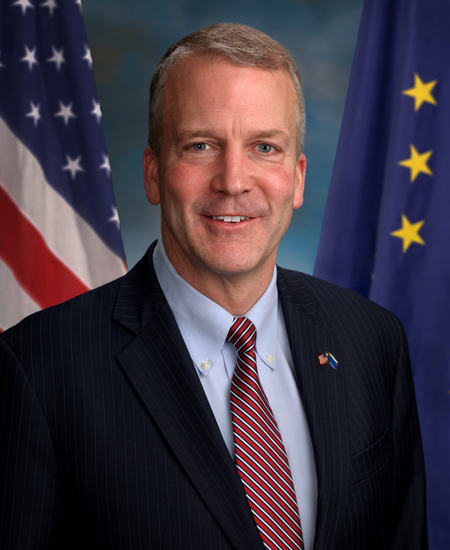
Sen. Dan Sullivan
Sponsored bills
Maddy summaryS 1217 expands credit access under the Farm Credit Act to businesses that provide services directly supporting fishing operations. It amends the Farm Credit Act to include "persons furnishing to producers or harvesters of aquatic products services directly related to their operating needs" as eligible for credit from Farm Credit Banks and Production Credit Associations. This change specifically affects service providers (like equipment suppliers or processors) supporting commercial fishing businesses, not the fishermen or harvesters themselves, by adding them to existing credit eligibility criteria.
Maddy summarySRES 147 is a Senate resolution expressing the chamber's position that the U.S. Postal Service (USPS) should remain an independent federal agency and not face privatization. It does not create new laws but urges Congress to take action to protect USPS’s current status as a self-sustaining, constitutionally mandated entity serving all communities. The resolution cites USPS’s role in supporting a $1.9 trillion mailing industry, employing over 7.9 million Americans, and maintaining universal service - including critical rural access - without taxpayer subsidies. It emphasizes that privatization could raise prices, reduce services, and harm e-commerce and national infrastructure. The resolution is non-binding and solely reflects the Senate’s expressed view on preserving USPS’s public mission.
Maddy summaryThis bill amends the tax code to exclude certain loan repayment assistance from taxable income for veterinary students participating in qualifying programs. It specifically expands the exclusion to cover assistance provided under the National Agricultural Research, Extension, and Teaching Policy Act of 1977 and similar state programs designed to increase veterinary access in rural areas. Veterinary students who receive this assistance through these designated programs will not owe income tax on the funds. The change applies to assistance received in taxable years beginning after December 31, 2025.
Maintaining and Enhancing Hydroelectricity and River Restoration Act of 2025 This bill establishes a new investment tax credit in the amount of 30% of the basis of any hydropower improvement property. The bill defines hydropower improvement property as property that adds or improves fish passage at a qualified dam; maintains or improves the quality of the water retained or released by a qualified dam; promotes downstream sediment transport and habitat maintenance; upgrades, repairs, or reconstructs a qualified dam to meet safety and security standards; improves public uses of, and access to, public waterways impacted by a qualified dam; removes an obsolete river obstruction; or places into service an approved remote dam. Further, written approval for hydropower improvement property must be obtained from the Federal Energy Regulatory Commission or state or local officials prior to January 1, 2035. The bill also allows an election to claim the investment tax credit for qualified progress expenses for some types of hydropower improvement property in advance of such property being placed into service. Any investment tax credit amount claimed for qualified progress expenses reduces the amount of the investment tax credit that may be claimed once the hydropower improvement property is placed into service. The bill authorizes certain entities, including tax-exempt and governmental entities, to treat the investment tax credit for hydropower improvement property as a payment of tax and receive a refund of any overpayment (also known as elective pay). Finally, the investment tax credit for hydropower improvement property may be transferred (i.e., sold).
Maddy summarySRES 142 is a Senate resolution recognizing the heritage, culture, and contributions of American Indian, Alaska Native, and Native Hawaiian women. It highlights specific achievements, including over 4,400 women serving in the military as of 2025, more than 11,600 women owning businesses as of 2024, and historical roles in fields like science, medicine, and cultural preservation. As a symbolic resolution, it does not create new laws or allocate funds but publicly honors these women’s contributions to communities, tribal sovereignty, and U.S. history without mandating policy changes.
Maddy summaryThe Mining Schools Act of 2025 creates a Department of Energy grant program to fund mining education at eligible colleges and universities. It directly affects accredited mining engineering programs and specific public university departments in states with significant mining economies, aiming to recruit students and strengthen training in critical mineral extraction, environmental reclamation, and domestic supply chains. Grants - limited to 10 annually - must support curriculum focused on rare earth elements, recycling technologies, reducing environmental impacts, and meeting U.S. energy mineral needs. The program authorizes $10 million yearly for fiscal years 2026-2033, with oversight by a Mining Professional Development Advisory Board.
Maddy summaryThis bill repeals federal waivers that allow California to set its own vehicle and engine emission standards under the Clean Air Act. It directly affects California's Air Resources Board (CARB), prohibiting the state from adopting or enforcing standards for nonroad engines (like construction equipment, farm vehicles, and locomotives) or new motor vehicles. Key provisions include removing federal authorization for California's vehicle standards (Section 177) and invalidating all existing waivers for state emission rules. The bill would eliminate California's ability to enforce its own emission requirements for these categories, shifting authority entirely to federal standards.
Maddy summaryThis bill amends Section 60123(b) of Title 49, U.S. Code, to expand criminal penalties for interfering with energy infrastructure. It broadens the prohibited actions from "damaging or destroying" to include vandalizing, tampering with, disrupting operations or construction, or preventing operations of energy facilities like pipelines. The change directly affects individuals who interfere with energy transportation infrastructure, increasing legal consequences for a wider range of disruptive acts. The bill focuses on strengthening existing penalties without creating new programs or funding.
Maddy summaryThis bill expands the Work Opportunity Tax Credit to include military spouses. It adds "qualified military spouse" as a new category eligible for the credit, meaning employers who hire spouses of active-duty service members can claim the tax benefit. To qualify, a spouse must be certified by a local agency as married to an Armed Forces member at the time of hire. The change applies to hires occurring after the law's effective date, directly affecting military spouses seeking employment and employers who hire them.