Maddy summaryThe FAIR Act of 2025 would prohibit companies from requiring pre-dispute arbitration agreements or waivers that prevent individuals from joining class or collective lawsuits in employment, consumer, antitrust, or civil rights cases. This directly affects workers, consumers, and small businesses who currently face forced arbitration for issues like workplace discrimination, product defects, or unfair business practices. The bill makes such agreements unenforceable while allowing voluntary arbitration after disputes arise and leaving collective bargaining agreements unaffected. It applies to all disputes occurring after the law takes effect, without changing how voluntary arbitration works post-dispute.
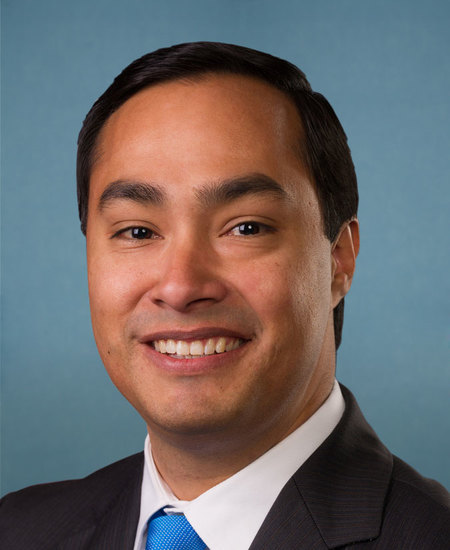
Rep. Joaquin Castro
Sponsored bills
Maddy summaryHR 5309, the Congressional Tribute to Constance Baker Motley Act of 2025, authorizes a posthumous Congressional gold medal for Constance Baker Motley, a pioneering civil rights attorney and judge. The bill directs the Treasury Secretary to strike the medal with her image and name, to be presented to her son, Joel W. Motley III, and her niece, Constance Royster. It also permits the sale of bronze duplicates at cost to cover expenses, with proceeds going to the U.S. Mint fund. This is a commemorative measure with no substantive policy changes, honoring Motley’s legacy as the first African-American woman appointed to a federal judgeship.
Maddy summaryThis bill directs the U.S. President to identify Pakistani officials responsible for undermining democracy and human rights within 180 days of enactment, then impose Global Magnitsky sanctions on them. It targets senior government, military, or security officials found to have committed gross human rights violations or interfered with democratic processes, such as during Pakistan’s 2024 elections or through constitutional changes. Sanctions would include asset freezes and travel bans, with exceptions for humanitarian aid, UN obligations, and national security activities. The bill expires on September 30, 2030, and aims to pressure Pakistan to uphold democratic norms, human rights, and judicial independence.
Maddy summaryHR 2181, the Protect Our Watchdogs Act of 2025, strengthens protections for federal Inspectors General (IGs) by requiring the President to have specific, documented reasons to remove them. The bill amends federal law to specify nine grounds for removal, including documented felony convictions, gross mismanagement, waste of funds, abuse of authority, or neglect of duty - each requiring written justification. This directly affects IGs who oversee federal agency accountability and investigations, as it prevents arbitrary removals and mandates transparency in the process. The law applies to all federal Inspectors General across agencies, ensuring their independence is maintained through clear, enforceable standards.
Maddy summaryThis bill prohibits Members of Congress, their spouses, and dependent children from owning or trading certain investments, including stocks, commodities, and derivatives (referred to as "covered investments"). It requires affected individuals to divest these investments within 90-180 days, with specific exemptions for Treasury bonds, diversified mutual funds, small business interests, and family trusts meeting strict conditions. Violations incur penalties of 10% of the investment's value plus disgorgement of profits, paid directly to the U.S. Treasury. The law applies to all covered individuals during federal service, with exceptions for investments acquired through inheritance or occupational trading (e.g., a spouse’s finance job).
Maddy summaryThe PARTNER Act (HR 4490) authorizes the U.S. President to extend diplomatic privileges and immunities to five international organizations: the Association of Southeast Asian Nations (ASEAN), CERN (European nuclear research group), the Pacific Islands Forum, the Caribbean Community, and the African Union. It modifies existing law to allow these organizations to receive the same diplomatic protections as other international bodies the U.S. collaborates with under treaties or congressional authorization. The bill does not create new policy but adjusts legal authority for diplomatic recognition, affecting how these organizations interact with U.S. government operations. This is a procedural change, not a substantive policy shift, and applies only to diplomatic privileges, not other forms of engagement.
Maddy summaryThis bill permanently establishes the Coordinator for Afghan Relocation Efforts (CARE) within the State Department, expanding their role to prioritize family reunification for U.S. military personnel and veterans with Afghan allies. It mandates the Coordinator to collect detailed data on Afghan applicants (including special immigrant visa seekers, refugees, and parolees), vetting timelines, and pending family reunification cases into a centralized database. The Coordinator must report this data to Congress every 90 days to ensure transparency and inform policy decisions. The law directly affects Afghan allies and their families seeking U.S. relocation, particularly those connected to U.S. military service.
Maddy summaryThis resolution (HRES 653) expresses U.S. congressional support for Japan's newly formed "Caucus for Universal Values in the Indo-Pacific," a bipartisan group within Japan's Diet focused on advancing democratic principles. It encourages continued collaboration between the U.S. Congress and Japan's Diet through existing programs like the House Democracy Partnership to strengthen democratic governance, civil society, and human rights protections across the Indo-Pacific region. The resolution does not create new laws or directly affect individuals or organizations; it serves as a symbolic endorsement of U.S.-Japan partnership in promoting shared democratic values. Key provisions include commending Japan's caucus, affirming common commitments to human rights and the rule of law, and urging expanded bilateral coordination on democracy initiatives.
Maddy summaryThe LOAN Act would significantly reform federal student loan programs by doubling Federal Pell Grants for eligible students (from $5,000 to $14,000 over several years), eliminating origination fees on new federal loans, and creating two new repayment plans: a fixed repayment plan and an Income-Driven Repayment Plan. It would automatically enroll borrowers who are delinquent or rehabilitating defaulted loans into income-driven repayment plans, eliminate interest capitalization (preventing interest from being added to the principal balance), and streamline Public Service Loan Forgiveness requirements. The bill would also provide refinancing options for existing federal student loans and private student loans with interest rates capped at 5%. These changes would directly affect millions of current and future student loan borrowers and Pell Grant recipients across the United States.
Maddy summaryThis bill adjusts health insurance subsidies by modifying the premium tax credit structure under the Internal Revenue Code. It replaces previous income thresholds with a sliding-scale formula, increasing subsidies for households earning between 150% and 400% of the federal poverty level - reducing their required premium payments as income rises within these tiers. The changes apply to tax years beginning after December 31, 2025, directly affecting middle-income individuals and families purchasing coverage through health insurance marketplaces. It also repeals specific provisions from a prior reconciliation law related to health care.