

Fair Pay for Federal Contractors Act of 2025 This bill provides back pay to employees of federal contractors who lost pay due to a lapse in appropriations (i.e., government shutdown) in FY2026. Specifically, the bill provides appropriations for federal agencies that are subject to a lapse in appropriations in FY2026 to adjust the price of contracts to compensate federal contractors for providing back pay to employees who were affected by the lapse in appropriations. The agencies must adjust the price of any contract for which the contractor stopped, suspended, delayed, or interrupted all or part of the work under the contract due to the lapse in appropriations. The price adjustment must compensate the contractor for reasonable costs incurred to (1) compensate employees who were furloughed or laid off, were not working, or experienced a reduction of hours or compensation due to the lapse in appropriations; or (2) restore paid leave taken by employees during the lapse in appropriations if the contractor required or permitted employees to use paid leave as a result of the lapse in appropriations. The maximum amount of weekly compensation of an employee for which an adjustment may be made under this bill may not exceed the lesser of (1) the employee's actual weekly compensation, or (2) $1,442 (or a lesser amount pro-rated for an employee who works less than 40 hours per week). The bill also requires the Office of Federal Procurement Policy to submit a report to Congress on the adjustments made under this bill.
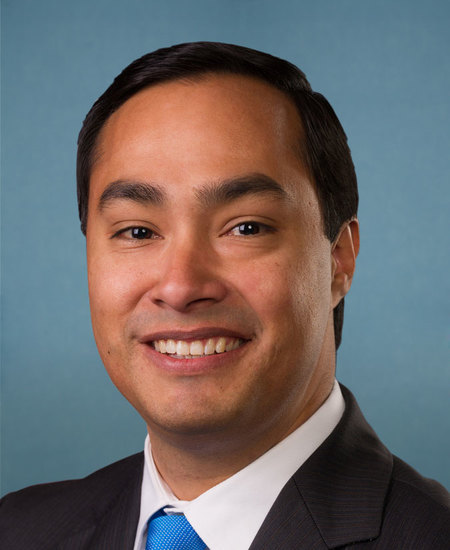
Rep. Joaquin Castro
Sponsored bills
Maddy summaryHR 5568, the "Funding Small Businesses During Shutdown Act," ensures certain Small Business Administration (SBA) loan programs continue during government shutdowns by appropriating specific funds from the Treasury. It allocates $500,000 for section 7(m) loans, $2.9 billion for section 7(a) loans, $1.25 billion for Small Business Investment Act loans, and $13.775 million for administrative costs related to section 7(m) loans. These funds cover salaries and expenses to maintain loan servicing during any 30-day shutdown period (or pro-rated for shorter lapses), directly affecting small businesses relying on SBA loans. The bill creates a targeted funding mechanism to prevent program interruptions without requiring new appropriations during shutdowns.
Maddy summaryHCONRES 51 directs the President to withdraw U.S. military forces from hostilities against Venezuela and designated terrorist organizations (transnational criminal groups listed as Foreign Terrorist Organizations or Specially Designated Global Terrorists) without congressional authorization. It applies to military actions since February 20, 2025, including recent Caribbean operations referenced in the bill's findings. The resolution invokes the War Powers Resolution, requiring removal of forces when no declaration of war or specific statutory authorization exists. It explicitly excludes self-defense against sudden attacks but mandates withdrawal for unapproved military engagement.
Maddy summaryHJRES 126 is a joint resolution directing the removal of U.S. Armed Forces from military operations against specific targets without congressional authorization. It requires the President to end hostilities involving: (1) foreign terrorist organizations designated after February 20, 2025; (2) countries where those groups operate; or (3) non-state groups trafficking illegal drugs, unless Congress explicitly authorizes such actions through a war declaration or specific law. The bill cites recent military strikes on vessels as examples of unauthorized hostilities and emphasizes that drug trafficking alone does not justify military force under the War Powers Resolution. This resolution applies to all current and future operations targeting these groups without prior congressional approval.
Maddy summaryThis bill requires health plans and insurers to create a clear, timely process for patients or doctors to request exceptions when step therapy protocols (which force patients to try cheaper drugs first) might harm them. It mandates approval for exceptions in six specific cases, such as when prior treatments failed, delaying care risks severe harm, or the required drug causes adverse reactions. Plans must respond within 72 hours (24 hours for emergencies) and cover the requested drug for at least one year if approved. Additionally, health plans must report annual data on exception requests, approvals, denials, and reasons to the government for transparency.
Maddy summaryThe Tyler Clementi Higher Education Anti-Harassment Act of 2025 requires U.S. colleges and universities participating in federal financial aid programs to create and distribute clear anti-harassment policies covering harassment based on race, color, national origin, sex (including sexual orientation and gender identity), disability, or religion. These policies must explicitly prohibit harassment in all settings - including online, on campus, off-campus housing, and during school-sponsored activities - and outline reporting procedures and support services for victims. The bill also establishes a $50 million annual grant program to fund schools developing prevention programs, victim support services, or staff/student training on recognizing and addressing harassment. Grants are competitive, require annual reporting on effectiveness, and must be used to improve existing efforts without replacing existing civil rights laws like Title IX.
Maddy summaryThe FAMILY Act would establish a national paid family and medical leave insurance program that provides wage replacement benefits for workers needing time off for caregiving or medical reasons. It defines "qualified caregiving" to include caring for a family member with a serious health condition, personal medical needs, or recovery from violence (including domestic violence, sexual assault, or stalking). Benefits would be calculated based on earnings, with a minimum monthly benefit of $580 and maximum of $4,000, administered by a new Office of Paid Family and Medical Leave within the Social Security Administration. Eligible individuals would need to have worked for at least 8 quarters in the previous year and file an application with required documentation, while existing state paid leave programs would continue to operate alongside this federal program.
Maddy summaryHJRES 117 is a joint resolution terminating a national emergency declared by the President on July 30, 2025, under Executive Order 14323. It directly ends the legal authority granted by that emergency declaration, which would have allowed the executive branch to use special powers under the National Emergencies Act (50 U.S.C. 1622). The resolution requires congressional action to formally end the emergency, as mandated by Section 202 of the National Emergencies Act. This is a procedural step affecting federal agencies' emergency powers, not a new policy.
Maddy summaryHRES 718 is a non-binding resolution expressing congressional support for increasing Latino participation in STEM careers. It highlights that Latinos make up 18.2% of the U.S. workforce but only 14.8% of STEM workers, despite growing educational enrollment and strong interest in STEM fields. The resolution encourages federal investment in initiatives to support Latino students pursuing STEM education and careers, particularly through Hispanic-serving institutions. It emphasizes that boosting Latino representation in STEM would strengthen the U.S. workforce, improve economic mobility, and reduce reliance on foreign workers.
Maddy summaryThe Azerbaijan Sanctions Review Act of 2025 requires the President to review within 180 days whether 53 specific Azerbaijani officials meet criteria for sanctions under the Global Magnitsky Human Rights Accountability Act. These officials include military commanders, security service heads, and judges implicated in human rights violations related to the Nagorno-Karabakh conflict. The review must include a detailed justification and determine if sanctions should be imposed on individuals linked to alleged war crimes, arbitrary detention, and torture of Armenians. The bill mandates this assessment without imposing new sanctions, focusing instead on evaluating existing legal authority for action.