Maddy summaryThis bill renames a specific plaza in Washington D.C. (the area between H and K Streets on 16th Street Northwest) from "Black Lives Matter Plaza" to "Charlie Kirk Freedom of Speech Plaza." It requires the District of Columbia to install two standard street signs with the new name at the plaza's intersections within 90 days of enactment. The bill only affects the plaza's official designation and signage, with no substantive policy changes or new regulations. It directly impacts how the location is referenced in official documents and public signage.
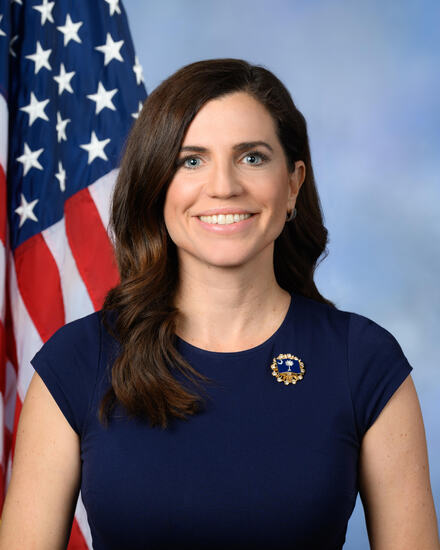
Rep. Nancy Mace
Sponsored bills
Maddy summaryThis bill directs the American Battle Monuments Commission to correct historical errors by identifying Jewish World War I and II veterans buried overseas under incorrect Christian markers (Latin crosses) and replacing them with appropriate markers. It establishes a 10-year program to contact families of affected veterans, with the Commission funding the effort at $500,000 annually through nonprofit contracts. The program specifically targets veterans buried in foreign U.S. military cemeteries with markers indicating non-Jewish faith, addressing a documented mistake affecting approximately 900 Jewish servicemembers. This directly affects Jewish veterans' families by honoring their heritage and correcting past burial inaccuracies.
Maddy summaryThe Freedom to Heal Act of 2025 creates a new federal registration process for physicians to directly administer Schedule I investigational drugs under the "Right to Try" framework. It requires physicians to apply to the Attorney General with evidence of state compliance, manufacturer agreements, and training, and limits the amount of drugs they may possess based on approved applications. The bill mandates the Attorney General to issue interim rules within 240 days and final rules within two years covering drug delivery, storage, recordkeeping, and registration management. This affects physicians treating eligible patients with Schedule I drugs under federal Right to Try provisions, not the patients themselves.
Maddy summaryThis bill creates a new IRS procedure allowing victims of domestic violence or abuse to seek relief from joint tax liability on past returns. It requires the IRS to presume that a spouse who knew about tax errors on a joint return but didn't challenge them did so due to fear or duress from the abusive partner. Survivors requesting relief can provide evidence of abuse without disclosing details in IRS notices to the non-requesting spouse, protecting their privacy. The bill directly affects survivors who filed joint tax returns with abusive partners and were unaware of tax errors or unable to challenge them due to abuse.
Maddy summaryThis bill redirects federal funding toward mandatory treatment facilities for unhoused individuals with serious mental illness or addiction, while tying grant money to local enforcement of public drug use bans, camping restrictions, and sex offender registration. It prohibits federal support for "harm reduction" programs and safe consumption sites, requires states to prioritize treatment over "housing first" approaches, and mandates data sharing between health programs and law enforcement. The bill defines "unhoused individuals" as those posing public risks or unable to care for themselves for 3+ months. It applies to federal grant programs for homelessness services, mental health treatment, and housing assistance.
Maddy summaryThis resolution formally censures Representative Cory Mills (R-FL) and removes him from the House Committees on Armed Services and Foreign Affairs. The action follows findings by the House Ethics Committee regarding potential conflicts of interest - specifically, Mills' companies securing nearly $1 million in federal defense contracts while serving on those committees - and allegations of misconduct including false military service claims and domestic violence incidents. The resolution requires Mills to appear before the House for a public reading of the censure. It does not impose new legal restrictions but addresses his conduct as a Member of Congress.
Maddy summaryHRES 581 is a procedural resolution that establishes rules for the House to consider H.R. 185, the Epstein Files Transparency Act. It waives all points of order against the bill, adopts a specific amendment (the full text of the Epstein Files Transparency Act), and limits debate to one hour equally divided between the Judiciary Committee's chair and ranking minority member. The resolution also requires the Attorney General to release unclassified DOJ records related to Jeffrey Epstein within 30 days, with limited exceptions for privacy or national security.
Maddy summaryThis bill amends Section 2119 of Title 18 (carjacking statute) to clarify the legal definition of the offense. It removes the phrase "with the intent to cause death or serious bodily harm" from the main definition, replacing it with "knowingly," and refines the death penalty provision to specify that death must result from a carjacking taken with the intent to cause death or serious bodily harm. The change streamlines the statute by focusing on the act of taking a vehicle "knowingly" rather than requiring proof of intent to cause harm as a core element. This technical amendment affects how federal prosecutors define and prosecute carjacking cases under existing law.
Maddy summaryThe Protect American Fisheries Act of 2025 amends the Magnuson-Stevens Act to expand the definition of "fishery resource disaster" to include "economic cause." This means U.S. fisheries affected by foreign activities - such as illegal fishing, predatory pricing, or harmful subsidies that distort markets or disrupt sustainable harvests - can now qualify for disaster assistance. The bill requires documentation of how foreign actors' actions specifically harm U.S. fishing communities' operational or economic viability. It directly affects U.S. commercial and recreational fisheries facing market disruptions from foreign entities, enabling them to access federal aid previously limited to natural or anthropogenic disasters.
Maddy summaryHRES 864 is a ceremonial resolution honoring U.S. veterans on Veterans Day 2025. It does not create new laws or policies but formally recognizes veterans' service and sacrifice, calling on all Americans to observe Veterans Day. The resolution references historical context about Veterans Day's origins (from Armistice Day to honoring all veterans) but contains no concrete policy changes. It directly addresses the general public, urging them to participate in the observance. As a non-binding resolution, it affects no specific individuals or groups through legislative action.