

Maddy summaryHR 5688, the Non-Domiciled CDL Integrity Act, changes rules for issuing commercial driver's licenses (CDLs) to people who don't live in the state where the license is issued. It allows states to issue CDLs to foreign nationals with lawful U.S. immigration status and work-related visas (valid for up to one year or until their stay ends), requiring states to verify status before issuing and keep records for two years. For residents of U.S. territories like Puerto Rico, it requires proof of U.S. citizenship or permanent residency before issuing CDLs, with similar verification and record-keeping rules. The bill directly affects commercial drivers from foreign countries and U.S. territories seeking CDLs in states where they are not residents.
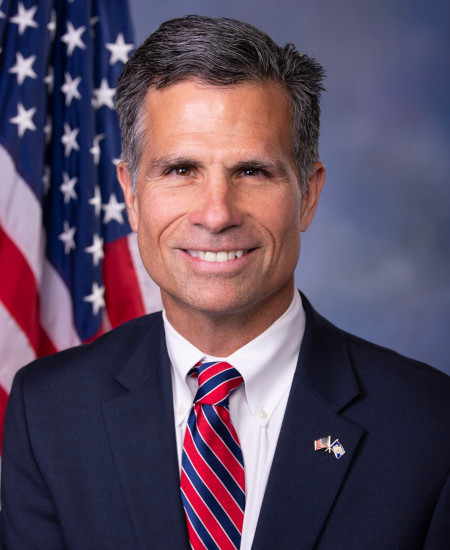
Rep. Daniel Meuser
Sponsored bills
Maddy summaryThis bill exempts H-1B visa holders working in healthcare from a presidential restriction that requires a $100,000 payment for entry into the United States. It directly affects foreign medical professionals and healthcare workers who hold H-1B nonimmigrant visas. The legislation removes the additional fee requirement for these workers while limiting any fees that may be charged to the standard amount already established under immigration law. The bill defines healthcare workers using the existing definition from the Affordable Care Act and was introduced in the 119th Congress in March 2026.
Enhanced Iran Sanctions Act of 2025 This bill imposes sanctions on certain foreign persons (individuals and entities) that are involved in Iran's petroleum sector as well as certain associated persons. The bill also requires or authorizes actions to facilitate the enforcement of sanctions on Iran. Specifically, the bill requires the President to impose visa- and property-blocking sanctions on any foreign person that, after the bill's enactment, knowingly engages in any transaction related to the processing, export, or sale of oil, condensates, gas, liquefied natural gas, or other petrochemical products in whole or in part from Iran. The President must also impose sanctions on certain foreign persons associated with a sanctioned individual or entity. For example, the President must sanction the subsidiaries and corporate officers of a sanctioned business. The bill provides certain exceptions to these sanctions, including specifying that sanctions do not apply to the importation of goods or to conducting or facilitating transactions for humanitarian assistance. The Department of State must establish an interagency working group that shall seek to establish a multilateral contact group to coordinate international efforts to enforce sanctions on Iran. The bill expands the State Department rewards program to authorize a reward payment to any individual who furnishes information leading to the identification of a person (1) subject to sanctions under this bill, or (2) that has attempted or is attempting to evade sanctions under this bill.
Maddy summaryHR 7871 (MVP Act) updates Medicaid drug rebate rules to allow manufacturers to report multiple "best price points" for drugs sold under outcome-based payment arrangements, requiring these arrangements to be offered to all states. It clarifies how average manufacturer price is calculated for such drugs and exempts certain outcome-linked payments from anti-kickback laws. The bill also mandates a GAO study to assess whether these arrangements improve patient access, lower costs, and reduce disparities in drug coverage. This affects Medicaid programs nationwide, drug manufacturers, and patients receiving covered outpatient drugs under Medicaid.
Maddy summaryThis bill requires drug manufacturers to offer Medicare Part D and Part B patients the lowest price they charge in eight specific countries (Canada, Denmark, France, Germany, Italy, Japan, Switzerland, UK), defined as the "most-favored-nation price." It directly affects drug manufacturers not in a special agreement with Medicare and Medicare beneficiaries who use covered drugs. The model, tested for five years starting in 2029, mandates manufacturers to report pricing data and provide discounts to eligible patients and providers. Manufacturers could avoid the requirement by signing an agreement with Medicare before December 2028. The bill aims to align U.S. drug prices with international averages for certain Medicare-covered drugs.
Debt-to-GDP Transparency and Stabilization Act This bill requires the President's annual budget and congressional budget resolutions to include (1) the ratio of the public debt to the estimated gross domestic product (GDP), and (2) the ratio of the surplus or deficit to the estimated GDP.
America's National Churchill Museum National Historic Landmark Act This bill designates the America’s National Churchill Museum, including the Winston Churchill Memorial, located at Westminster College in Fulton, Missouri, as the America’s National Churchill Museum National Historic Landmark. (Former British Prime Minister Winston Churchill gave a speech titled The Sinews of Peace , also widely known as the Iron Curtain Speech, at the college in 1946.) The bill permits the Department of the Interior to enter into cooperative agreements with public and private entities for the purposes of protecting historic resources at the landmark and providing educational and interpretive facilities for the public. Interior may provide technical and financial assistance to partner entities. The bill also directs Interior to conduct a special resource study to evaluate the national significance of the landmark and to determine the suitability and feasibility of designating it as a unit of the National Park System. The study must consider alternatives to that designation for the preservation, protection, and interpretation of the landmark, and must include cost estimates associated with identified alternatives.
Maddy summaryThe TIER Act of 2025 adjusts financial regulatory thresholds to account for economic growth. It raises key asset thresholds for large banks and financial institutions - from $250 billion to $370 billion in most cases (e.g., in the Federal Reserve Act and Financial Stability Act). The bill also establishes a new mechanism requiring periodic, automatic adjustments to these thresholds every five years based on U.S. GDP growth, starting in 2031. These changes directly affect large bank holding companies and financial firms subject to federal oversight under current regulations. The adjustments aim to keep regulatory standards aligned with the evolving size of the economy.
Maddy summaryHRES 1073 is a non-binding resolution designating February 21-28, 2026, as "National FFA Week" to recognize the National Future Farmers of America (FFA) Organization’s role in developing agricultural education leaders and to celebrate the 50th anniversary of Alaska’s State FFA Association. It does not create new laws or affect any specific groups or policies; instead, it formally expresses the House’s support for this commemorative week. The resolution highlights FFA’s mission to prepare students for leadership and careers in agriculture, food, and natural resources. As a symbolic gesture, it has no direct legislative or financial impact on constituents.
Maddy summaryThis bill designates the U.S. Postal Service facility at 4431 Main Street in Philadelphia, Pennsylvania, as the "Dr. Constance 'Connie' E. Clayton Post Office." It updates all official federal references to the location to reflect this new name, honoring Dr. Constance E. Clayton's contributions. The bill affects only the postal facility's official designation and has no substantive policy changes.