Maddy summaryThis bill creates a new system for recognizing and regulating individuals who help veterans file benefit claims. It requires the VA to provide veterans with information about free assistance options and maintain a public list of accredited representatives. The bill sets a maximum fee limit of $12,500 or 5 times the monthly benefit increase for representatives, and establishes penalties for unaccredited representatives who charge improper fees. The law aims to protect veterans from unscrupulous representatives while ensuring they have access to quality assistance with their benefit claims.
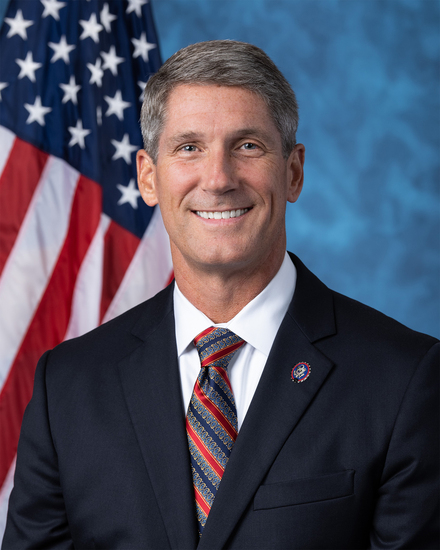
Rep. Scott Franklin
Sponsored bills
Maddy summaryThe ACES Act (HR 530) mandates a study by the National Academies to examine cancer rates and deaths among veterans who served as aircrew members (e.g., pilots, navigators) in fixed-wing military aircraft. The study will identify potential exposure risks (like chemicals) linked to 12 specific cancers (including brain, lung, prostate, and melanoma) and use VA, DoD, and CDC data to analyze prevalence and mortality. It does not change benefits or laws but requires a final report to the VA and congressional committees. The study directly affects veterans with the defined aircrew service history.
Maddy summaryThis bill provides a 3-year transition period for newly insured banks to meet federal capital requirements, easing compliance for institutions that recently became federally insured. It allows these banks to request temporary deviations from approved business plans, with regulators required to respond within 30 days (or the request is automatically approved). Small rural banks with less than $10 billion in assets located in rural areas receive a lower 8% leverage ratio requirement during this transition. Additionally, the bill expands lending authority for certain banks to include agricultural loans and requires a federal study on increasing new bank formations in underserved areas.
Maddy summaryThis bill expands access to employee ownership by modifying the Small Business Act to allow S corporations owned by employee stock ownership plans (ESOPs) to retain small business status, even when an ESOP owns over 49% of the company. It creates a new Treasury Department office to provide education and technical assistance for S corporations establishing ESOPs, and establishes a Labor Department Advocate for Employee Ownership to coordinate outreach and resolve disputes. These changes directly affect S corporations transitioning to ESOP ownership and their employees, who gain retirement benefits through ESOP accounts. The bill aims to increase employee ownership by removing eligibility barriers and improving support for businesses adopting this model.
Maddy summaryThis bill establishes federal standards for state laws that automatically remove certain criminal records from public access without requiring individuals to pay fees or take action. It defines "covered expungement laws" as state programs that automatically seal records (with limited exceptions) and mandates states receiving federal grants to annually report expungement data broken down by race, ethnicity, and gender. The law requires states to track how many eligible individuals have their records cleared, are pending, or remain ineligible. It directly affects states that implement automatic expungement systems and the individuals whose records qualify for removal under these laws.
Maddy summaryThis bill designates the POW/MIA Memorial and Museum under construction in Jacksonville, Florida, as the official "National POW/MIA Memorial and Museum." It requires the museum to submit a detailed report to Congress within 90 days, including a five-year budget, organizational structure, bylaws, and accreditation details. The designation may be withdrawn if the museum is not operational within five years of the bill's enactment or if the required report is late. The museum honors prisoners of war and those missing in action since World War II through educational exhibits and reflective spaces for the public.
Maddy summaryHR 2930, the PROTECT the Second Amendment Act, prevents landlords and housing authorities from banning or imposing extra restrictions on lawfully possessed firearms in specific federally assisted housing. It directly affects tenants living in properties covered by HUD or USDA housing programs, including public housing, Section 8 voucher recipients, and other subsidized rental units. The bill explicitly allows residents to possess firearms within their own dwelling units or while moving through common areas to reach their unit, without additional prohibitions. This changes existing policies in these housing programs by mandating that firearm possession cannot be restricted solely based on housing type.
Maddy summaryThis bill repeals a restriction that previously prevented individuals from rolling over funds directly from their Individual Retirement Accounts (IRAs) to donor-advised funds (DAFs) for charitable giving. It directly affects IRA account holders who wish to make tax-advantaged charitable contributions through DAFs. The key provision amends the Internal Revenue Code to remove the specific language barring such rollovers, allowing these transfers to occur without triggering taxable distributions. The change becomes effective after the bill's enactment, streamlining a pathway for donors to support charities via DAFs using IRA assets.
Transportation Freedom Act This bill reduces taxes on auto companies and repeals specified environmental regulations on cars and trucks. The bill establishes a new tax deduction equal to 200% of eligible wages paid or incurred by domestic producers of automobiles or automobile components, subject to limitations. It also allows an entity to reduce (and adjust) its financial statement income (for purposes of calculating liability for the alternative minimum tax) by the amount of eligible wages it elects to deduct. The bill nullifies the 2024 rules of the Environmental Protection Agency (EPA) regarding (1) the finalization of specified greenhouse gas (GHG) programs and the reduction of emissions from certain light-duty and medium-duty vehicles (e.g., cars and trucks that are under a certain weight) starting with model year 2027, and (2) phase three of GHG emission standards for heavy-duty vehicles (e.g., school buses and tractor-trailer trucks). It also repeals the 2024 rules of the National Highway Traffic Safety Administration (NHTSA) regarding corporate average fuel economy (CAFE) standards for certain cars, trucks, and vans. Additionally, the bill eliminates (1) the option given to California to set standards for car emissions that are more stringent than those set under the Clean Air Act, and (2) the option for other states to adopt California's standards. NHTSA and the EPA must establish new CAFE and GHG standards, respectively, for vehicles that are economically practicable and technologically feasible. The GHG standards may not require the production or sale of electric vehicles.
Maddy summaryThis bill requires FEMA to reimburse local governments and electric cooperatives for interest paid on disaster recovery loans. It covers interest calculated as the lesser of actual payments or what would have been paid at the current prime rate, for loans where at least 90% of funds were used for disaster-related projects. The reimbursement includes interest from the past nine years and mandates FEMA to process payments within one year of the bill's enactment.