

My Body, My Data Act of 2022 This bill establishes protections, subject to certain limits, for personal reproductive or sexual health information. This includes information relating to past, present, or future surgeries or procedures, such as the termination of a pregnancy. Specifically, commercial entities, including individuals, nonprofits, and common carriers, may not collect, retain, use, or disclose personal reproductive or sexual health information except (1) with the express written consent of the individual to whom such information relates, or (2) as is strictly necessary to provide a requested product or service. Commercial entities also must provide individuals with access to, and a reasonable mechanism to delete, any of their reproductive or sexual health information upon request. Further, commercial entities must maintain and publish a privacy policy describing their practices with respect to such information. The bill's provisions do not apply to entities that are subject to certain existing health-related privacy regulations, such as the privacy regulations issued under the Health Insurance Portability and Accountability Act of 1996. Additionally, the provisions do not apply to the disclosure of personal reproductive or sexual health information for the publication of newsworthy information of legitimate public concern. The bill provides for enforcement by the Federal Trade Commission and by private civil actions.
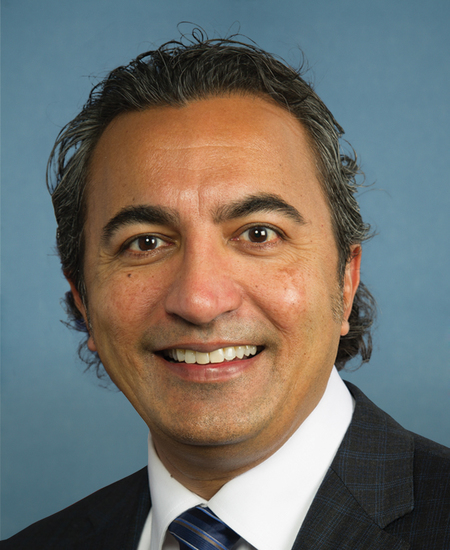
Rep. Ami Bera
Sponsored bills
Save America’s Forgotten Equines Act of 2021 or the SAFE Act of 2021 This bill prohibits the transporting, receiving, possessing, purchasing, selling, or donation by a person of an equine (e.g., horse) that the person has reason to believe will be slaughtered for human consumption.
This bill designates the facility of the United States Postal Service located at 1 League in Irvine, California, as the Tuskegee Airman Lieutenant Colonel Robert J. Friend Memorial Post Office Building.
Prioritizing Clean Energy and Climate Cooperation with India Act of 2022 This bill establishes the U.S.-India Climate and Clean Energy Agenda 2030 Partnership and addresses related issues. The partnership shall serve as the primary forum and funding mechanism for U.S.-India cooperation on clean energy technology matters. The Department of State must report to Congress a comprehensive multiyear strategy for implementing the partnership. The bill requires programs to promote U.S.-India partnerships in (1) research and innovation for clean energy technologies, (2) initiatives for providing technical assistance for grid improvement and energy efficiency in India, and (3) initiatives to develop new renewable energy generation capacity in India. The U.S. Agency for International Development must work cooperatively with India's government on integrating scientifically supported climate change risk reduction and building resilience capacities in India. The State Department must report to Congress on the prospects for cooperation between U.S. states and states in India on clean energy issues.
Ukraine Invasion War Crimes Deterrence and Accountability Act This bill requires the President to report to Congress on atrocities committed during Russia's invasion of Ukraine since February 24, 2022. Specifically, the report must describe in detail (1) U.S. government efforts to collect, analyze, and preserve evidence related to war crimes and other atrocities committed during the invasion; (2) media, public diplomacy, and information operations to make the Russian people, including their military and political leaders, aware of efforts to identify and prosecute those responsible for such atrocities; and (3) the process for a domestic, foreign, or international court or tribunal to obtain information from the U.S. government related to such atrocities.
Commission To Study the Potential Creation of a National Museum of Asian Pacific American History and Culture Act This bill establishes a Commission to Study the Potential Creation of a National Museum of Asian Pacific American History and Culture. The commission must (1) report recommendations for a plan of action for the establishment and maintenance of a National Museum of Asian Pacific American History and Culture in Washington, DC; (2) develop a fundraising plan to support the establishment, operation, and maintenance of the museum through public contributions; (3) obtain an independent review of this fundraising plan, including an analysis of the resources necessary to fund the construction of the museum and its operations and maintenance in perpetuity without reliance on federal funds; and (4) submit a legislative plan of action to establish and construct the museum. The commission may convene a national conference relating to the museum. The commission shall be solely responsible for acceptance of contributions to it and payment of its expenses. No federal funding may be obligated to carry out this bill.
Military Spouse Hiring Act This bill expands the Work Opportunity Tax Credit (WOTC) to include the hiring of a qualified military spouse. (The WOTC permits employers who hire individuals who are members of a targeted group such as qualified veterans, ex-felons, or long-term unemployment recipients to claim a tax credit equal to a portion of the wages paid to those individuals.) A qualified military spouse is any individual who is certified by the designated local agency as being (as of the hiring date) a spouse of a member of the Armed Forces.
Protecting Our Kids Act This bill makes various changes to federal firearms laws, including to establish new criminal offenses and to expand the types of weapons and devices that are subject to regulation. Among the changes, the bill generally prohibits the sale or transfer of certain semiautomatic firearms to individuals who are under 21 years of age; establishes new federal criminal offenses for gun trafficking and related conduct; establishes a federal statutory framework to regulate ghost guns (i.e., guns without serial numbers); establishes a framework to regulate the storage of firearms on residential premises at the federal, state, and tribal levels; subjects bump stocks to regulation under federal firearms laws; generally prohibits the import, sale, manufacture, transfer, and possession of large capacity ammunition feeding devices; and requires the Department of Justice to report on the demographic data of persons who are determined to be ineligible to purchase a firearm based on a background check performed by the national instant criminal background check system.
This resolution supports the goals and ideals of an International Day Against Homophobia, Transphobia, Biphobia, and Intersexphobia. The resolution encourages (1) health care providers to offer culturally and clinically competent care to the lesbian, gay, bisexual, transgender, queer, questioning, intersex, asexual, and agender (LGBTQIA+) community; (2) schools to support the creation of gender and sexuality alliances; (3) individuals to learn about national resources for those who identify as LGBTQIA+; and (4) funding organizations, aid efforts, and governments to prioritize the health and human rights of LGBTQIA+ people.
Affordability is Access Act This bill establishes several requirements relating to health insurance coverage of, and access to, over-the-counter contraceptives. Specifically, the bill requires the Department of Health and Human Services, the Department of Labor, and the Department of the Treasury to specify that private health insurance plans must cover over-the-counter contraceptives that are approved by the Food and Drug Administration (FDA), even without a prescription. Under current law, private health insurance plans (with some exceptions) must cover FDA-approved prescription contraceptives, without cost-sharing requirements. The bill also prohibits retailers from interfering with an individual's access to oral contraceptives that are meant for routine, daily use and are FDA-approved for use without a prescription.