Preserve American History Act This bill provides statutory authority for a November 2, 2020, executive order establishing the President's Advisory 1776 Commission to promote the history and principles of the founding of the United States.
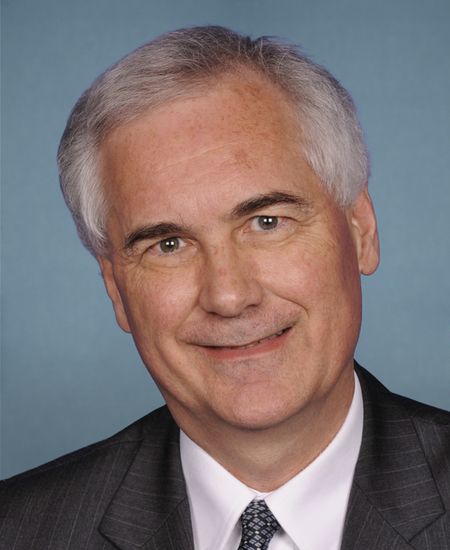
Rep. Tom McClintock
Sponsored bills
Student Empowerment Act This bill allows tax-exempt distributions from qualified tuition programs (known as 529 plans) to be used for additional educational expenses in connection with enrollment or attendance at an elementary or secondary school. (Under current law, distributions in connection with an elementary or secondary school are limited to tuition for a public, private, or religious school.) The bill allows the distributions to be used for additional educational expenses, including curriculum and curricular materials, books or other instructional materials, online educational materials, tutoring or educational classes outside the home, testing fees, fees for dual enrollment in an institution of higher education, and educational therapies for students with disabilities. Distributions may also be used for tuition and the purposes above in connection with a homeschool (whether treated as a homeschool or a private school under state law).
This bill requires the Department of State to establish the Unit to Audit US Contributions to Multilateral and International Organizations to audit and report on the contributions to those organizations during the preceding fiscal year.
No Taxpayer Funding for the World Health Organization Act This bill prohibits the United States from providing any assessed or voluntary contributions to the World Health Organization.
No Taxpayer Funding for Paris Climate Agreement Act This bill prohibits the use of any funds to take action providing for the United States to become a party to the Paris Agreement.
Save Democracy Act This bill addresses issues involving voter registration, casting of ballots, and tabulation of ballots in federal elections. Specifically, regarding voter registration for federal elections, the bill prohibits the use of automatic voter registration systems, requires individuals to provide documentary proof of U.S. citizenship to register to vote, requires individuals to provide their full Social Security number on their voter registration application, and requires courts to notify state election officials when an individual is recused from jury duty because the individual is not a U.S. citizen. Next, regarding the casting of ballots in federal elections, the bill requires individuals to provide proof of identification for absentee and in-person voting, prohibits states from mailing unrequested absentee ballots, prohibits the use of a drop box for collecting voted absentee ballots unless it is located inside of a building that serves as an office for the election official, restricts the delivery of ballots by third parties (i.e., prohibits ballot harvesting), requires that absentee ballots be received before the polls close on election day, and requires states to use Social Security numbers to verify the identification of each individual who casts a ballot. Finally, regarding the tabulation of ballots in federal elections, the bill requires states to permit poll watching by at least two campaign representatives per campaign, requires continuous counting of ballots after the closure of polling places on election day, and requires an audit of voting systems.
Old Glory Only Act This bill prohibits the flying of any flag other than the U.S. flag over U.S. diplomatic and consular posts.
Federal Reserve Transparency Act of 2021 This bill establishes requirements regarding audits of certain financial agencies performed by the Government Accountability Office (GAO). Specifically, the bill directs the GAO to complete, within 12 months, an audit of the Federal Reserve Board and Federal Reserve banks. In addition, the bill allows the GAO to audit the Federal Reserve Board and Federal Reserve banks with respect to (1) international financial transactions; (2) deliberations, decisions, or actions on monetary policy matters; (3) transactions made under the direction of the Federal Open Market Committee; and (4) discussions or communications among Federal Reserve officers, board members, and employees regarding any of these matters.