Maddy summaryHRES 971 is a non-binding resolution condemning China's economic and military actions against Japan following Japanese officials' comments about Taiwan. It specifically addresses China's travel advisory (causing $1.2 billion in tourism losses), a ban on Japanese seafood imports, and military drills near Japanese territory. The resolution reaffirms U.S. support for the U.S.-Japan alliance under their mutual security treaty and calls on China to cease coercion. It emphasizes U.S. commitment to upholding a "free and open Indo-Pacific" based on international law. This resolution directly affects Japan's economy and security, with no new legal obligations but serving as a formal U.S. policy statement.
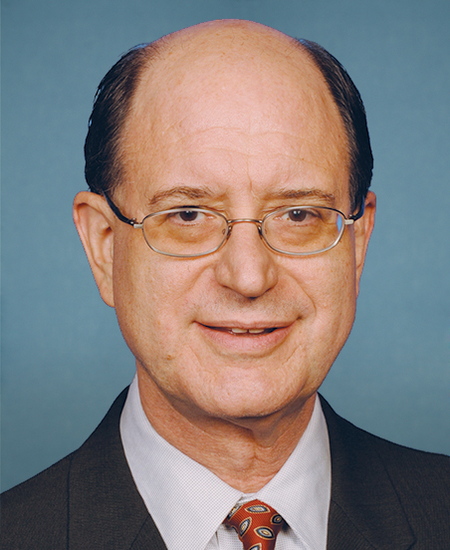
Rep. Brad Sherman
Sponsored bills
Maddy summaryHR 7669, the "Rejecting the Erasure of Afghan Women and Girls Act," requires the U.S. Secretary of State to submit a report within 180 days of enactment. The report must detail Taliban-imposed restrictions on Afghan women and girls since August 2021 and determine whether these restrictions constitute crimes against humanity, torture under the Convention against Torture, or gross human rights violations under U.S. law. This bill directly addresses the situation of Afghan women and girls under Taliban rule by mandating a formal U.S. government assessment of those restrictions. The legislation focuses on establishing a factual basis for potential policy responses through this required report.
Maddy summaryHR 7675, the Securing Partner Supply Chains Act, establishes a 3-year U.S. initiative to help allied and partner countries strengthen their screening of foreign investments for national security risks. The initiative, led by the Secretary of State, will provide technical assistance, training, and advisory services to partner countries - defined as those with U.S. trade or defense agreements - to improve their ability to assess risks to critical infrastructure, sensitive technology, and supply chains. It requires annual reports to Congress detailing the assistance provided, partner countries' progress, and emerging security risks. The bill does not directly affect U.S. citizens or businesses but focuses on building international capacity to address shared security concerns through cooperation.
Maddy summaryHR 7653, the Biodefense Diplomacy Enhancement Act, requires the U.S. Secretary of State to develop two new strategies to strengthen international cooperation on biodefense, biosecurity, and biotechnology. The bill mandates a NATO Biodefense Strategy to improve alliance coordination on biological threat response and a broader International Cooperation Strategy to enhance partnerships with U.S. allies and major non-NATO partners on export controls for dual-use biotech items and adherence to safety standards. These strategies must identify gaps in current efforts, recommend improvements, and assess coordination with U.S. agencies, with reports due to Congress within 270 days of enactment. The bill directly affects U.S. diplomatic engagement with NATO and allied nations on biological threat preparedness, focusing on policy development, capabilities, and enforcement of the Biological Weapons Convention.
Maddy summaryThe SHADOW Act creates a new State Department Coordinator to lead U.S. efforts against hybrid warfare threats from China and Russia, particularly in Europe. The Coordinator will assess threats like cyberattacks and disinformation campaigns, coordinate with NATO allies and partners (including Japan and Australia), and help protect critical infrastructure sectors. The bill requires the Coordinator to submit a strategy within 60 days and annual reports for three years detailing threat assessments and coordination progress. It also mandates a specific report within 180 days identifying Chinese entities supporting Russia’s defense industry.
Maddy summaryHR 6428 requires the Secretary of State to submit regular reports on U.S. and Chinese educational exchange programs. Specifically, it mandates that within 180 days of enactment and every five years thereafter, the State Department must report on participation in U.S. programs like Fulbright, the Mandela Washington Fellowship, and the Kennedy-Lugar Youth Exchange, including detailed metrics such as participant demographics, changes in perceptions of the U.S., and program funding. The report must also track Chinese exchange program participation by country and analyze how both nations' programs affect U.S. strategic interests. This bill directly affects the State Department (which must compile and submit the reports) and Congress (which receives the reports for oversight). The requirement applies to specific U.S. exchange programs funded by the Department of State, focusing on measurable outcomes rather than altering program operations.
Maddy summaryThis bill requires U.S. foreign aid agencies (like USAID) to increase direct funding to local organizations in recipient countries, including local nonprofits, governments, and private businesses. It mandates specific changes to simplify access for these partners, such as allowing applications in local languages, reducing complex accounting requirements, and permitting limited local-only contracts for certain projects. Agencies must also report annually on progress, including how much aid went directly to local partners and how they are enabling local leadership in program design and management. The goal is to shift aid delivery toward locally led development and humanitarian response, making assistance more efficient and sustainable by prioritizing community-driven solutions.
Maddy summaryHR 3447, the Chip Security Act, requires manufacturers to equip specific advanced integrated circuits (classified under export control numbers like 3A090) with security mechanisms before exporting them. These mechanisms must verify location and prevent unauthorized access, diversion, or tampering. The law mandates this for covered chips within 180 days of enactment, with a follow-up assessment within one year to develop additional security requirements. It directly affects U.S. chip exporters and importers of these high-tech products, aiming to strengthen export control compliance and national security.
Maddy summaryThis bill requires the U.S. Department of State to develop a strategy within 120 days to strengthen nuclear energy cooperation with Europe and reduce Russian influence in the nuclear sector. The strategy must assess reactor types, fuel cycles, and U.S. nuclear technology investments to decrease Russia’s market share in uranium, enrichment, and reactor supply by 2030. It authorizes $30 million annually (2025-2029) for U.S. engagement, including capacity building and countering Russian disinformation, targeting European countries with active nuclear programs. The bill directly affects U.S. foreign policy coordination, European energy security, and the competitiveness of U.S./European nuclear technology against Russian suppliers like Rosatom.
Maddy summaryThis bill requires the Department of Veterans Affairs (VA) to cover abortion care, counseling, and related medication as part of standard hospital and medical services for eligible veterans and certain dependents. It amends VA healthcare law to explicitly include these services under existing coverage for veterans qualifying under section 1703 and dependents eligible under section 1781(a). The policy directly affects veterans and their dependents enrolled in VA healthcare programs by expanding covered benefits to include abortion-related care. This is a concrete policy change to VA healthcare benefits, not a broader abortion law.