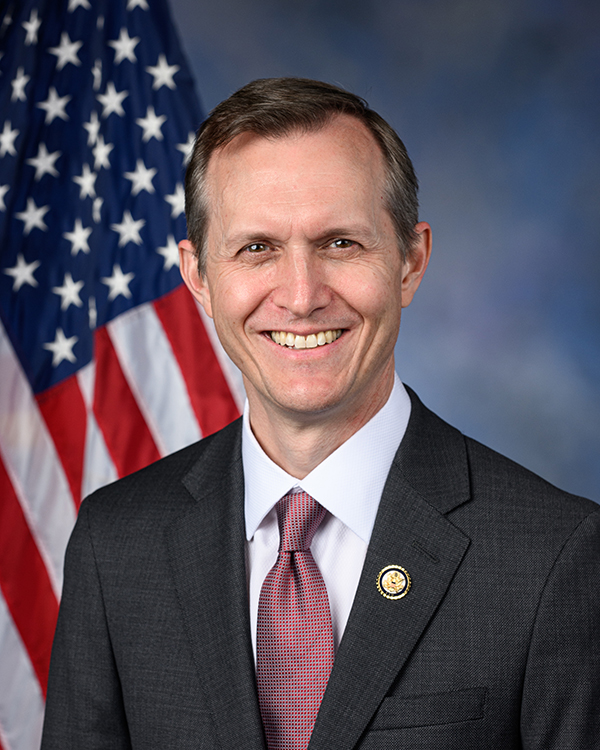
Photo of George Whitesides
D United States House · District 27 · California On the 2026 ballot

Rep. George Whitesides

Compare
Total votes
669
all sessions
Attendance
98%
16 missed
Near the chamber average
With party
93%
of cast votes
Lower than 87% of chamber peers
Bipartisan score
3%
crosses aisle rarely
Higher than 86% of chamber peers
Sponsored
323
bills & resolutions
Near the chamber average
Committees
6
assignments
323 bills and resolutions

Sponsored bills

Total
323
Primary
23
Co-sponsor
300
This page
323
matching current filters
Co-sponsor HR 5543
In committee · Utah House · Co-sponsor
Baltic Security Assessment Act of 2025

Maddy summaryHR 5543, the Baltic Security Assessment Act of 2025, requires the U.S. State and Defense Departments to submit a report within 180 days of enactment. The report will assess emerging military, cyber, hybrid, and political threats to Estonia, Latvia, and Lithuania, including the roles of Russia, Belarus, China, Iran, and other actors. It will also evaluate U.S. and NATO military presence in the region, opportunities for defense cooperation, and recommendations to strengthen deterrence, cybersecurity, and democratic resilience in the Baltic countries. This bill directly affects U.S. foreign policy and defense planning regarding the Baltics, but does not create new programs or funding.

In committee Apr 22, 2026 1 co-sponsor
Co-sponsor HR 7973
In committee · Utah House · Co-sponsor
Momnibus Act

Maddy summaryThe Momnibus Act is a comprehensive legislative bill designed to improve maternal health outcomes across the United States by addressing social determinants of health, expanding access to care, and reducing disparities among pregnant and postpartum individuals. The bill establishes a federal task force to coordinate efforts between agencies and stakeholders to eliminate preventable maternal mortality and severe morbidity, while providing sustained funding to community-based organizations to address nonclinical factors like housing, nutrition, and transportation. Key provisions include extending WIC eligibility to 24 months postpartum, creating grants to grow and diversify the perinatal workforce, implementing respectful maternity care training for all healthcare employees, and establishing compliance programs to track and address bias in maternity care settings. The legislation also includes specific measures for incarcerated mothers, veterans, and vulnerable populations affected by climate change, alongside funding for maternal mental health services and technology-enabled care models to expand access in underserved areas.

In committee Apr 20, 2026 1 co-sponsor
Co-sponsor HR 8041
In committee · Utah House · Co-sponsor
Supporting VA Families Act

Maddy summaryThe Supporting VA Families Act grants unpaid parental leave to Department of Veterans Affairs employees. This provision allows employees to take four weeks of unpaid leave within a 12-month period for the birth of a child or for adoption and foster care placements. The leave is designed to supplement existing leave policies rather than replace them, ensuring employees can balance family needs with their work responsibilities. The act defines eligible employees and children according to existing federal definitions found in Title 5 of the United States Code.

In committee Apr 15, 2026 1 co-sponsor
Co-sponsor HR 8175
In committee · Utah House · Co-sponsor
To amend title 10, United States Code, and the National Defense Authorization Act for Fiscal Year 1994, to codify and clarify gender neutral standards for members of certain Armed Forces, and for other purposes.

Maddy summaryThis bill updates federal law to prohibit excluding military members from assignments or career fields based on their gender, affecting all branches of the U.S. Armed Forces. It requires the Secretary of Defense to submit annual reports detailing changes to occupational standards and data on involuntary reclassifications or separations, broken down by military job and gender. The legislation also modernizes how the military evaluates job requirements, mandating that standards be based on scientifically rigorous assessments of technical, tactical, cognitive, and physical abilities rather than gender. Additionally, it directs the Secretary of Defense to submit a full review of ground combat unit effectiveness to Congress and requires an independent audit of that review within 180 days.

In committee Apr 2, 2026 1 co-sponsor
Co-sponsor HR 8119
In committee · Utah House · Co-sponsor
HOPE with Fertility Services Act

Maddy summaryThis bill requires group health plans and health insurers that cover obstetrical services to also cover infertility and iatrogenic infertility treatments, including procedures like in vitro fertilization and egg freezing. It defines infertility as the inability to achieve pregnancy after 12 months of unprotected intercourse or after standard medical treatment, and iatrogenic infertility as fertility damage caused by medical procedures such as chemotherapy or radiation therapy. The legislation establishes coverage standards that cannot be more restrictive than those applied to other medical benefits, prohibits penalties against providers for offering these services, and requires annual compliance reporting to the federal government.

In committee Mar 26, 2026 1 co-sponsor
Co-sponsor HR 3447
In committee · Utah House · Co-sponsor
Chip Security Act

Maddy summaryHR 3447, the Chip Security Act, requires manufacturers to equip specific advanced integrated circuits (classified under export control numbers like 3A090) with security mechanisms before exporting them. These mechanisms must verify location and prevent unauthorized access, diversion, or tampering. The law mandates this for covered chips within 180 days of enactment, with a follow-up assessment within one year to develop additional security requirements. It directly affects U.S. chip exporters and importers of these high-tech products, aiming to strengthen export control compliance and national security.

In committee Mar 26, 2026 1 co-sponsor
Co-sponsor HR 7977
In committee · Utah House · Co-sponsor
Energy Bills Relief Act

Maddy summaryThe Energy Bills Relief Act aims to lower household energy costs and accelerate the development of low-cost, clean energy by modifying federal tax credits, expanding weatherization programs, and streamlining permitting processes. Key provisions include restoring tax incentives for renewable energy projects, increasing funding for low-income heating assistance, and requiring federal agencies to treat wind, solar, and storage projects with the same procedural fairness as oil and gas projects. The bill also establishes new incentives for upgrading the electricity grid, such as tax credits for transmission lines and grants for wildfire prevention measures, while creating mechanisms to ensure utilities serve public interests and protect consumers from price volatility.

In committee Mar 18, 2026 1 co-sponsor
Co-sponsor HR 4876
In committee · Utah House · Co-sponsor
Reproductive Freedom for Veterans Act

Maddy summaryThis bill requires the Department of Veterans Affairs (VA) to cover abortion care, counseling, and related medication as part of standard hospital and medical services for eligible veterans and certain dependents. It amends VA healthcare law to explicitly include these services under existing coverage for veterans qualifying under section 1703 and dependents eligible under section 1781(a). The policy directly affects veterans and their dependents enrolled in VA healthcare programs by expanding covered benefits to include abortion-related care. This is a concrete policy change to VA healthcare benefits, not a broader abortion law.

In committee Mar 18, 2026 1 co-sponsor
Co-sponsor HR 2766
In committee · Utah House · Co-sponsor
Special District Fairness and Accessibility Act

Maddy summaryThis bill requires federal agencies to clarify how they recognize special districts (like water, fire, or school districts operating separately from cities or counties) as eligible for federal grants. It mandates the OMB Director to issue guidance within 180 days, directing agencies to adopt this standard within one year for all federal financial assistance programs. The bill ensures special districts - defined as state-created entities with budgetary autonomy for specific services - can consistently access existing federal funding they currently face barriers to. A report on agency implementation must be submitted to Congress two years after enactment.

In committee Mar 18, 2026 1 co-sponsor
Showing 61 to 70 of 323 bills
Previous 1 … 6 7 8 … 33 Next