Miracle on Ice Congressional Gold Medal Act This act provides for the award of Congressional Gold Medals to the members of the 1980 U.S. Olympic men's ice hockey team in recognition of the team's achievement at the 1980 Winter Olympic Games.
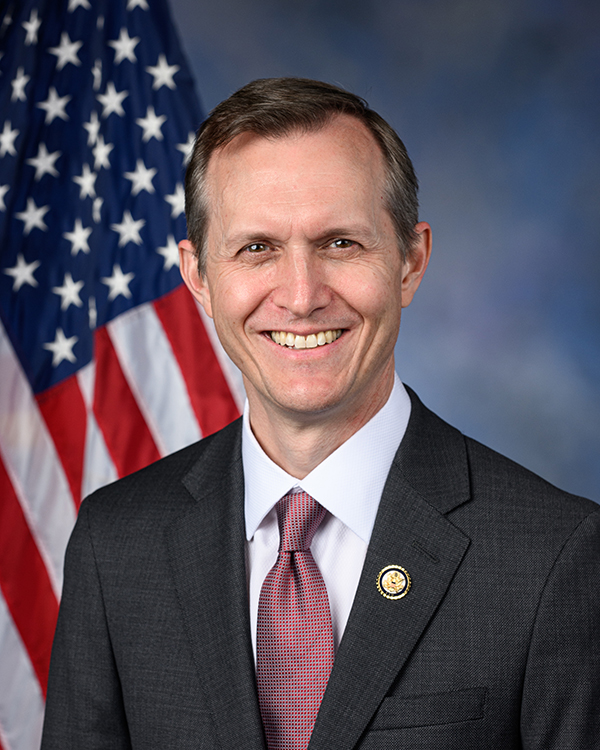
Rep. George Whitesides
Sponsored bills
Maddy summaryHR 6681 establishes the Office of National Fraud and Scam Prevention within the White House, led by a Director appointed by the President with Senate approval. The Office coordinates federal efforts across agencies like Homeland Security, Justice, and the FTC to prevent scams, share non-personal scam data via a "fraud data shield," and manage large-scale fraud incidents (defined as causing over $5 million in losses or affecting 1,000+ people). It requires annual reports to Congress on scam threats and mandates federal agencies to align their budgets and strategies with national prevention goals. The Office expires after five years.
Maddy summaryThis bill increases federal student loan limits for graduate and professional students. Starting July 1, 2026, it sets a $50,000 annual limit and a $200,000 total aggregate limit (beyond undergraduate borrowing) for unsubsidized Federal Direct Stafford loans. These changes directly affect graduate and professional students pursuing advanced degrees who rely on federal loans for education costs. The provisions aim to provide higher borrowing capacity for these students' educational expenses under the Higher Education Act.
Maddy summaryThis bill establishes a new interagency Task Force to dismantle foreign scam operations targeting Americans, particularly through "pig butchering" scams in Southeast Asia. The Task Force, chaired by the Secretary of State, will coordinate efforts across multiple agencies to shut down scam centers, impose sanctions on perpetrators, and support victims of trafficking. It requires a detailed strategy within 180 days and annual reports to Congress on progress, including sanctions imposed and funds recovered. The bill authorizes $30 million for these efforts in fiscal years 2026-2027, focusing on countries like Cambodia, Laos, and Burma where scam centers operate with forced labor.
Maddy summaryHR 6358, the Veteran Education Empowerment Act, creates a federal grant program to help colleges establish or improve dedicated Student Veteran Centers. These centers provide veterans, active-duty service members, and their families with lounge space, benefits counseling, academic support, and mental health services. Institutions must serve significant numbers of veterans and have sustainability plans to qualify for grants, with funding capped at $500,000 per institution over four years. The bill directly affects colleges serving veterans and aims to address challenges like isolation and transition difficulties through centralized campus support.
Maddy summaryHR 5731, the School Food Modernization Act, provides funding to help schools upgrade facilities and equipment for healthier meal programs. It authorizes $300 million in loan guarantees (covering up to 80% of costs) and $35 million annually for grants to support kitchen renovations, equipment purchases, and food safety improvements for local schools and tribal organizations. The bill also allocates $10 million yearly to fund training programs for school food service staff, developed by third-party organizations, to meet nutrition standards. These provisions directly affect public school districts, tribal schools, and their food service operations by enabling infrastructure upgrades and staff training.
Give Kids a Chance Act of 2025 This bill expands the Food and Drug Administration’s (FDA’s) authority with respect to research on rare pediatric diseases, including by permitting the FDA to take enforcement action against drug sponsors that fail to satisfy pediatric study requirements and by reauthorizing programs that support pediatric research. Specifically, the bill modifies requirements relating to molecularly targeted pediatric cancer investigations to permit research on new drugs in combination with active ingredients that have already been approved, provided certain conditions are met; permits the FDA to take enforcement action against drug sponsors that fail to comply with pediatric study requirements, if such sponsors demonstrated a lack of due diligence in satisfying the requirement; renews the FDA’s authority to award priority review vouchers to sponsors of new products intended to treat rare pediatric diseases through September 30, 2029; and reauthorizes through FY2027 certain funding for the National Institutes of Health to support priority pediatric research. The bill also provides statutory authority for the FDA’s interpretation of the orphan drug exclusivity period. The bill specifies, consistent with FDA regulations, that the seven-year market exclusivity period for drugs for rare diseases or conditions (i.e., orphan drugs) prohibits the approval of the same drug for the same approved use or indication with respect to the disease or condition. (In Catalyst Pharmaceuticals, Inc. v. Becerra , a court rejected the FDA’s interpretation and held that orphan drug exclusivity extends to all uses or indications for the disease or condition.)
Maddy summaryThis bill ensures FEMA can continue disaster relief payments during government funding gaps. It requires the agency to keep using existing Disaster Relief Fund money for active disaster assistance, emergency aid, and recovery programs - even if Congress hasn’t passed new funding. Essential staff handling these disbursements are protected from furloughs during such gaps, treated as "excepted" under federal law. The bill directly affects disaster victims receiving aid and FEMA employees managing relief operations during budget lapses.
Maddy summaryHR 5652, the Wildfire Recovery Act, increases federal reimbursement for wildfire response by setting a minimum 75% federal cost share under Section 420 of the Stafford Act, directly benefiting states, local governments, and Tribal governments that deploy firefighting resources. It requires FEMA to develop rules within three years to determine when the federal share could exceed 75% based on a state's financial impact from wildfires. The bill also updates FEMA policy to allow reimbursement for predeployment of fire assets (like crews or equipment) before a fire occurs. These changes aim to provide more predictable and timely federal support for wildfire recovery efforts.
Maddy summaryThis bill establishes a federal program to help low-income households pay for drinking water and wastewater services. It provides $500 million annually (2026-2030) in grants to states and tribes that already administer energy assistance programs, allowing them to cover past-due bills or other costs for households meeting specific income criteria (e.g., receiving certain federal benefits or earning ≤150% of the poverty level). The program prohibits using these funds to replace existing assistance and requires technical help to streamline eligibility. It directly affects low-income households in participating states and tribes, particularly those facing water affordability challenges.