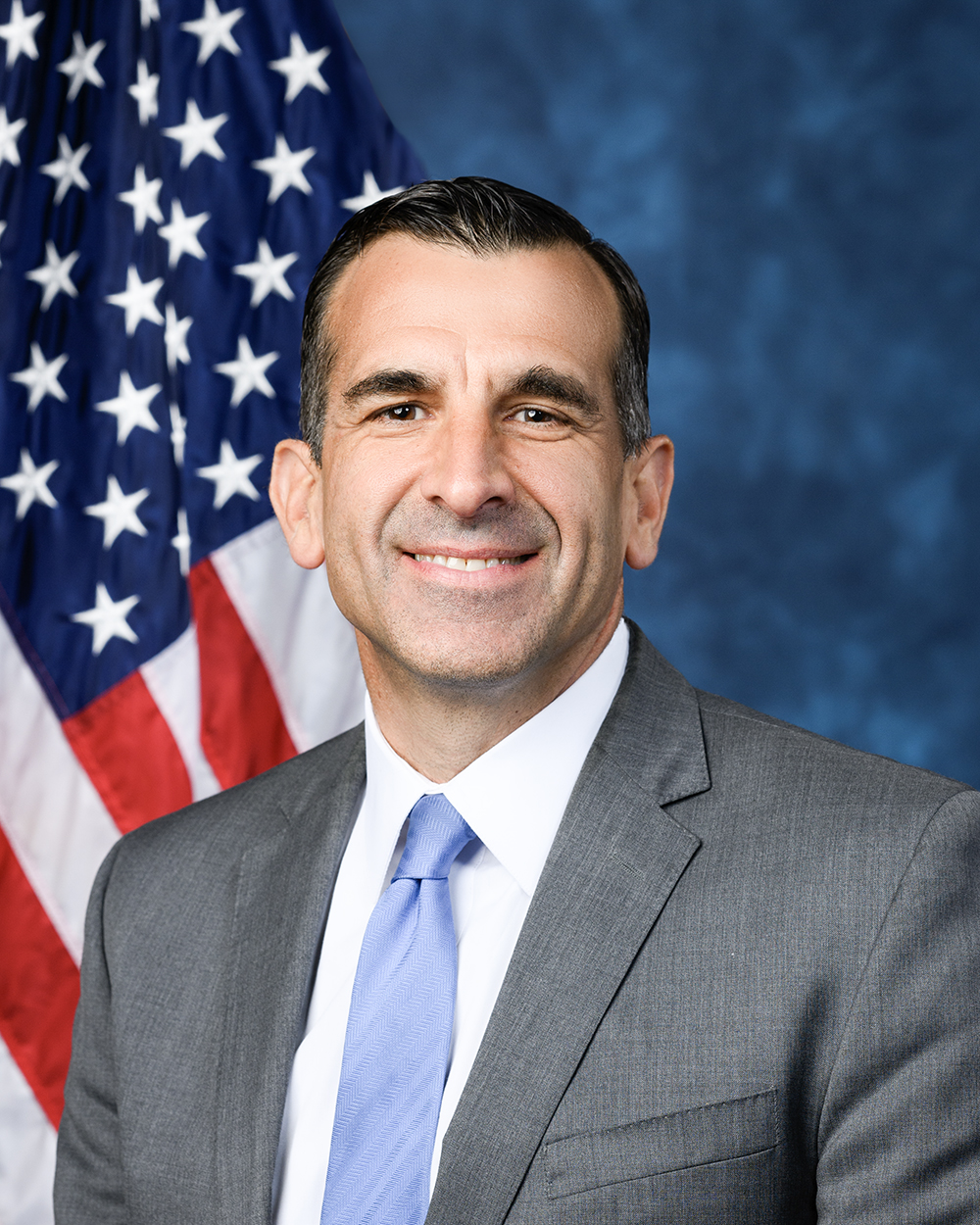
Photo of Sam T. Liccardo
D United States House · District 16 · California On the 2026 ballot

Rep. Sam T. Liccardo

Compare
Total votes
669
all sessions
Attendance
99%
9 missed
Near the chamber average
With party
98%
of cast votes
Near the chamber average
Bipartisan score
1%
crosses aisle rarely
Near the chamber average
Sponsored
209
bills & resolutions
Lower than 77% of chamber peers
Committees
4
assignments
209 bills and resolutions

Sponsored bills

Total
209
Primary
17
Co-sponsor
192
This page
209
matching current filters
Co-sponsor HRES 1107
In committee · Utah House · Co-sponsor
Memorializing Rev. Jesse Jackson by flying the flag of the United States at halfstaff.

Maddy summaryHRES 1107 is a House resolution urging the President to issue a proclamation flying the U.S. flag at half-staff to honor Rev. Jesse Jackson. The resolution recognizes his civil rights leadership, including founding the Rainbow PUSH Coalition and his presidential campaigns in 1984 and 1988, which advanced racial equality and economic justice. This symbolic gesture directly affects the President (as the one who would issue the proclamation) and the public, who would observe the flag at half-staff.

In committee Mar 5, 2026 1 co-sponsor
Co-sponsor HR 7853
In committee · Utah House · Co-sponsor
PrEP Access and Coverage Act of 2026

Maddy summaryThis bill, the PrEP Access and Coverage Act of 2026, requires most health insurance plans to cover HIV prevention medication without charging patients any out-of-pocket costs. It directly affects people with private insurance, government health programs like Medicare and Medicaid, military health care, and the Indian Health Service. The law mandates that insurance companies cannot require pre-approval for these medications, cannot charge deductibles or copayments for them, and cannot deny or charge higher premiums for life, disability, or long-term care insurance based on someone taking HIV prevention medication. The bill also creates a new public education campaign to increase awareness about HIV prevention options and provides federal funding to states and community organizations to expand access to these services.

In committee Mar 5, 2026 1 co-sponsor
Co-sponsor HR 7792
In committee · Utah House · Co-sponsor
Property Improvement and Manufactured Housing Loan Modernization Act of 2026

Maddy summaryThis bill increases FHA loan limits for manufactured home purchases, home improvements, and accessory dwelling units under the National Housing Act. It raises the maximum loan amount for single-section manufactured home purchases to $106,405 and multi-section homes to $195,322, while setting a $75,000 cap for home improvements. The bill also requires annual adjustments to these limits based on HUD's methodology and mandates a HUD study comparing off-site construction (including manufactured/modular homes) to site-built housing on cost, quality, maintenance, and applications like accessory dwelling units. It directly affects borrowers seeking FHA financing for these housing types.

In committee Mar 4, 2026 1 co-sponsor
Co-sponsor HR 7769
In committee · Utah House · Co-sponsor
MINT Act

Maddy summaryThe MINT Act modifies rules for federal home loan banks backing tax-exempt bonds used in community development projects. It removes a 2010 deadline for certain bond issuances and shifts safety requirements to be set by the Federal Housing Finance Agency Director, rather than fixed standards. This directly affects community development organizations and local governments using tax-exempt bonds for housing or neighborhood revitalization. The changes apply to guarantees issued after the bill's enactment, streamlining how these bonds are secured.

In committee Mar 3, 2026 1 co-sponsor
Co-sponsor HR 7696
In committee · Utah House · Co-sponsor
AI Cyber Grid Protection Resilient Development Act of 2026

Maddy summaryHR 7696 establishes a federal grant program to fund secure AI testbeds for simulating large-scale cyberattacks on critical infrastructure like power grids. The bill directs DHS and CISA to award grants from 2026-2030 to eligible entities - including universities, community colleges, Hispanic-serving institutions, national labs, and their consortia - to develop safe AI systems for grid cybersecurity training. It authorizes $100 million in funding over five years and requires annual reports to Congress on emerging threats and progress. This directly affects institutions and labs conducting AI research for grid security, creating a structured federal initiative to strengthen cyber defenses through practical testing.

In committee Feb 26, 2026 1 co-sponsor
Co-sponsor HR 7697
In committee · Utah House · Co-sponsor
International AI Energy Grid Modernization Strategy Act

Maddy summaryThis bill directs the U.S. Secretary of State to create an international strategy focused on using artificial intelligence to upgrade and secure electrical grids around the world. It requires the development of partnerships with allied nations, academic institutions, and private companies to research and deploy AI tools that can predict grid failures, detect cyber threats, and integrate renewable energy sources. The legislation authorizes funding for pilot projects, workforce training, and technical assistance to help vulnerable regions modernize their power infrastructure while ensuring compliance with U.S. export control laws. Additionally, the bill mandates that the Secretary of State submit regular reports to Congress detailing the progress of these international cooperation efforts and the measurable improvements made to grid resilience.

In committee Feb 25, 2026 1 co-sponsor
Co-sponsor HR 7645
In committee · Utah House · Co-sponsor
Ceasefire Compliance Act of 2026

Maddy summaryThe Ceasefire Compliance Act of 2026 establishes requirements for Israel to comply with the October 10, 2025, ceasefire agreement, including allowing sufficient humanitarian aid into Gaza, halting military operations in Gaza, preventing settler violence, and supporting Palestinian governance. The bill requires the US government to submit quarterly reports certifying Israel's compliance with these conditions, with potential restrictions on US defense sales to Israel if violations occur. If Israel fails to meet the requirements, the US would prohibit the sale, export, or transfer of US-origin defense articles for use in the West Bank or Gaza. The bill also creates an end-use monitoring group to track if US defense articles are being used in those areas, with a 5-year sunset provision. This legislation directly affects US-Israel defense relations and the flow of military assistance.

In committee Feb 23, 2026 1 co-sponsor
Co-sponsor HR 7481
In committee · Utah House · Co-sponsor
Department of Homeland Security Appropriations Act, 2026

Department of Homeland Security Appropriations Act, 2026 This bill provides FY2026 appropriations for various agencies and offices within the Department of Homeland Security (DHS), except for U.S. Immigration and Customs Enforcement (ICE), U.S. Customs and Border Protection (CBP), and management and oversight activities of the Office of the Secretary. Specifically, the bill provides appropriations to DHS for  the Federal Protective Service, the Office of Inspector General, the Transportation Security Administration, the U.S. Coast Guard, the U.S. Secret Service, the Cybersecurity and Infrastructure Security Agency, the Federal Emergency Management Agency (FEMA), U.S. Citizenship and Immigration Services, the Federal Law Enforcement Training Centers, and the Science and Technology Directorate. The bill does not provide appropriations for some agencies and activities that have been funded in prior DHS appropriations acts, including ICE, CBP, and management and oversight activities of the Office of the Secretary.

In committee Feb 11, 2026 1 co-sponsor
Co-sponsor HR 7335
In committee · Utah House · Co-sponsor
Humanitarian Standards for Individuals in ICE and CBP Custody Act

Maddy summaryHR 7335 establishes comprehensive humanitarian standards for individuals held in U.S. Immigration and Customs Enforcement (ICE) and U.S. Customs and Border Protection (CBP) custody. The bill requires facilities to provide immediate health screenings within 12 hours (6 hours for high-risk individuals like children, pregnant people, or those with medical conditions), ensure access to adequate water, sanitation, food (with 2,000+ calories daily for adults), and age-appropriate shelter. It mandates specific facility standards including separate housing for males and females, accessible accommodations for people with disabilities, daily outdoor access for those detained over 48 hours, and proper medical equipment and personnel on-site. The bill also requires regular inspections, staff training on humanitarian protocols, and public reporting of sexual abuse complaints. These standards directly affect all individuals detained by ICE or CBP, with special protections for vulnerable groups like children, pregnant people, and those with medical needs.

In committee Feb 4, 2026 1 co-sponsor
Co-sponsor HJRES 144
In committee · Utah House · Co-sponsor
Providing for congressional disapproval under chapter 8 of title 5, United States Code, of the rule submitted by the Department of Veterans Affairs relating to "Reproductive Health Services".

Maddy summaryHJRES 144 is a congressional disapproval resolution targeting a specific rule issued by the Department of Veterans Affairs (VA) on December 31, 2025, which addressed "Reproductive Health Services" (90 Fed. Reg. 61310). This resolution directs Congress to disapprove the VA rule under Chapter 8 of Title 5, U.S. Code, meaning the rule would have no legal effect if passed. The bill directly affects the VA's implementation of reproductive health services for veterans, as it seeks to nullify the agency's existing policy. This is a procedural measure, not a substantive policy change, aimed solely at blocking the VA's rule through congressional action.

In committee Jan 27, 2026 1 co-sponsor
Showing 51 to 60 of 209 bills
Previous 1 … 5 6 7 … 21 Next