

Maddy summaryThe Temporary Protected Status Review Act restores the ability of courts to review decisions by the Department of Homeland Security to end Temporary Protected Status (TPS) designations for foreign nationals. Under this bill, the government must publish detailed written findings explaining why a country no longer qualifies for TPS protection, and these decisions would be subject to a legal challenge in federal court. If a TPS designation is terminated, the affected individuals would remain in the United States with their current status and work authorization intact while the legal challenge is pending. Additionally, the legislation requires the government to follow specific administrative procedures, such as considering all available evidence and avoiding bias, before making any termination decisions.
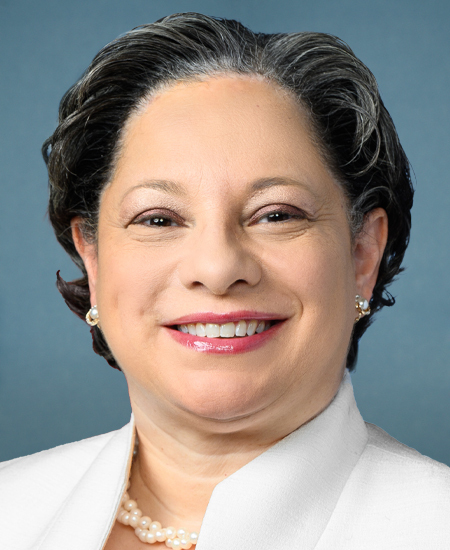
Rep. Jennifer L. McClellan
Sponsored bills
Maddy summaryThis bill establishes federal protections and funding to expand access to in vitro fertilization and intrauterine insemination for individuals, military service members, and veterans. It requires most private health plans, Medicaid programs, and Medicare to cover these fertility treatments without imposing higher cost-sharing than other medical services. Additionally, the legislation mandates that the Department of Defense and the Department of Veterans Affairs provide specific fertility preservation and treatment benefits to uniformed service members and eligible veterans. The bill also includes preemption clauses that override state laws restricting these procedures and prohibits discrimination based on marital status, sex, or sexual orientation in the provision of care.
Maddy summaryThe Rural Hospital Cybersecurity Enhancement Act directs the Department of Health and Human Services to create a workforce development plan aimed at training cybersecurity professionals specifically for rural hospitals. This strategy requires the Secretary to consult with various federal agencies and healthcare representatives while focusing on partnerships, curriculum development, and identifying local security challenges. Additionally, the bill mandates the publication of free instructional materials and an awareness campaign to help rural hospital staff learn fundamental cybersecurity skills. The legislation does not authorize any new funding, relying instead on existing resources to implement these training and educational initiatives.
Maddy summaryThis resolution condemns all forms of hate, including racism, antisemitism, transphobia, and xenophobia, while highlighting recent statistics on hate crimes affecting various communities. It calls for comprehensive federal and state policies to prevent hate crimes through education and intervention, as well as support for victims through legal aid and mental health resources. The measure also advocates for funding programs that are culturally accessible to vulnerable groups, such as immigrants and LGBTQIA+ individuals, and reaffirms the government's commitment to maintaining an inclusive democracy.
This bill designates the facility of the United States Postal Service located at 1225 Kempsville Road in Virginia Beach, Virginia, as the "Colonel Edward Shames Post Office Building".
Maddy summaryThis concurrent resolution formally recognizes the persistent wage gap between Black women and white, non-Hispanic men in the United States. It highlights data showing that Black women earn significantly less than their male counterparts and reaffirms Congress's support for existing laws that prohibit pay discrimination based on sex or race. The document does not create new laws or change policy but serves as a symbolic statement to raise awareness about the economic disparities faced by Black women.
Maddy summaryThe No Passes for Polluters Act of 2026 requires Congress to explicitly approve any exemptions from Clean Air Act regulations before the President or federal agencies can use them. Under this bill, the President must submit a detailed message to both houses of Congress explaining the reasons and facts behind any proposed exemption, which then triggers a special legislative process. To pass such an exemption, a joint resolution must be approved by a two-thirds vote in both the Senate and the House of Representatives, with limited debate and no amendments allowed. Additionally, the Comptroller General will review these proposals to ensure they have legal authority, and any unauthorized use of exemptions could lead to civil lawsuits. The legislation also mandates that the President reconsider certain executive branch emissions regulations every three years.
Maddy summaryThe Load Forecasting Enhancement Act requires the Federal Energy Regulatory Commission to create regional joint boards made up of state commission representatives and a commission member to study how electric utilities predict energy demand. These boards will investigate methods to improve the accuracy and transparency of these forecasts to ensure reliable and affordable electricity service, then report their findings to Congress within a year. Once the report is submitted, the law mandates that state regulators incorporate these recommended forecasting standards into their oversight of electric utilities, while exempting nonregulated utilities from certain requirements. Additionally, the bill updates existing energy laws to include procedures for improving the accuracy and transparency of load forecasting in state energy conservation plans.
Maddy summaryThe AADAPT Act reauthorizes and expands Project ECHO grants to improve Alzheimer’s and dementia care through technology-enabled training. It specifically funds grants for healthcare providers in rural, frontier, or medically underserved areas to enhance early diagnosis, quality care, and provider retention for dementia patients. The bill authorizes $1 million annually (2027-2032) for these dementia-focused training programs, requiring funds to supplement - not replace - existing resources. This directly supports primary care providers licensed to serve underserved communities, using collaborative online learning to address care gaps.
Maddy summaryHR 2004, titled "Tyler’s Law," requires the Secretary of Health and Human Services to study how often hospital emergency departments test for fentanyl during overdose cases (beyond standard drug tests), including associated costs, patient benefits/risks, and impacts on privacy and patient-physician relationships. The study must be completed within one year of the bill's enactment. Based on the study results, the Secretary must issue guidance within six months on whether emergency departments should routinely test for fentanyl, how to inform clinicians about test contents, and how such testing may affect future overdose risks and health outcomes. This bill directly affects hospital emergency departments and patients experiencing overdoses by shaping future testing protocols.